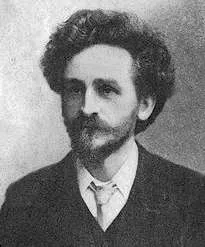
James Allen
James Allen was a British writer and pioneer of the self-help movement, known for his inspirational works.
James Allen, born in England in 1864, became a significant British philosophical writer and a foundational figure in the self-help movement. Despite a challenging childhood, marked by his father's death and his own early departure from school, Allen pursued a career in journalism and writing. He gained recognition for his inspirational books and poetry, with his most famous work, 'As a Man Thinketh,' published in 1903. This book, inspired by a biblical passage, achieved global readership and cemented Allen's posthumous reputation as a key figure in modern inspirational thought. Allen's writing focused on the power of thought and its influence on one's life, a theme that resonated widely and inspired many subsequent motivational authors. He passed away in 1912, leaving behind a legacy of profound philosophical insights.
Allen's writing career began in earnest in the late 1890s, and by 1901, he had published his first book, 'From Poverty to Power.' He also launched his own spiritual magazine, 'The Light of Reason,' later renamed 'The Epoch.' After the success of 'As a Man Thinketh,' Allen was able to dedicate himself fully to writing. He and his wife retired to Ilfracombe, where he continued to produce over a book a year until his death. His wife, Lily L. Allen, continued his work after his passing, emphasizing that his writings were based on lived experience and proven principles.
Early Life and Influences
Born in Leicester, England, in 1864, James Allen hailed from a working-class background. His father, a factory knitter, tragically died in America shortly after arriving in 1879, leaving the family in dire financial straits. This hardship forced Allen, at the age of fifteen, to leave school and seek employment. For much of the 1890s, he worked in secretarial and stationery roles for various British companies before transitioning to journalism and reporting in London and South Wales. It was in South Wales that he met and married Lily Louisa Oram in 1895. This period of his life, marked by economic struggle and a need for self-reliance, likely informed the themes of resilience and inner strength that would later characterize his writings.
Literary Career and Philosophy
Allen's spiritual and social interests found an outlet when he began writing for 'The Herald of the Golden Age' in 1898. This marked the beginning of a prolific creative period, during which he published his first book, 'From Poverty to Power,' in 1901. He further established his voice by launching his own spiritual magazine, 'The Light of Reason' (later 'The Epoch'), in 1902. His most celebrated work, 'As a Man Thinketh,' appeared in 1903. Loosely based on a proverb, this concise book explored the profound impact of thoughts on one's character and circumstances. Its widespread appeal allowed Allen to leave his secretarial work and fully embrace his vocation as a writer and editor. He continued to publish prolifically until his death in 1912, producing nineteen books that emphasized personal responsibility, mental discipline, and the power of positive thinking.
Legacy and Posthumous Influence
James Allen's philosophical writings, particularly 'As a Man Thinketh,' have had a lasting impact, positioning him as a pioneer of the self-help movement. His works have been continuously reprinted and have served as a significant source of inspiration for countless motivational and self-help authors. Following Allen's death in 1912, his wife, Lily L. Allen, continued to publish his magazine, 'The Epoch,' and oversaw the posthumous release of several of his manuscripts. She described his writing as based on 'facts, which he had proven by practice,' highlighting the practical and experiential foundation of his philosophy. Allen's emphasis on the internal cultivation of thought as the key to external success and well-being continues to resonate with readers seeking personal growth and spiritual understanding.
Key Ideas
- The power of thought shapes an individual's character and circumstances.
- Mental discipline and positive thinking are crucial for personal success and well-being.
- Inner transformation leads to outer changes in life.
- Personal responsibility for one's life situation.
Notable Quotes
“He never wrote theories, or for the sake of writing; but he wrote when he had a message, and it became a message only when he had lived it out in his own life, and knew that it was good. Thus he wrote facts, which he had proven by practice.”
Books by James Allen
5 free public domain books · Read online or download