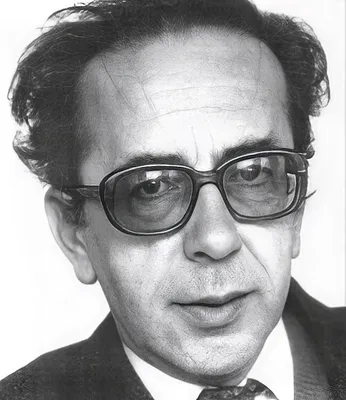
Ismail Kadare was a globally acclaimed Albanian writer known for his allegorical critiques of totalitarianism.
Ismail Kadare was a prominent Albanian novelist, poet, essayist, screenwriter, and playwright, recognized internationally as a significant literary figure and intellectual. His early career focused on poetry, but his first novel, 'The General of the Dead Army,' brought him widespread fame. Kadare is celebrated for his powerful opposition to totalitarianism, particularly during his time in Albania under strict censorship. He skillfully employed literary devices such as parable, myth, fable, allegory, double-entendre, and satire to circumvent censors and critique the Communist regime. In 1990, he sought political asylum in France. Throughout his career, Kadare received numerous prestigious awards and was frequently nominated for the Nobel Prize in Literature. His works, translated into many languages, have been compared to those of Kafka, Gogol, and Orwell, reflecting his deep exploration of power's impact on the human psyche.
Literary Style and Thematic Concerns
Kadare's literary output is characterized by a profound engagement with history, myth, and the human condition, particularly under oppressive regimes. Facing strict censorship in Communist Albania, he developed sophisticated methods to convey his messages indirectly. His writing frequently utilizes allegory, fable, myth, and folk-tale, often infused with double-entendre and satire, to critique totalitarianism and its effects on individuals. This approach allowed him to bypass censors while exploring universal themes of power, resistance, and the resilience of the human spirit. His novels, such as 'The General of the Dead Army,' delve into the psychological impact of authoritarianism, earning him comparisons to literary giants like Franz Kafka and George Orwell for his incisive portrayal of the mechanisms of power.
Early Life and Literary Beginnings
Born in Gjirokastër, Albania, in 1936, Kadare's early life was shaped by the political shifts in his country, including Italian occupation and the establishment of a Communist state. His literary journey began at a young age, with his first short stories published at 12 and his debut poetry collection, 'Boyish Inspirations,' appearing in 1954. His education included studies at the University of Tirana and postgraduate work at the Maxim Gorky Literature Institute in Moscow, where he was trained in Socialist Realism. However, Kadare internally rejected dogmatic literary approaches, opting instead to engage with Western literature and develop his own distinct voice. His early works, including poetry collections and his first novel, 'The City Without Signs,' began to establish his reputation, though some faced censorship and criticism for deviating from socialist ideals.
International Recognition and Later Life
Kadare achieved international acclaim with the French translation of 'The General of the Dead Army' in 1970. This novel, exploring the aftermath of war and the complexities of national identity, resonated widely and led to translations into numerous languages. Despite facing bans and criticism within Albania, his international reputation grew, culminating in prestigious awards such as the Man Booker International Prize and the Neustadt International Prize for Literature. In 1990, he defected to Paris to escape the Communist regime. He was later offered the presidency of Albania but declined. France honored him with significant distinctions, including becoming a foreign associate of the Académie des Sciences Morales et Politiques and receiving the Commandeur de la Légion d'Honneur. His work continues to be celebrated for its artistic merit and its profound commentary on political oppression.
Key Ideas
- Allegorical critique of totalitarianism
- Use of myth, fable, and folklore to circumvent censorship
- Exploration of the psychological impact of authoritarian rule
- Resistance against dogmatic literary and political systems
Notable Quotes
“Because I did not yet understand that I could simply purchase it in a bookstore, I copied much of it by hand and took it home. My childhood imagination pushed me to feel like a co-author of the play.”
Books by
3 free public domain books · Read online or download