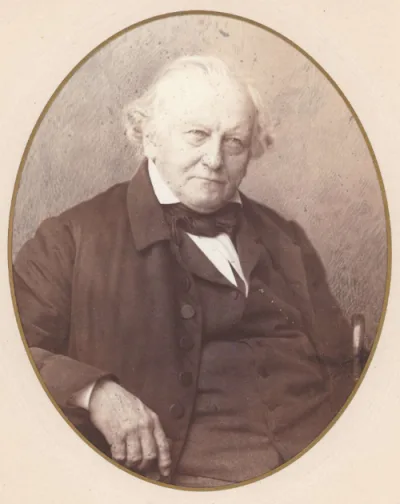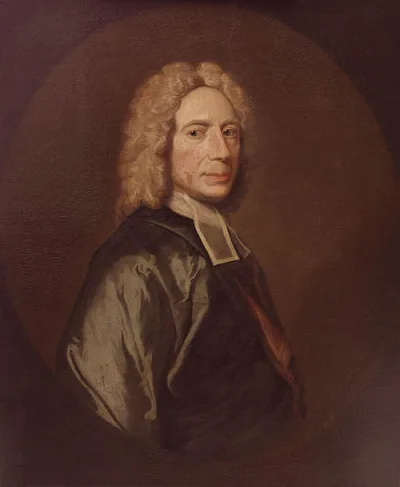
Isaac Watts
Isaac Watts was a prolific theologian and hymn writer, also recognized for his influential work in logic.
Isaac Watts (1674-1748) was an English minister, theologian, logician, and exceptionally popular hymn writer, credited with composing around 750 hymns, many of which are still widely sung today. Born into a family of religious nonconformists, Watts received a classical education but was unable to attend Oxford or Cambridge due to his religious beliefs. He pursued his studies at a Dissenting Academy and later served as a pastor, dedicating much of his life to promoting education and scholarship. His theological views were notably ecumenical, and he spent many years living with the Abney family, finding inspiration in their estate's grounds for his extensive writings.
Watts is often called the "Godfather of English Hymnody" for his significant contributions to Christian worship music. He moved beyond the traditional practice of singing only biblical Psalms, introducing new poetry for "original songs of Christian experience" and adapting existing Psalms with a distinctly Christian perspective, drawing on New Testament interpretations. Beyond his hymns, Watts also authored influential theological and logical works. His textbook on logic, "Logick, or The Right Use of Reason," was widely adopted, even in prestigious universities, and is noted for its methodical approach and practical emphasis. He also provided an early definition of a chemical element.
Hymnody and Theological Innovation
Isaac Watts revolutionized English hymn writing by introducing "original songs of Christian experience" for worship, moving beyond the exclusive use of biblical Psalms. He reinterpreted the Psalms with a Christian lens, adapting their language and themes to reflect New Testament teachings, including the role of Christ's sacrifice and eternal salvation. This approach, exemplified in his 1707 collection "Hymns and Spiritual Songs," allowed for a richer expression of Christian faith in congregational singing. His prolific output and innovative methods significantly shaped the future of English worship music, earning him the title "Godfather of English Hymnody." Many of his hymns, such as "When I Survey the Wondrous Cross" and "O God, Our Help in Ages Past," remain enduringly popular and have been translated into numerous languages, demonstrating the lasting impact of his theological and poetic contributions.
Logic and Epistemology
Watts made a significant mark on the field of logic with his textbook "Logick, or The Right Use of Reason in the Enquiry After Truth." This work, first published in 1724, became a standard text in numerous universities, including Oxford and Cambridge, for over a century. Watts structured his logic systematically, dividing it into perception, judgment, reasoning, and method. He incorporated influences from British empiricism, particularly John Locke, and innovated by carefully distinguishing between judgments and propositions. A key aspect of his approach was emphasizing logic as a practical art applicable to all forms of inquiry, not just speculation. This practical orientation, along with his methodical presentation, made his work highly accessible and influential, even earning praise from later logicians like Charles Sanders Peirce.
Early Scientific Concepts
In his logical and philosophical writings, Isaac Watts touched upon concepts relevant to the nascent scientific understanding of his time. Notably, within his work "Logick," he provided an early definition of a chemical element, distinguishing it clearly from a chemical compound. He also listed the five elements that were recognized by chemists during his era, according to his understanding. This demonstrates an engagement with the emerging scientific discourse, applying his logical framework to categorize and define fundamental substances. His later work, "The Improvement of the Mind," also served as a widely used moral textbook and influenced figures like Michael Faraday, indicating the broad reach of his intellectual contributions.
Key Ideas
- Innovated English hymnody by introducing original Christian songs and reinterpreting Psalms with a New Testament perspective.
- Emphasized logic as a practical art applicable to various inquiries, distinguishing it from purely speculative approaches.
- Provided early definitions of chemical elements and compounds, reflecting an engagement with scientific concepts.
- Advocated for ecumenical and nondenominational religious views, prioritizing education and scholarship.
Books by Isaac Watts
3 free public domain books · Read online or download