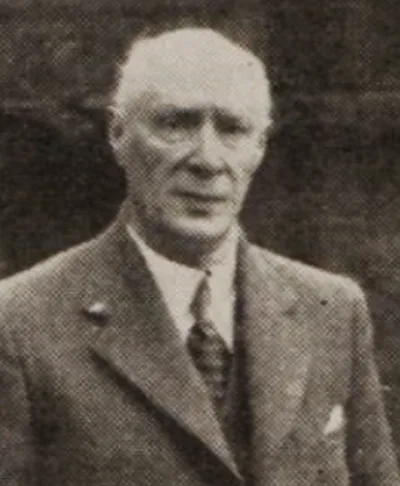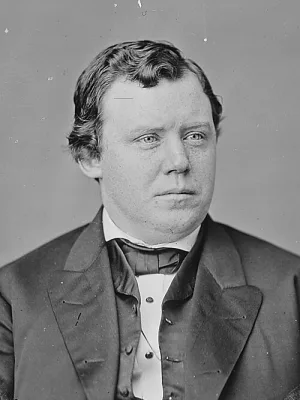
Ignatius Donnelly was a politician and writer known for his pseudoscientific theories on Atlantis and Shakespearean authorship.
Ignatius Donnelly, born in 1831, was an American politician, writer, and figure associated with pseudoscientific theories. He served as a U.S. Representative from Minnesota and held various state political offices, advocating for causes like the Freedmen's Bureau and women's suffrage. Donnelly's political career was marked by his effective oratory and his role in the Populist movement, for which he authored the preamble to the Omaha Platform.
Beyond politics, Donnelly gained notoriety for his speculative works. His most famous book, "Atlantis: The Antediluvian World" (1882), proposed that the lost continent of Atlantis was the origin of many ancient civilizations and was destroyed in a cataclysmic event. He also explored theories of ancient impact events affecting civilizations in "Ragnarok: The Age of Fire and Gravel" and suggested Francis Bacon was the true author of Shakespeare's plays in "The Great Cryptogram." These works are widely considered examples of pseudoscience and pseudohistory.
Early Life and Political Beginnings
Born in 1831, Ignatius Donnelly was the son of Irish immigrants who settled in Philadelphia. His father, Philip, studied medicine, and his mother, Catherine, operated a pawn shop to support the family. Ignatius received a strong education at Central High School, excelling in literature. He pursued a legal career, becoming a lawyer in 1852. Donnelly married Katherine McCaffrey in 1855 and had three children. He entered politics that same year, campaigning for Democratic candidates. In 1857, he moved to Minnesota, where he attempted to establish a utopian community called Nininger City, which ultimately failed due to financial panic and left him in debt.
Political Career and Populist Movement
Donnelly later became a Republican and was elected lieutenant governor of Minnesota, serving from 1860 to 1863. He then served as a U.S. Congressman from Minnesota from 1863 to 1869. Throughout his career, he was a state senator and representative, championing causes such as expanding the Freedmen's Bureau for education and supporting women's suffrage. Donnelly was a significant figure in the Populist movement, writing the influential preamble to the People's Party platform in 1877. He was nominated for Vice President by the Populist Party in 1900. His political activities also included campaigns for governor and involvement with the Farmers' Alliance, though his financial dealings sometimes drew scrutiny.
Theories on Atlantis and Catastrophism
Donnelly's most enduring legacy stems from his speculative writings. His 1882 book, "Atlantis: The Antediluvian World," posited that Plato's Atlantis was a real continent and the source of numerous ancient civilizations, including those in Egypt and the Americas. He linked its destruction to the biblical Great Flood. In "Ragnarok: The Age of Fire and Gravel" (1883), he proposed that a comet impact caused prehistoric catastrophes, including the extinction of mammoths and the destruction of Atlantis. These theories, while popular, are considered pseudoscientific and have been widely rejected by scholars.
Shakespearean Authorship and Other Works
In "The Great Cryptogram" (1888), Donnelly argued that Francis Bacon was the true author of the works attributed to William Shakespeare, claiming to have found hidden ciphers. This theory, though popular at the time, ultimately discredited him in academic circles. Donnelly also ventured into science fiction with novels like "Caesar's Column" (1890), a dystopian tale of worker revolt. His literary output also included other novels and essays, reflecting his diverse interests. His personal papers are preserved at the Minnesota Historical Society.
Key Ideas
- Atlantis as the origin of ancient civilizations and a source of global myths.
- Catastrophic geological events, such as comet impacts, shaping human history and causing mass extinctions.
- The theory that Francis Bacon authored the works attributed to William Shakespeare.
- Hyperdiffusionism, suggesting prehistoric catastrophes influenced multiple unrelated cultures.
Books by
7 free public domain books · Read online or download