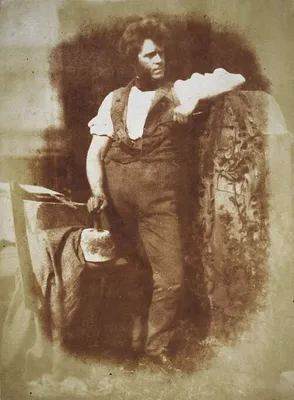
Hugh Bowden
Hugh Miller was a Scottish geologist and writer who explored the intersection of science and faith, interpreting geological findings through a theological lens.
Hugh Miller (1802-1856) was a Scottish geologist, writer, and folklorist known for his work on the Old Red Sandstone. Born in Cromarty, he began his career as a stonemason, which led him to study geology through his work in quarries and coastal explorations. Miller became involved in political and religious debates of his time, notably the Disruption of 1843 in the Church of Scotland. He later served as editor for the newspaper 'The Witness', becoming an influential figure in the Free Church.
Miller's geological writings, such as 'The Old Red Sandstone' and 'The Testimony of the Rocks', sought to reconcile scientific discoveries with religious beliefs. He posited that the Earth was ancient and had seen the rise and fall of many species, but he believed this succession demonstrated the work of a Creator rather than evolutionary descent. He interpreted biblical accounts, like the creation in Genesis, as potentially referring to geological epochs rather than literal days, and viewed Noah's Flood as a localized event. Miller's work offered a theological interpretation of natural design, countering arguments of chance or impersonal natural laws.
Geology and Theology
Hugh Miller approached geology with a strong theological framework, seeking to harmonize his scientific observations with his Christian faith. He proposed that the Earth was immensely old and had hosted numerous extinct species, viewing this progression as evidence of a benevolent Creator's plan rather than a process of evolution from earlier forms. Miller suggested that the biblical creation narrative in Genesis could be understood as describing vast geological periods, not literal twenty-four-hour days. He also reinterpreted the story of Noah's Flood as a regional event. For Miller, geology provided a powerful argument for divine design, countering skeptical views that attributed the origins of life to randomness or unguided natural processes.
Career and Influence
Starting as a stonemason, Hugh Miller's deep engagement with the natural world, particularly through his work in quarries and along the coast, fueled his passion for geology. His intellectual journey led him to become a writer and editor, most notably for the newspaper 'The Witness', where he became a prominent voice in the religious and political landscape of mid-19th century Scotland. Despite lacking formal academic qualifications, Miller achieved significant recognition for his ability to communicate complex scientific ideas to a broad audience. His work contributed to the understanding of palaeontology, with several fossil species and even geological formations named in his honor, reflecting his lasting impact on the field.
Personal Life and Legacy
Hugh Miller's life was marked by significant intellectual contributions but also by personal struggles. He married Lydia Mackenzie Falconer Fraser, a children's author, and together they had children. In the later years of his life, Miller experienced severe mental distress, ultimately dying by suicide in 1856. His wife played a crucial role in preserving his legacy by editing and publishing his works posthumously, ensuring his continued readership. Today, Miller is remembered as a key figure in Victorian science communication, particularly for his efforts to bridge the perceived gap between scientific discovery and religious belief, with his home in Cromarty now serving as a geological museum.
Key Ideas
- Geological periods can be reconciled with biblical creation accounts.
- The diversity of species, both past and present, demonstrates divine design.
- The Earth's ancient age and the succession of species do not negate a Creator.
- Scientific findings can reinforce, rather than contradict, religious faith.
Notable Quotes
“Mr. Miller is one of the few individuals in the history of Scottish science who have raised themselves above the labors of an humble profession, by the force of their genius and the excellence of their character, to a comparatively high place in the social scale.”
Books by Hugh Bowden
2 free public domain books · Read online or download