✍️ Author Biography
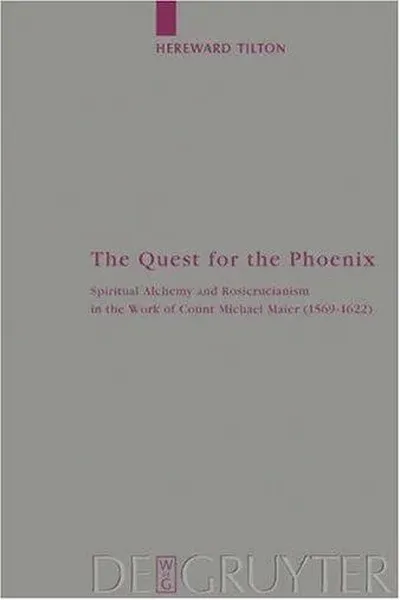
Hereward Tilton
🌍 American
📚 3 free books
⭐ Known for: Harry Potter and the Philosopher's Stone (1997)
Harry Potter and the Deathly Hallows concludes the series with Harry's quest to destroy Horcruxes and confront Voldemort.
Harry Potter and the Deathly Hallows, the seventh and final installment in J.K. Rowling's fantasy series, was released in July 2007, shattering sales records. The novel follows Harry Potter as he and his friends, Ron Weasley and Hermione Granger, hunt for the remaining Horcruxes—objects containing fragments of Lord Voldemort's soul—in their final confrontation with the dark wizard. The narrative details their perilous journey, including infiltrating the Ministry of Magic, escaping capture, and seeking out legendary artifacts known as the Deathly Hallows.
The plot culminates in a massive battle at Hogwarts, where Harry learns the truth about his own connection to Voldemort and his destiny. He ultimately sacrifices himself, only to return and face Voldemort, whose Killing Curse rebounds due to Harry's mastery of the Elder Wand. The series concludes with an epilogue set nineteen years later, showing Harry and his friends with their families.
The Quest for Horcruxes and the Deathly Hallows
The central narrative of Harry Potter and the Deathly Hallows revolves around Harry, Ron, and Hermione's mission to locate and destroy Lord Voldemort's Horcruxes. These hidden objects are essential to Voldemort's immortality, and their destruction is the key to defeating him. During their quest, they uncover the legend of the Deathly Hallows—three mythical items: the Elder Wand, the Resurrection Stone, and the Cloak of Invisibility. The pursuit of these powerful artifacts intertwines with their efforts to find and destroy the Horcruxes, leading them through dangerous encounters and challenging their resolve. The concept of these powerful, legendary objects introduces a layer of mystical lore into the story's climax.
Sacrifice, Revelation, and Destiny
A significant thematic element in the novel is the concept of sacrifice and the revelation of hidden truths. Harry discovers that he himself is an unintended Horcrux, meaning he must die to make Voldemort mortal. This revelation is facilitated by Severus Snape's memories, which expose his complex loyalties and his love for Harry's mother. The narrative explores the idea of destiny and choice, particularly as Harry embraces his fate to protect others. His temporary death and subsequent return, facilitated by Dumbledore in a liminal space, highlight spiritual or metaphysical themes of resurrection and the enduring power of love.
The Climax and Resolution
The novel's conclusion features a large-scale battle at Hogwarts, symbolizing the final stand against Voldemort and his followers. The conflict involves not only magical combat but also profound personal duels. The climax hinges on Harry's confrontation with Voldemort, where the Elder Wand's allegiance proves crucial. Voldemort's final curse rebounds, leading to his demise and the restoration of peace. The epilogue, set nineteen years later, provides a sense of closure, showing the protagonists as adults with families, signifying the triumph of good and the continuation of life, with their children beginning their own journeys.
Key Ideas
- Horcruxes: Objects containing fragments of a soul, granting immortality.
- The Deathly Hallows: Three mythical artifacts—Elder Wand, Resurrection Stone, Cloak of Invisibility.
- Sacrifice and Love: The power of love as a protective force and the necessity of sacrifice.
- Destiny vs. Choice: The interplay between predetermined fate and individual decisions.
Notable Quotes
“I've never felt such a mixture of extreme emotions in my life, never dreamed I could feel simultaneously heartbroken and euphoric.”
“To which, I can only sigh, try seventeen years, Charles”
“Deathly Hallows is my favourite, and that is the most wonderful way to finish the series.”
“These books have been plotted for such a long time, and for six books now, that they're all leading a certain direction. So, I really can't.”
“almost as though they are two-halves of the same novel”