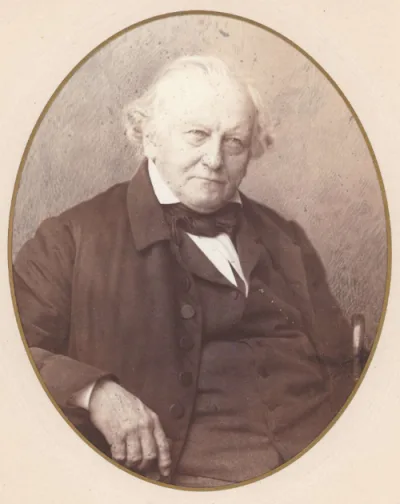
✍️ Author Biography
Henry T. Williams
📅 1848 – 1929
🌍 American
📚 0 free books
⭐ Known for: War in Heaven (1930)
Charles Walter Stansby Williams was an English poet and novelist exploring supernatural themes and theological concepts.
Charles Walter Stansby Williams was an English poet, novelist, playwright, theologian, and literary critic born in London in 1886. He spent most of his life in London, working for Oxford University Press from 1908 until his death in 1945, eventually moving to Oxford in 1939. Williams was a prolific writer, known for his novels that blended the supernatural with contemporary settings, often exploring theological ideas. His notable novels include 'War in Heaven,' 'Descent into Hell,' and 'All Hallows' Eve.' T. S. Eliot famously described his novels as 'supernatural thrillers' for their examination of the intersection between the physical and spiritual realms, and the corrupting or sanctifying nature of power.
Williams's work is considered a significant contribution to "Christian fantasy," alongside writers like C. S. Lewis and J. R. R. Tolkien, with his narratives often set in the modern world. Beyond fiction, he authored poetry, literary criticism, theology, and drama. His theological contributions included the concept of 'co-inherence,' which describes a mutual indwelling and interdependence within creation, particularly within the Body of Christ. He also developed ideas on the theology of romantic love, viewing it as a mystical experience. Williams was an active member of literary circles, including the Inklings, and his work profoundly influenced contemporaries like C. S. Lewis and Dorothy L. Sayers.
Literary Contributions and Style
Charles Williams is primarily remembered for his novels, which are characterized by their unique blend of the supernatural and the everyday. Unlike many fantasy writers, his stories are typically set in contemporary England, where extraordinary events intrude upon ordinary life. T. S. Eliot aptly termed these works "supernatural thrillers," highlighting their exploration of how spiritual forces intersect with the physical world and the potential for power, even spiritual power, to both corrupt and sanctify. His literary output also included poetry, drama, literary criticism, and theological works, demonstrating a broad range of intellectual and creative pursuits. His unique approach to fantasy has inspired later writers in the genre.
Theological Concepts and Philosophy
A central tenet of Williams's thought is the concept of 'co-inherence,' a theological idea he adapted and expanded. Originally used in early Christian theology to describe the relationship between Christ's divine and human natures and the persons of the Trinity, Williams applied it to the interconnectedness of all creation. This concept suggests a mutual indwelling and interdependence, where individuals and elements of the world exist in relation to each other, particularly within the framework of the Body of Christ and the communion of saints. He envisioned an order dedicated to practicing this principle through substitution, exchange, and bearing one another's burdens in love. His understanding of romantic love also touched upon mystical experience, viewing the beloved through divine eyes.
Career and Influence
Williams dedicated a significant portion of his life to working with the Oxford University Press, starting as a proofreading assistant in 1908 and rising to editor. His editorial work included publishing the first major English edition of Søren Kierkegaard's works. He was an active participant in literary circles, notably the Inklings, a group that included C. S. Lewis and J. R. R. Tolkien. His intellectual contributions and literary style garnered admiration from prominent figures like W. H. Auden and T. S. Eliot. His friendship with C. S. Lewis, initiated by mutual admiration for each other's work, was particularly fruitful, with Lewis's novel 'That Hideous Strength' showing influence from their acquaintance. Williams's work also inspired Dorothy L. Sayers's translation of 'The Divine Comedy.'
Key Ideas
- Co-inherence: A concept of mutual indwelling and interdependence within creation, especially in the Body of Christ.
- Theology of romantic love: Viewing falling in love as a mystical experience where the beloved is seen through God's eyes.
- Supernatural thrillers: Novels blending the supernatural with contemporary settings, exploring the intersection of physical and spiritual realms.