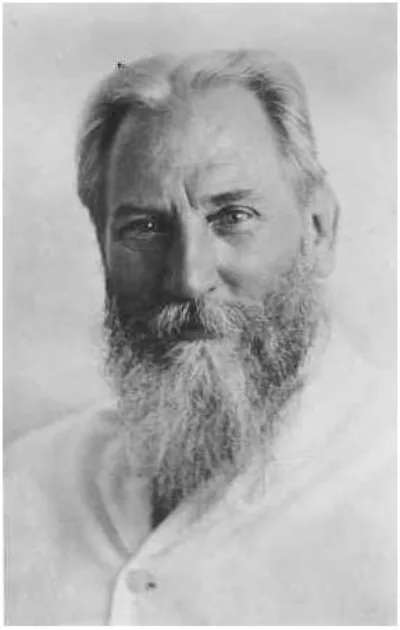
Henry Steel Olcott
Anagarika Dharmapala was a Sri Lankan Buddhist revivalist and writer who co-founded the Theosophical Society and promoted Buddhism globally.
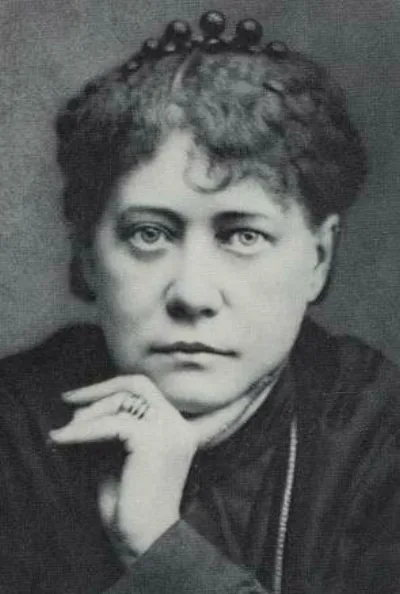
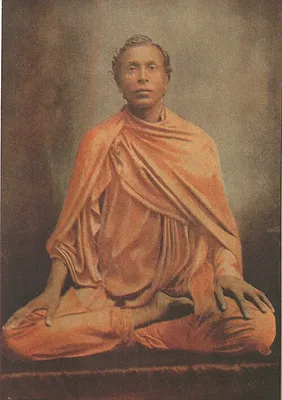
Anagarika Dharmapala, born Don David Hewavitarne, was a prominent Sri Lankan Buddhist revivalist and writer. He co-founded the Theosophical Society with Helena Blavatsky and Henry Steel Olcott, playing a crucial role in the revival and global transmission of Buddhism. Initially working closely with Olcott and Blavatsky, Dharmapala later separated from the Theosophists due to differing views on universal religion, feeling that Buddhism was being assimilated into a non-Buddhist framework.
Dharmapala dedicated his life to the propagation of Buddhism, taking on the status of an anagarika, a celibate, full-time worker for Buddhism, a role he redefined for modern times. He was instrumental in advocating for the restoration of Buddhist sites, particularly the Mahabodhi Temple at Bodh Gaya, and founded the Maha Bodhi Society to achieve this. His efforts also extended to establishing Buddhist schools and viharas across India and the world. He was recognized as a significant figure in Buddhist modernism, emphasizing rationality and consistency with science, and was eventually ordained as a bhikkhu shortly before his death.
Buddhist Revival and Theosophy
Born Don David Hewavitarne into a wealthy Sri Lankan family, he later adopted the name Anagarika Dharmapala, meaning "protector of the dharma." He became a key figure in the Buddhist revival movement, especially after meeting Helena Blavatsky and Henry Steel Olcott, founders of the Theosophical Society. In 1880, Olcott and Blavatsky arrived in Ceylon, declared themselves Buddhists, and began working to promote Buddhist education. Dharmapala collaborated with them, serving as a translator and working for the cause of Buddhism. He adopted the status of an anagarika, a celibate layperson committed to Buddhist work, a role he pioneered in modern times. This involved adhering to eight precepts for life and dedicating himself to activism, even while traveling globally.
Advocacy and Global Reach
Dharmapala's work included a strong focus on reclaiming and restoring Buddhist holy sites, most notably the Mahabodhi Temple at Bodh Gaya, which he found under the care of a Hindu priest. This led him to initiate the Maha Bodhi Society in 1891, aiming to return such sites to Buddhist control. He also worked to raise Buddhist consciousness in India and inspired conversions, including among South Indian Dalits. He gained international recognition, attending the World Parliament of Religions in Chicago in 1893, where he presented Buddhism in a way that resonated with Western audiences, often referencing science and Enlightenment ideals. He traveled extensively, lecturing and establishing Buddhist centers, and received significant financial support for his endeavors.
Buddhist Modernism and Philosophical Stance
Anagarika Dharmapala is considered a prime example of Buddhist modernism, a movement that adapted Buddhist teachings to contemporary thought and countered claims of Western superiority. His approach, sometimes termed 'Protestant Buddhism,' emphasized individual experience, rationality, and consistency with science, particularly evolution. This contrasted with traditional monastic structures and ritualism. Dharmapala eventually diverged from the Theosophical Society due to Olcott's advocacy for a universal religion, believing that Buddhism's distinctiveness was being compromised. He asserted the supremacy of Dharma, arguing against the idea that all religions share an equal foundation.
Key Ideas
- Buddhist modernism: Adapting Buddhism to contemporary thought, emphasizing rationality and science.
- Protestant Buddhism: A form of Buddhism influenced by Protestant ideals and a protest against colonialism.
- Anagarika status: A modern redefinition of a celibate, full-time lay worker for Buddhism.
- Restoration of Buddhist sites: Actively campaigning for Buddhist control of key pilgrimage locations like Bodh Gaya.
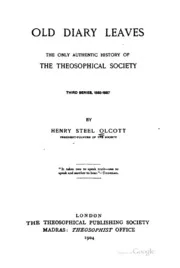
Books by Henry Steel Olcott
2 free public domain books · Read online or download