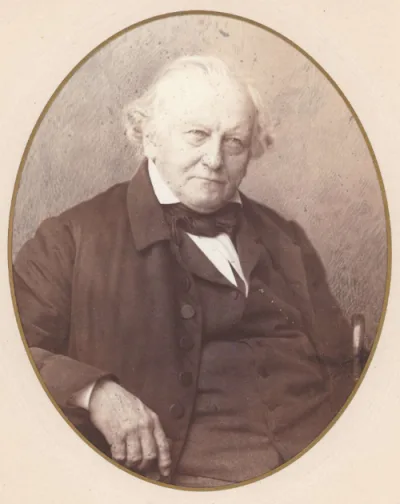
Henry Callaway
Henry Callaway was an early figure in the study of spiritualism and the occult in Australia.
Henry Callaway was an early European settler in Australia and a physician who became deeply interested in the spiritual beliefs and practices of Indigenous Australians. His work, particularly his correspondence with E.B. Tylor, provided significant early ethnographic data on these subjects. Callaway's efforts aimed to document and understand the spiritual world of the Aboriginal people, which he believed held insights into universal human beliefs. He meticulously recorded their traditions, rituals, and cosmologies, seeking to bridge the gap between his own scientific worldview and the indigenous spiritual landscape. His contributions were crucial in the nascent field of anthropology and the study of comparative religion, offering a detailed, albeit from an outsider's perspective, look into a complex spiritual system.
Early Life and Career in Australia
Henry Callaway arrived in Australia in 1835, establishing himself as a medical doctor. He spent considerable time in Victoria and later in Queensland, where he encountered Indigenous Australian communities. His professional role as a physician provided him with opportunities to observe and interact with the Aboriginal people, fostering his interest in their culture and beliefs. This period marked the beginning of his ethnographic inquiries, driven by a desire to understand the spiritual dimensions of their lives.
Ethnographic Research and Spiritualism
Callaway's most significant contribution lies in his detailed documentation of Indigenous Australian spiritualism, particularly their beliefs in spirits, sorcery, and the afterlife. He engaged in extensive correspondence, most notably with anthropologist E.B. Tylor, sharing his observations and findings. His work focused on understanding the indigenous worldview, including their creation myths, rituals, and the role of spiritual practitioners. Callaway sought to present these beliefs in a systematic way, contributing to the early development of anthropological studies and the understanding of non-Western spiritual traditions.
Correspondence and Scholarly Influence
The extensive letters exchanged between Henry Callaway and E.B. Tylor form a critical part of the historical record of early ethnographic research. These communications reveal Callaway's dedication to collecting and interpreting data on Indigenous Australian spiritual beliefs. His meticulous notes and descriptions offered valuable insights to scholars like Tylor, influencing their theories on the origins of religion and human culture. Callaway's work provided a foundation for later studies into the complex spiritual and social structures of Aboriginal societies, highlighting the importance of indigenous spiritual practices in the broader study of humanity.
Books by Henry Callaway
3 free public domain books · Read online or download