Henri Doré
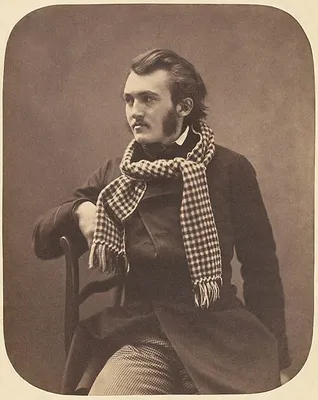
Gustave Doré was a prolific 19th-century French artist renowned for his dramatic illustrations of classic literature.
Paul Gustave Louis Christophe Doré (1832–1883) was a highly productive French artist known for his masterful wood-engravings that brought classic literary works to life. He began his career at a young age as a caricaturist and quickly expanded into illustrating numerous books, achieving international acclaim for his prolific output. While popular with the public during his lifetime, critical reception was varied, though his work has since been widely celebrated. Doré's unique style, often characterized by dramatic light and shadow, influenced many subsequent artists and writers.
His most celebrated works include illustrations for the Vulgate Bible and Dante's Divine Comedy, which achieved significant success. Doré also illustrated texts by Cervantes, Milton, Edgar Allan Poe, and Lord Byron, among others. His depictions, such as those for Don Quixote, became iconic and shaped visual interpretations of these characters. Despite his fame, Doré primarily worked as a designer, with numerous block-cutters executing his drawings onto woodblocks for printing. His vast body of work, exceeding 10,000 illustrations, was often reproduced using electrotyping, enabling widespread distribution.
Doré's career spanned various artistic disciplines, including painting, sculpture, and comics, but his printmaking, particularly his wood-engravings, is where his individual artistic vision is most evident. His ambitious project depicting London, "London: A Pilgrimage," showcased his talent but also drew criticism for its focus on the city's poverty. He was recognized by the French government as a Knight of the Legion of Honour in 1861. Doré continued to illustrate until his death in 1883, working on an edition of Shakespeare's plays.
Artistic Style and Influence
Gustave Doré's artistic output was immense, with his wood-engravings for classic literature earning him widespread recognition. His technique often involved dramatic contrasts of light and shadow, imbuing his subjects with a sense of fantasy, mystery, and sometimes the macabre. This distinctive style made his illustrations particularly suited to the epic and often supernatural themes found in works like Dante's Divine Comedy and Coleridge's Rime of the Ancient Mariner. Writers like H.P. Lovecraft cited Doré's illustrations as a source of inspiration, particularly for their ability to visualize "wildest dreams and fantasies." His depictions of characters and scenes became so definitive that they influenced subsequent artistic and directorial interpretations for decades.
Notable Literary Illustrations
Doré is primarily remembered for his prolific illustrations of canonical literary texts. His renderings of the Vulgate Bible and Dante's Divine Comedy were particularly successful and widely distributed. He also contributed iconic imagery to works such as Cervantes's Don Quixote, Milton's Paradise Lost, and Edgar Allan Poe's "The Raven." His collaboration with Blanchard Jerrold on "London: A Pilgrimage" offered a comprehensive, albeit sometimes criticized, visual portrait of the city. These commissions, often requiring the work of many skilled engravers under his direction, cemented his reputation as a master illustrator capable of translating complex narratives into powerful visual forms.
Career and Critical Reception
Beginning his career as a caricaturist at age 15, Gustave Doré rapidly developed into a versatile artist. While his illustrative work was immensely popular with the general public during his lifetime, contemporary art critics offered mixed assessments. Some found his work to be overly dramatic or even fabricated, as seen in criticisms of "London: A Pilgrimage." However, his artistic contributions were acknowledged through honors such as being made a Knight of the Legion of Honour in 1861. Posthumously, his reputation has grown, with his ability to capture the imaginative and the fantastical being widely appreciated by artists, writers, and scholars.
Notable Quotes
“Nobody better than this artist can give a mysterious and deep vitality to chimeras, dreams, nightmares, intangible shapes bathed in light and shade, weirdly caricatured silhouettes and all the monsters of fantasy.”
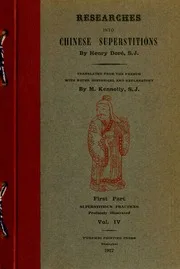
Books by Henri Doré
3 free public domain books · Read online or download