Hedrick, Charles W.
The Secret Gospel of Mark is a disputed text, allegedly discovered by Morton Smith, with its authenticity debated by scholars.
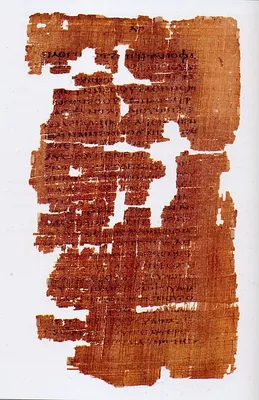
The Secret Gospel of Mark, also known as the Mystic Gospel or Longer Gospel of Mark, is a purported longer version of the Gospel of Mark. Its existence is known solely through the Mar Saba letter, a document of uncertain authenticity attributed to Clement of Alexandria. This letter, itself preserved only in photographs of an 18th-century transcription, claims that Mark created this expanded text for initiates into 'great mysteries'.
Morton Smith, a professor of ancient history, announced his discovery of the letter in 1958 at the Mar Saba monastery. His findings, published in 1973, generated significant scholarly debate and accusations of forgery. The original manuscript, later transferred to a library in Jerusalem, has since been lost. The authenticity of the Mar Saba letter and, consequently, the Secret Gospel of Mark, remains a subject of ongoing contention within academic circles, with no scholarly consensus.
Discovery and Initial Reception
In 1958, historian Morton Smith reported finding a previously unknown letter from Clement of Alexandria within the Mar Saba monastery. This letter, purportedly transcribed in the 18th century into the endpapers of an older book, mentioned a longer, secret version of the Gospel of Mark. Clement's letter, addressed to Theodore, suggested that Mark brought Peter's and his own notes to Alexandria, expanding his gospel for those undergoing initiation into profound spiritual knowledge. Smith announced his discovery in 1960 and published his research in 1973, but the revelation was met with immediate skepticism and accusations of forgery. The original document, eventually housed in Jerusalem, was later lost, leaving only photographs and copies for study.
Scholarly Debate and Authenticity
The authenticity of the Mar Saba letter, and by extension the Secret Gospel of Mark, is fiercely debated among scholars. There is no agreement on whether the letter is entirely genuine, entirely fabricated, or a mixture of authentic and inauthentic parts. Many who believe it to be a modern forgery point to Morton Smith as the potential perpetrator, suggesting the gospel excerpts are also fabricated. Others accept the letter as genuine but propose the gospel is a second-century Gnostic text, while some argue Clement's account is accurate and the secret gospel is either a later expansion by Mark himself or an earlier version from which the canonical Gospel of Mark was derived through omissions.
Manuscript's Subsequent History and Disappearance
Following Smith's discovery, the manuscript's location and accessibility have been complex. While initially thought to be seen only by Smith, other scholars later confirmed its presence. In 2003, Guy Stroumsa reported seeing the letter in 1976. Later, pages containing the text were separated for photographing around 1977 and were reportedly kept aside until at least 1990. However, these pages subsequently vanished. Various theories suggest the pages might be intentionally withheld due to controversial interpretations of the text, or simply lost or destroyed. Color photographs taken in 1983, arranged by Quentin Quesnell, eventually became available, though Quesnell's own critical examination and possession of these photos were not widely known until years later. As of recent documentation, the manuscript's whereabouts remain unknown.
Key Ideas
- The Secret Gospel of Mark is a hypothetical longer version of the canonical Gospel of Mark.
- Its existence is based on a letter attributed to Clement of Alexandria, found by Morton Smith.
- The letter suggests the secret gospel was used for initiating individuals into spiritual mysteries.
- The authenticity of the letter and the gospel is highly contested within scholarly communities.
Books by Hedrick, Charles W.
2 free public domain books · Read online or download