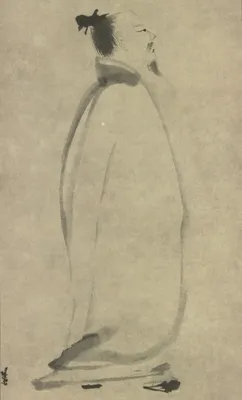
He Ming Bai
Li Bai was a celebrated Tang dynasty poet known for his romantic verses on nature, friendship, and wine, whose life became intertwined with legend.
Li Bai (c. 701–762) stands as one of the most significant poets of China's Tang dynasty, a period often referred to as the "Golden Age of Chinese Poetry." His approximately one thousand extant poems are celebrated for their exploration of themes such as friendship, nature's beauty, solitude, and the pleasures of wine. These works, including famous pieces like "Quiet Night Thought," continue to be studied and translated globally.
Li Bai's life was marked by extensive travel and a less conventional path than many of his contemporaries. He showed an early aptitude for poetry and martial arts, and while he expressed a desire to serve as an official, he eschewed the traditional civil service examinations. His life story has acquired a legendary quality, embellished with tales of his spirited personality, including a famous anecdote of his supposed death by drowning while reaching for the moon's reflection. His personal experiences and the tumultuous political landscape of his time, particularly the An Lushan rebellion, significantly influenced his poetic output.
Poetic Legacy and Themes
Li Bai's poetry is renowned for its romantic and often unrestrained spirit, capturing the essence of the Tang dynasty's cultural zenith. His verses frequently celebrate the simple yet profound joys found in friendship, the awe-inspiring beauty of the natural world, the introspective calm of solitude, and the convivial spirit of drinking. These themes resonate through his most famous works, such as "Waking from Drunkenness on a Spring Day," "The Hard Road to Shu," "Bring in the Wine," and "Quiet Night Thought," many of which remain staples in Chinese education. His literary contributions were so significant that they were collected in prominent anthologies of the era and later gained international recognition through translations, notably influencing Ezra Pound's "Cathay."
Life and Influences
Born around 701, likely in Central Asia, Li Bai's family later relocated to Sichuan. His upbringing involved extensive reading, including classical texts and esoteric materials, alongside developing skills in swordsmanship and a penchant for aiding the less fortunate, embodying the knight-errant tradition. Despite his talents and a governor's recognition, he did not pursue officialdom through the standard examinations. His life was characterized by extensive travels across China, encounters with notable figures, and four marriages. The political climate of his time, transitioning from an era of peace to the devastation of the An Lushan rebellion, profoundly shaped his later poetry, imbuing it with a different tone and gravity. His life story has since been mythologized, blending historical fact with popular legend.
Names and Titles
Li Bai was known by several names and epithets throughout his life and in later scholarship. His given name, Li Bai, has been romanized in various ways, including Li Po and Li Bo, reflecting different pronunciations and historical romanization systems. His courtesy name was Taibai, meaning "Great White," linked to the planet Venus, which his mother reportedly dreamt of before his birth. He also held several evocative art names and nicknames that hinted at his persona: "Householder of Azure Lotus," "Immortal of Poetry," "Wine Immortal," "Banished Transcendent," and "Poet-Knight-Errant." These various appellations underscore the multifaceted nature of his reputation and the rich symbolism associated with him.
Key Ideas
- Celebration of nature's beauty
- The joys of friendship and wine
- Exploration of solitude and introspection
- Influence of personal experiences on poetry
- The impact of political upheaval on art
Notable Quotes
“When I was fifteen, I was fond of sword play, and with that art I challenged quite a few great men.”
Books by He Ming Bai
3 free public domain books · Read online or download