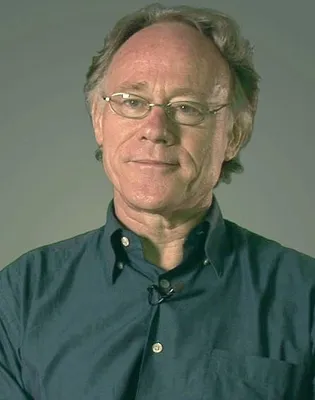
Graham Hancock, Santha Faiia
Graham Hancock is a British author known for his theories about an advanced Ice Age civilization and ancient mysteries, often labeled as pseudoarchaeology.
Graham Hancock is a British author whose work focuses on speculative theories about ancient civilizations and lost lands. Born in 1950, he began his career as a journalist, reporting on international development and authoring critical works like "Lords of Poverty" (1989). However, starting with "The Sign and the Seal" (1992), his focus shifted to exploring ancient mysteries, including the Ark of the Covenant, and proposing the existence of an advanced global civilization that predated the last Ice Age.
Hancock's central thesis suggests that this sophisticated society possessed advanced spiritual technology and was wiped out by comet impacts around 12,900 years ago. He posits that survivors disseminated their knowledge to emerging cultures in places like Egypt, Sumer, and Mesoamerica, thereby seeding the earliest known civilizations. Despite widespread academic criticism, which labels his work as pseudoarchaeology and pseudohistory due to perceived inaccuracies, bias, and selective use of evidence, Hancock maintains his theories challenge established dogma and offer deeper insights into reality and spiritual elements.
His later works, such as "Fingerprints of the Gods" and "Magicians of the Gods," delve into these ideas, interpreting ancient monuments and myths as evidence of this lost civilization. Hancock has also ventured into fiction with his fantasy novel "Entangled: The Eater of Souls," inspired by his experiences with ayahuasca. His theories have gained public attention through various media, including the Netflix series "Ancient Apocalypse" and frequent appearances on "The Joe Rogan Experience."
Early Career and Shift to Speculation
Graham Hancock was born in Edinburgh in 1950 and studied sociology at Durham University. He embarked on a career in journalism, working for prominent British newspapers and magazines, and served as East Africa correspondent for The Economist. His initial books, such as "Lords of Poverty" (1989), offered sharp critiques of the international aid system. However, a significant career pivot occurred in 1992 with the publication of "The Sign and the Seal," which marked his transition to investigating ancient history and mythology through a speculative lens, exploring topics like the Ark of the Covenant and its potential journey to Ethiopia.
Theories on Lost Ice Age Civilization
Hancock is best known for his hypothesis that an advanced, global civilization flourished during the last Ice Age, possessing advanced spiritual and technological knowledge. He proposes that this civilization was destroyed by comet impacts around 12,900 years ago, an event linked to the Younger Dryas. According to his theory, survivors shared their sophisticated understanding with primitive hunter-gatherer societies, thereby initiating the development of major ancient civilizations in regions such as Egypt, Sumer, and Mesoamerica. This concept has been critically examined by academics, who often categorize his work as pseudoarchaeology and pseudohistory, citing a lack of scholarly rigor and selective interpretation of evidence.
Esoteric and Spiritual Dimensions
Beyond historical and archaeological speculation, Hancock's work often incorporates esoteric and spiritual elements. He suggests that members of the proposed Ice Age civilization possessed psychic abilities and communicated with nonphysical entities, sometimes through the use of psychedelic substances. Hancock positions his work as a challenge to the perceived materialism of mainstream academia, presenting his research as a pathway to understanding deeper realities and spiritual truths that he believes are often ignored. His own experiences with ayahuasca have influenced his writing, including his fantasy novel, further blending personal spiritual exploration with his public theories.
Key Ideas
- An advanced global civilization existed during the last Ice Age.
- This civilization was destroyed by comet impacts around 12,900 years ago.
- Survivors of this civilization transmitted knowledge to early cultures.
- Ancient monuments and myths are evidence of this lost civilization.
- Members of the Ice Age civilization had psychic abilities and spiritual knowledge.
- Psychedelic use played a role in spiritual communication for ancient civilizations.
Notable Quotes
“a whacking big dose of amateur scholarship alloyed with a fervid imagination.”
“that the Lost Ark of the Covenant really exists”
“that the Sphinx and Pyramids occurred as far back as 10,500 BC using astronomical data.”
“a warning that a Mars-like doom lies in wait for the Earth unless we take steps to avert it.”
“the stream of heterodox religious beliefs, from early Christianity to the 18th century.”
Books by Graham Hancock, Santha Faiia
2 free public domain books · Read online or download