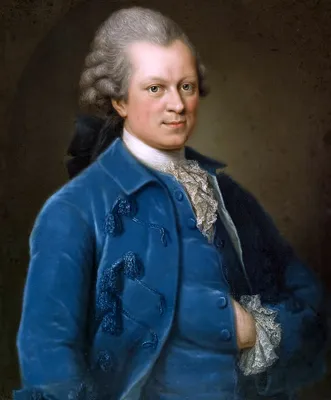
Gotthold Ephraim Lessing
Gotthold Ephraim Lessing was a pivotal Enlightenment figure, philosopher, and dramatist whose writings significantly shaped German literature and theatre.
Gotthold Ephraim Lessing (1729–1781) was a prominent German philosopher, playwright, essayist, and art critic who embodied the spirit of the Enlightenment. His extensive body of work, encompassing plays, critical essays, and philosophical treatises, profoundly influenced the trajectory of German literature and theatre.
Lessing's career was marked by his intellectual curiosity and engagement with various fields. He studied theology, medicine, philosophy, and philology, and his early involvement with theatre, including translating plays and writing his own, laid the groundwork for his later contributions. He served as a critic and editor, and his theoretical writings, particularly on drama, challenged existing conventions and advocated for a more naturalistic and impactful form of theatrical expression. His role at the Hamburg National Theatre, where he is considered the first dramaturge, was foundational to the development of theatrical criticism and theory.
Philosophical and Religious Thought
Lessing's philosophical and religious writings explored the tension between faith and reason, particularly concerning the nature of revelation and historical truth. He famously articulated 'Lessing's Ditch,' a concept highlighting his inability to bridge the gap between historical evidence and metaphysical truths, questioning the reliance on miracles as proof for religious doctrines. His engagement with Spinoza's philosophy and his friendship with Moses Mendelssohn fostered an environment for critical religious debate. Lessing defended the freedom of thought for believers and critically examined orthodox interpretations of the Bible. His later work, 'The Education of Humankind,' expounded his belief in the progressive development of human reason, independent of divine revelation.
Contributions to Theatre and Literature
As a dramatist and critic, Lessing significantly advanced German theatre. He challenged the prevailing neoclassical rules, advocating for principles aligned with Aristotle's Poetics and championing the works of Shakespeare. His plays, such as 'Miss Sara Sampson' and 'Emilia Galotti,' are seen as early examples of bourgeois tragedy, while 'Minna von Barnhelm' became a model for German comedy. 'Nathan the Wise,' written in response to censorship, is celebrated as the first German 'drama of ideas' and a testament to his ideals of religious tolerance and humanity, using the parable of the three rings to suggest the relative nature of religious truth. His theoretical works, 'Laocoön' and 'Hamburg Dramaturgy,' established new standards for aesthetic and literary criticism.
Early Life and Career Development
Born in Kamenz, Saxony, Lessing received a rigorous education, initially intended for the clergy, studying at the Latin School in Kamenz and the Fürstenschule St. Afra in Meissen. He pursued higher education at Leipzig University, where he studied theology, medicine, philosophy, and philology. During this period, his interest in theatre was ignited through his relationship with actress Karoline Neuber, for whom he translated plays and penned his first drama, 'The Young Scholar.' He later lived and worked in Berlin and Leipzig, contributing as a reviewer and editor for various periodicals. His collaboration with Christlob Mylius on the periodical 'Beiträge zur Historie und Aufnahme des Theaters' marked him as a serious critic and theorist of drama.
Key Ideas
- The 'ugly great ditch' separating historical and metaphysical truths.
- The 'Proof of Power' regarding miracles as evidence for Christianity.
- Advocacy for religious tolerance and freedom of thought.
- The concept of the 'drama of ideas' (Ideendrama).
- The Enlightenment ideal of humanity and individual reason.
- Critique of neoclassical dramatic rules in favor of Aristotelian principles.
Notable Quotes
“That, then, is the ugly great ditch which I cannot cross, however often and however earnestly I have tried to make that leap.”
Books by Gotthold Ephraim Lessing
2 free public domain books · Read online or download