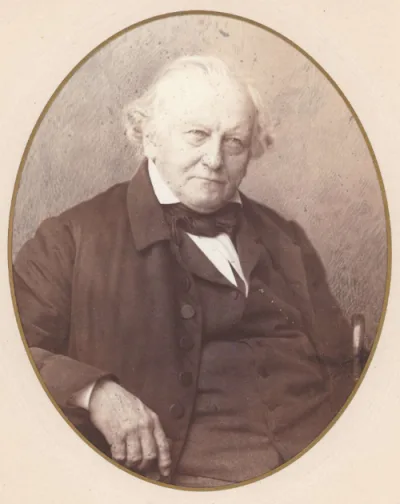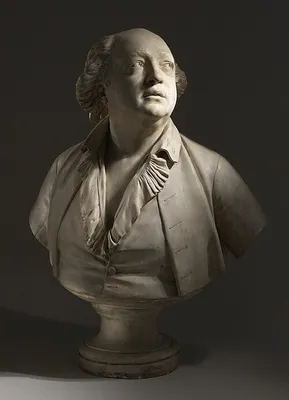
Giuseppe Balsamo
Giuseppe Balsamo, known as Count Cagliostro, was an Italian occultist and adventurer who practiced alchemy and claimed mystical knowledge, leaving a controversial legacy.
Giuseppe Balsamo, widely known by his adopted title Count Alessandro di Cagliostro, was an Italian figure active in the late 18th century, associated with occult practices and adventurous pursuits. His life story is marked by claims of noble ancestry, including descent from the Byzantine Greek Komnenos family, though his origins were humble in Palermo, Sicily. Despite a basic education and a brief period as a novice in a religious order where he learned chemistry, Balsamo engaged in various schemes, including a fraudulent treasure hunt. He later adopted the persona of Count Cagliostro, becoming a notable presence in European royal courts. His activities included practicing what he termed "Egyptian Freemasonry," alchemy, and purported healing arts. His reputation was complex, seen by some as a charismatic magician and by others as a charlatan. He faced legal troubles, including an accusation related to the Affair of the Diamond Necklace, which led to his imprisonment and eventual death in Rome.
Origins and Early Life
Giuseppe Balsamo's true origins are obscured by conflicting accounts and self-promotional narratives. While he claimed noble Christian birth and abandonment in Malta, his actual roots were in a poor family in Albergheria, Palermo. He received some education and was briefly a novice in the Order of St. John of God, where he studied chemistry and spiritual rites. Early in his life, he demonstrated a capacity for deception, notably in a scheme involving a wealthy goldsmith and a supposed hidden treasure. Following this incident, he left Palermo and eventually found his way to Malta, where he served as a pharmacist and auxiliary for the Knights of Malta. His background, including his surname of Greek origin and his birthplace's demographics, suggests some Greek ancestry.
Adoption of Cagliostro Persona and Travels
Balsamo adopted the alias Count Alessandro di Cagliostro and embarked on a life of travel and intrigue across Europe. He claimed extensive travels in his youth, including to the Middle East, and purported studies in alchemy and Kabbalah. In Rome, he worked briefly for Cardinal Orsini but also engaged in selling counterfeit magical items. He married Lorenza Feliciani, known as Serafina, and together they traveled extensively. Cagliostro styled himself as a master of occult arts, particularly promoting his unique "Egyptian Freemasonry," which he established lodges for in various European cities, including Lyon and Paris. His reputation grew, leading him to be consulted by notable figures, and he was admitted as a Freemason in London. His travels took him through Germany, Russia, Poland, and France, where he sought patronage and followers for his esoteric system.
Legal Troubles and Later Years
Cagliostro's life took a significant turn with his involvement in the Affair of the Diamond Necklace in France, which led to his arrest and imprisonment in the Bastille. Although acquitted due to a lack of evidence, he was banished from France. He later returned to England, where he was exposed by a French journalist as Giuseppe Balsamo, a claim he initially denied. His final journey took him to Rome, where he was arrested by the Inquisition in 1789, reportedly betrayed by individuals who were spies. He was accused of founding a Masonic lodge and imprisoned in Castel Sant'Angelo. Initially sentenced to death, his sentence was commuted to life imprisonment in the Forte di San Leo, where he died in 1795.
Esoteric Legacy and Notoriety
Count Cagliostro's legacy is intertwined with his promotion of "Egyptian Freemasonry," a system that influenced later Masonic rites like Memphis-Misraïm. He was known for his purported skills in alchemy, scrying, and psychic healing. Despite facing widespread condemnation as a fraud, with Thomas Carlyle famously labeling him the "Quack of Quacks," some later authors have sought to re-evaluate his life. Giacomo Casanova noted Cagliostro's remarkable ability as a forger, even when unable to understand the content of documents. It is also suggested that he used his ill-gotten gains to establish maternity hospitals and orphanages. He is associated with the alchemical manuscript "The Most Holy Trinosophia," which he may have authored. His life and persona have inspired numerous literary and dramatic works, cementing his place as a controversial historical figure.
Key Ideas
- Egyptian Freemasonry
- Alchemy
- Psychic healing
- Scrying
Books by Giuseppe Balsamo
2 free public domain books · Read online or download