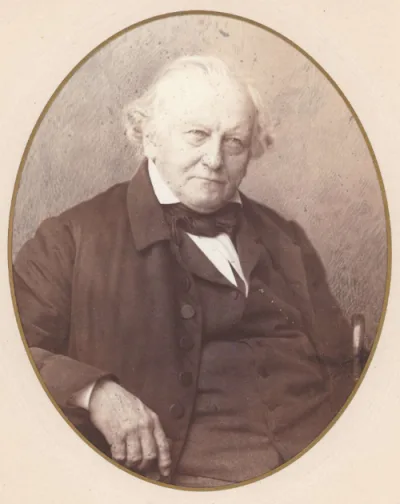
Giordano Bruno
Giordano Bruno was an Italian philosopher burned at the stake for heresy, known for his cosmological theories and esoteric writings.
Giordano Bruno was an Italian philosopher, poet, and cosmological theorist active in the late 16th century. He is recognized for expanding upon the Copernican model, proposing that stars are distant suns with their own planets, and suggesting the universe is infinite and without a center. Bruno also explored Hermeticism and adopted a mystical approach to understanding the cosmos, including the concept of cosmic pluralism – the idea that other planets might harbor life.
His unconventional views, including pantheism and metempsychosis (reincarnation), led to his trial for heresy by the Roman Inquisition. Accused of denying core Catholic doctrines, he was found guilty and executed by burning in 1600. Despite his condemnation, Bruno later achieved significant fame, particularly in the 19th and 20th centuries, where he was often celebrated as a martyr for scientific inquiry. His case remains a notable event in the history of free thought and emerging sciences.
Cosmological and Esoteric Theories
Bruno is renowned for his radical cosmological theories that challenged the prevailing geocentric view. He embraced and extended the Copernican heliocentric model, proposing that the sun was merely one of countless stars, each potentially orbited by its own planets. This concept of cosmic pluralism suggested the possibility of life existing beyond Earth. Furthermore, Bruno asserted that the universe is infinite, lacking any fixed center, a notion that profoundly departed from contemporary understanding. His philosophical approach was deeply intertwined with Hermeticism, and he employed mystical methods to investigate the universe, viewing it as a unified, infinite entity.
Heresy Trial and Execution
Bruno's philosophical and theological views led to severe conflict with the Catholic Church. He was tried for heresy by the Roman Inquisition on multiple charges, including the denial of fundamental doctrines such as the Trinity, Christ's divinity, Mary's virginity, eternal damnation, and transubstantiation. His pantheistic beliefs and his teachings on the reincarnation of the soul (metempsychosis) were particularly contentious. The Inquisition ultimately found him guilty, and he was publicly burned at the stake in Rome in 1600. His execution marked a tragic end to a life dedicated to intellectual exploration and challenging established dogma.
The Art of Memory and Intellectual Influences
Beyond his cosmological speculations, Bruno was a significant scholar of the art of memory, a collection of mnemonic techniques. He developed sophisticated mnemonic systems based on organized knowledge, contrasting with simpler logical methods popular at the time. His intellectual development was shaped by a variety of influences, including pre-Socratic philosophers like Empedocles, Neoplatonism, Renaissance Hermeticism, and ancient legends surrounding Hermes Trismegistus. Historians also note his qualitative approach to mathematics and his application of geometric concepts to language, indicating a multifaceted intellectual engagement.
Key Ideas
- Cosmic pluralism: the idea that stars are distant suns with planets, which may harbor life.
- Infinite universe: the concept that the universe is boundless and has no central point.
- Hermeticism: an esoteric tradition focused on mystical understanding of the universe.
- Art of Memory: development and practice of mnemonic techniques for knowledge organization.
Books by Giordano Bruno
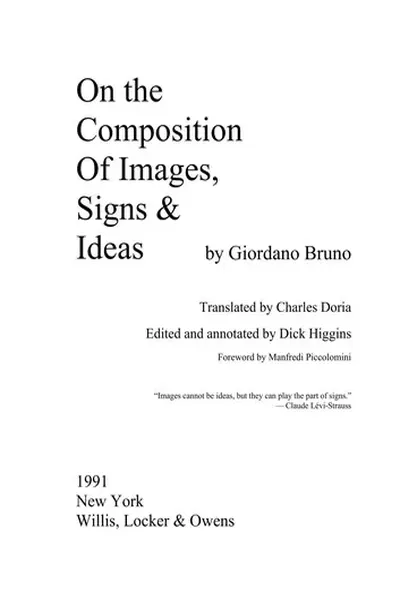
3 free public domain books · Read online or download