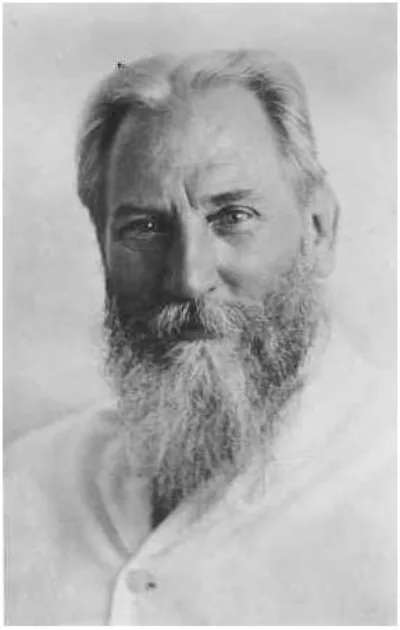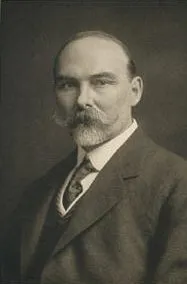
George Robert Stow Mead
George Robert Stow Mead was a historian and writer influential in Theosophy and Gnosticism, founding the Quest Society.
George Robert Stow Mead (1863-1933) was an English historian and writer known for his extensive work on religious and philosophical traditions, particularly Neoplatonism, Hermeticism, and Gnosticism. Initially a mathematics student at Cambridge, he developed a deep interest in Theosophy after reading Alfred Percy Sinnett's "Esoteric Buddhism," leading him to join Helena Blavatsky's Theosophical Society in 1884. He became Blavatsky's private secretary and held significant positions within the Society, including leadership in its Esoteric Section. Mead also served as the editor of the Theosophical magazine "Lucifer," which was later renamed "The Theosophical Review."
Mead's tenure with the Theosophical Society concluded in 1909 when he, along with approximately 700 other members, withdrew in protest of Annie Besant's decision to reinstate Charles Webster Leadbeater, who had faced accusations of misconduct. This departure, after 25 years of involvement, may also have stemmed from his growing dissatisfaction with the Society's dogmatism. Following his exit, Mead established the Quest Society in March 1909. This organization aimed for an undogmatic approach to the comparative study of religion, philosophy, and science, and it became a significant platform for disseminating esoteric thought through lectures and its publication, "The Quest: A Quarterly Review."
Early Life and Education
Born in London in 1863 to Colonel Robert Mead and Mary Stow, George Robert Stow Mead received a traditional upbringing. His academic journey began at St. John's College, Cambridge, where he initially pursued mathematics. He later shifted his focus to Classics, acquiring a strong command of Greek and Latin. Mead completed his BA in 1884 and subsequently became a public school master. He earned his MA degree in 1926, reflecting a lifelong engagement with academic pursuits.
Theosophical Society Involvement
Mead's engagement with Theosophy began during his Cambridge studies, spurred by Alfred Percy Sinnett's "Esoteric Buddhism." He joined Helena Blavatsky's Theosophical Society in 1884. His dedication led him to become Blavatsky's private secretary in 1889 and a key figure in the Esoteric Section, serving on its Inner Group. It was within this group that he met Laura Mary Cooper, who would become his wife. Mead also played a crucial role in editing "Lucifer," later "The Theosophical Review," acting as its sole editor from 1907 to 1909. His departure from the Society in 1909, alongside hundreds of other members, was a protest against the reinstatement of Charles Webster Leadbeater and potentially a result of his own frustrations with the Society's rigid doctrines after 25 years.
Founding the Quest Society and Esoteric Scholarship
In 1909, Mead founded the Quest Society, drawing 150 former Theosophical Society members and 100 new adherents. This new organization was conceived as a forum for the open, undogmatic exploration of religion, philosophy, and science. The Quest Society hosted lectures in London and, more significantly, published "The Quest: A Quarterly Review" from 1909 to 1931, featuring contributions from many notable scholars. Mead's own scholarly output focused heavily on esoteric traditions, including Neoplatonism, Hermeticism, and Gnosticism. He was the first to translate the Gnostic text "Pistis Sophia" into English, significantly contributing to the understanding and popularization of Gnosis.
Influence and Legacy
George Robert Stow Mead's intellectual contributions resonated with many prominent figures, including writers like Ezra Pound, W. B. Yeats, and Hermann Hesse. His work on Gnosticism, particularly his translation of "Pistis Sophia," was instrumental in bringing the concept of "Gnosis" to wider attention within academic and esoteric circles. Scholar Gilles Quispel has suggested Mead's influence on Carl Gustav Jung's thinking, a point further explored by subsequent academics. Mead's dedication to translating and interpreting ancient esoteric texts established him as a key figure in the study and dissemination of mystical and philosophical traditions.
Key Ideas
- Comparative study of religion, philosophy, and science
- Undogmatic approach to spiritual inquiry
- Popularization of Gnosticism and the concept of Gnosis
- Translation and interpretation of esoteric texts (Neoplatonism, Hermeticism, Gnosticism)
Books by George Robert Stow Mead
3 free public domain books · Read online or download