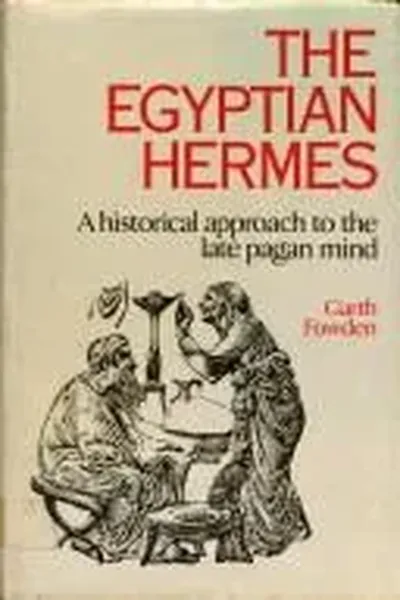
Garth Fowden
Hermeticism is an esoteric tradition based on teachings attributed to Hermes Trismegistus, influencing alchemy, astrology, and various mystical philosophies.
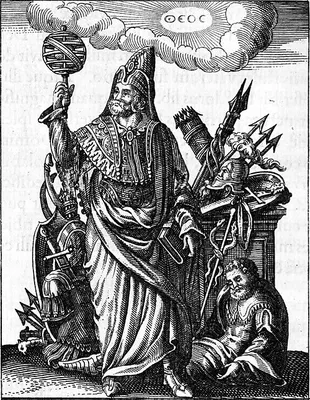
Hermeticism is a religious and philosophical tradition rooted in the teachings attributed to Hermes Trismegistus, a syncretic figure blending Greek and Egyptian deities. This system encompasses a wide array of esoteric knowledge, including alchemy, astrology, and theurgy, and has profoundly shaped mystical and occult traditions throughout history.
The core writings, known as the Hermetica, were produced over many centuries and vary significantly. Key texts like the Corpus Hermeticum and the Asclepius, dating from the early centuries CE, are central to the religio-philosophical aspects. The broader concept of Hermeticism also includes the 'technical' Hermetica, associated with alchemy and astrology, and notably influenced Renaissance Hermeticism, which drew upon translations of these texts and figures like Paracelsus.
Historically, Hermeticism has been linked to the idea of an ancient, divine wisdom. During the Renaissance, this concept evolved into the 'prisca theologia' and later the 'perennial philosophy,' suggesting a universal divine truth found across various ancient traditions. In this context, 'Hermetic' gradually became synonymous with ancient Egyptian divine knowledge, particularly concerning alchemy and magic, a view popularized by later occultists.
Origins and Early Development
Hermeticism emerged in Hellenistic Egypt, a cultural crossroads where Greek, Egyptian, and other Near Eastern traditions merged. The figure of Hermes Trismegistus, a composite of the Greek Hermes and Egyptian Thoth, became the central symbol of this syncretism, revered as a divine sage and credited with a vast body of esoteric teachings known as the Hermetica. These teachings explored theology, cosmology, and spiritual practices. Hermeticism developed concurrently with other significant spiritual and philosophical movements of Late Antiquity, such as early Christianity, Gnosticism, and Neoplatonism, often characterized by a balance between pure reason and doctrinal faith. The Corpus Hermeticum, a collection of seventeen Greek treatises, is considered a foundational text, focusing on divine oneness, soul purification, and the mind-spirit relationship, predominantly presented in dialogue form where Hermes instructs a disciple.
Core Texts and Concepts
The Hermetica collection forms the bedrock of the Hermetic tradition, with works composed over centuries, primarily between 200 BCE and 300 CE. These texts are broadly categorized into philosophical/theological Hermetica and technical Hermetica, which covers alchemy, astrology, and occult sciences. The Corpus Hermeticum is the most influential philosophical component, featuring dialogues on divine nature, the cosmos, and spiritual enlightenment. The Emerald Tablet, a concise alchemical text, is central to Western alchemy, embodying the principle of "as above, so below." The technical Hermetica provided foundational knowledge for medieval alchemists and astrologers, contributing significantly to Western esotericism. Other important texts include dialogues and fragments preserved in anthologies.
Influence and Interpretation
The rediscovery and translation of Hermetic texts during the Renaissance spurred a significant revival of Hermetic philosophy. Translations by scholars like Marsilio Ficino introduced these ideas to a wider audience, influencing early modern esotericism. Renaissance thinkers perceived Hermeticism as a source of ancient wisdom compatible with Christian doctrine and classical philosophy, aligning with the era's emphasis on human potential and knowledge. Hermeticism's core tenets, such as the divine nature of humanity and spiritual ascent, resonated with these ideals. Over time, the Hermetica have been interpreted in various ways, from philosophical and mystical perspectives to practical applications in alchemy and magic, demonstrating their adaptability and enduring influence across diverse cultural and intellectual landscapes.
Key Ideas
- Syncretic figure of Hermes Trismegistus blending Greek and Egyptian deities
- Esoteric knowledge encompassing alchemy, astrology, and theurgy
- Influence on mystical and occult traditions
- Concept of prisca theologia (ancient theology) and perennial philosophy
- Principle of 'as above, so below'
Books by Garth Fowden
3 free public domain books · Read online or download