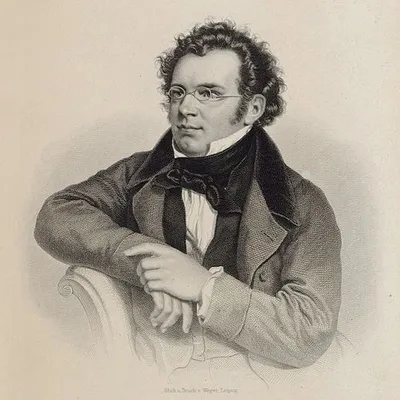
Franz Boas
Franz Boas was a German-American anthropologist, often called the father of American anthropology.
Franz Boas (1858–1942) was a pioneering German-American anthropologist. He is widely recognized as the "father of American anthropology" for his significant contributions to the field.
Boas's work profoundly shaped the discipline, emphasizing fieldwork and cultural relativism. He challenged prevailing theories of racial hierarchy and cultural evolution, advocating for a more nuanced understanding of human societies. His extensive research and teaching influenced generations of anthropologists, establishing a foundation for modern anthropological thought and practice.
Early Life and Education
Born in Minden, Prussia, in 1858, Franz Boas received his academic training in Germany. He pursued studies in mathematics and geography at the University of Heidelberg and the University of Bonn, earning his doctorate in geography from the University of Kiel in 1881. His early academic interests in geography and his doctoral research, which involved geographical knowledge of the Eskimo, laid the groundwork for his later anthropological pursuits. This period of his life was crucial in developing his scientific methodology and observational skills, which would later be applied to the study of human cultures.
Anthropological Contributions
Franz Boas is credited with revolutionizing anthropology in the United States. He championed the concept of cultural relativism, asserting that cultures should be understood on their own terms rather than judged by the standards of another. This approach stood in stark contrast to the prevailing evolutionary theories of the time, which often ranked cultures hierarchically. Boas also stressed the importance of empirical research, particularly through extensive fieldwork, to gather data on diverse cultures. His emphasis on linguistic analysis and the holistic study of societies, encompassing their history, social organization, and material culture, became foundational principles of modern anthropology.
Influence and Legacy
Throughout his career, primarily at Columbia University and the American Museum of Natural History, Boas mentored a generation of influential anthropologists, including Alfred Kroeber, Robert Lowie, and Edward Sapir. His work directly challenged prevailing notions of race and culture, advocating for the equal worth of all human societies. This intellectual stance had significant social and political implications, contributing to a more inclusive understanding of humanity. Boas's legacy endures through the methodologies he established and the critical perspectives he introduced, which continue to shape anthropological inquiry today.
Key Ideas
- Cultural relativism: Understanding cultures on their own terms.
- Emphasis on fieldwork: Importance of direct observation and data collection.
- Rejection of racial hierarchies: Challenging theories of racial superiority.
- Holistic approach: Studying cultures comprehensively, including language and history.
Books by Franz Boas
3 free public domain books · Read online or download