Ford, Ford Madox
Ford Madox Ford was an influential English novelist, critic, and editor who championed early 20th-century literature.
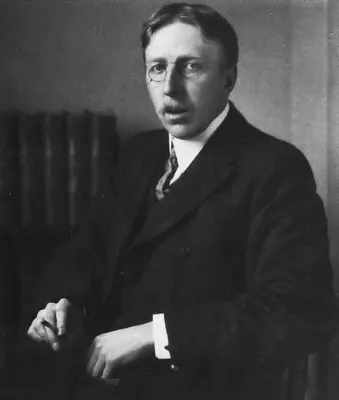
Ford Madox Ford, born Joseph Leopold Ford Hermann Madox Hueffer, was a prominent English novelist, poet, critic, and editor whose work significantly shaped early 20th-century literature. He is particularly remembered for his novels such as "The Good Soldier," the "Parade's End" tetralogy, and "The Fifth Queen" trilogy. Ford's journals, "The English Review" and "The Transatlantic Review," were crucial platforms for emerging literary talents in both England and America. He was born into a family with artistic and literary connections, including his maternal grandfather, the Pre-Raphaelite painter Ford Madox Brown. His personal life was marked by complex relationships and a name change after World War I, partly due to anti-German sentiment. Ford also served in the British Army during World War I, an experience that informed his later writing. He spent his final years teaching in the United States before passing away in France.
Literary Influence and Editorial Work
Ford Madox Ford's impact on early 20th-century literature is undeniable, largely due to his prolific writing and his crucial role as an editor. His journals, "The English Review" and "The Transatlantic Review," served as vital launching pads for many significant writers. "The English Review," founded in 1908, introduced works by established authors like Thomas Hardy and Henry James, alongside debuting talents such as Ezra Pound and D. H. Lawrence. Later, "The Transatlantic Review," established in 1924 while Ford was in Paris, fostered connections with expatriate writers like James Joyce, Ernest Hemingway, and Gertrude Stein, many of whom he published. Ford's own literary philosophy emphasized the novelist's role as a historian of their time, believing in the importance of capturing contemporary life and language.
Notable Literary Contributions
Among Ford's most celebrated literary achievements are his novels. "The Good Soldier" (1915) is frequently cited as a masterpiece of 20th-century fiction, known for its complex narrative structure and exploration of expatriate lives. The "Parade's End" tetralogy (1924–1928) draws heavily on his experiences during and after World War I, depicting the societal shifts and personal struggles of the era. His "The Fifth Queen" trilogy (1906–1908) offered historical fiction focused on historical figures. Ford also collaborated with Joseph Conrad on several novels, including "The Inheritors" and "Romance." His poem "Antwerp" received praise from T. S. Eliot for its handling of the war theme. Ford's critical insights included the memorable adage, "Open the book to page ninety-nine and read, and the quality of the whole will be revealed to you."
Personal Life and Identity
Ford's life was marked by significant personal shifts and a renaming of his identity. Born Joseph Leopold Ford Hermann Madox Hueffer, he adopted the name Ford Madox Ford after World War I. This change was influenced by several factors, including a legacy requirement, a desire to distance himself from his German heritage during a period of anti-German sentiment, and potentially to avoid legal issues related to his marital status. His personal relationships were often complex; he eloped with his first wife, Elsie Martindale, and later lived with writer Violet Hunt and then artist Stella Bowen, with whom he had a daughter. He also had a relationship with artist Janice Biala. These personal experiences, including his service in the British Army during World War I, informed his literary output.
Key Ideas
- The novelist's function is to serve as the historian of his own time.
- Belief in the importance of contemporary diction and modern subjects in poetry.
- Champion of new literature and literary experimentation.
- Critical approach to evaluating literature by examining a specific page (page 99).
Notable Quotes
“the finest French novel in the English language!”
“Tory mad about historic continuity”
“the Stupid Party.”
“the only good poem I have met with on the subject of the war”
“Open the book to page ninety-nine and read, and the quality of the whole will be revealed to you.”
Books by Ford, Ford Madox
2 free public domain books · Read online or download