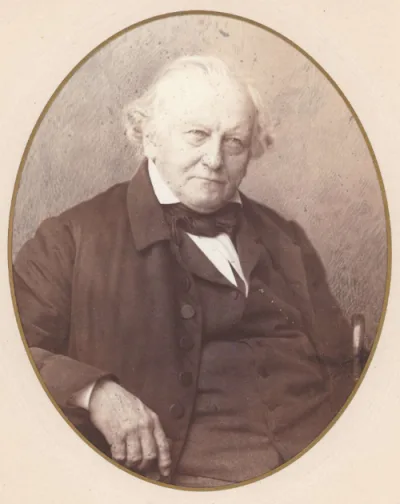
✍️ Author Biography
F. Sherwood Taylor
📅 1877 – 1967
🌍 American
📚 0 free books
⭐ Known for: Winesburg, Ohio
Sherwood Anderson was an American novelist and short story writer known for subjective works, who transitioned from business to a literary career after a breakdown.
Sherwood Anderson, born in 1876, was an American novelist and short story writer recognized for his introspective and deeply personal narratives. Despite a self-educated background, he achieved success in copywriting and business ownership in Ohio. A significant turning point occurred in 1912 when a nervous breakdown prompted him to leave his business and family to dedicate himself to writing.
He relocated to Chicago, where he embarked on his literary career, eventually marrying three more times. His seminal work, the short-story sequence "Winesburg, Ohio," is credited with launching his professional life. Throughout the 1920s, Anderson was prolific, publishing numerous collections of short stories, novels, memoirs, essays, and poetry. While his books generally sold well, his novel "Dark Laughter" (1925) was his sole bestseller, drawing inspiration from his diverse life experiences, including his time in the army, his residence in New Orleans, factory work, advertising, and his upbringing in the Midwest. "Dark Laughter" continues to be of interest for its narrative technique, influenced by James Joyce.
Early Life and Influences
Born in Camden, Ohio, Sherwood Anderson was the third of seven children. His family experienced financial instability and frequent moves, a period that later informed his semi-autobiographical novel "Tar: A Midwest Childhood." His father's struggles with alcohol and employment led the family to settle in Clyde, Ohio, where Sherwood's father worked menial jobs and his mother took in laundry. This environment encouraged young Sherwood to take on various odd jobs, earning him the nickname "Jobby." Despite leaving formal schooling at age 14, Anderson was an avid reader, borrowing books from school and local acquaintances. His early work experiences included being a newsboy, stable groom, and factory worker, which later translated into his writing. His family life was marked by hardship, including his mother's death from tuberculosis and his father's estrangement.
Chicago, Military Service, and Education
Anderson moved to Chicago in the late 1890s, initially living with his brother Karl and working in a cold-storage plant. He pursued further education through night classes at the Lewis Institute, studying subjects like "New Business Arithmetic" and attending lectures on literature, possibly encountering Walt Whitman's poetry. His time in Chicago was interrupted by the Spanish-American War, during which he enlisted and was sent to Cuba. Though his company saw no combat, the experience was a notable part of his life. After his military service, Anderson briefly returned to agricultural work before deciding to complete his education. He enrolled in Wittenberg Academy in Springfield, Ohio, graduating in 1900 and delivering a commencement speech on Zionism.
Advertising Career and Literary Beginnings
While in Springfield, Anderson worked in a boardinghouse where he met influential individuals, including a teacher who introduced him to "fine literature" and a businessman who offered him a job in advertising. This led him back to Chicago in 1900 to work as an advertising solicitor. He moved between advertising firms, writing copy for agricultural products and publishing his first professional work, "The Farmer Wears Clothes," in the trade journal "Agricultural Advertising" in 1902. He also wrote columns and essays for this magazine, developing a style of character writing that would become a hallmark of his later literary work, particularly in "Winesburg, Ohio."
Key Ideas
- Subjective and self-revealing writing
- Character sketches and character writing
- Influence of personal experience on fiction