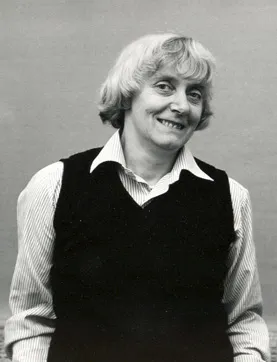
Duffy, Maureen.
Maureen Duffy is an English author known for novels, plays, and poetry, often exploring themes of identity, social issues, and mythology.
Maureen Duffy, born in 1933, is a prolific English writer whose career spans poetry, drama, novels, and non-fiction. Her work is frequently informed by her working-class background, experiences with social divisions, and a deep engagement with classical mythology and folklore. Duffy has also been a consistent activist, advocating for causes such as gay rights and animal welfare, with a particular focus on supporting authors' rights.
Her literary output often delves into themes of identity, sexuality, and social commentary. Early in her career, she explored the lives of creative individuals and the challenges of alternative lifestyles. Duffy's writing is also noted for its inclusion of diverse characters and its engagement with historical and mythological narratives, often reimagined in contemporary settings. She has received recognition for her contributions to literature, including the Benson Medal from the Royal Society of Literature.
Early Life and Influences
Born in Worthing, Sussex, in 1933, Maureen Duffy's early life was marked by significant challenges, including the departure of her father and the death of her mother when she was fifteen. These experiences, alongside her working-class origins and Irish heritage, profoundly shaped her perspective and are reflected in her autobiographical novel, 'That's How It Was.' Duffy developed an early passion for classical stories from Greece and Rome, as well as Irish and Welsh folk tales, which would later inform her literary work. Her mother instilled in her the value of education, which Duffy pursued by teaching in junior schools before earning a degree in English from King's College London in 1956.
Literary Career and Thematic Exploration
Duffy's ambition began with poetry, winning prizes and editing a magazine called 'the sixties.' Her transition to playwriting led to her joining the Royal Court Writers Group. Her first novel, 'That's How It Was,' garnered acclaim for its depiction of working-class life and its exploration of same-sex attraction. Duffy is particularly recognized for her groundbreaking novel 'The Microcosm' (1966), considered one of the first openly gay novels, which portrayed a diverse range of lesbian experiences. Her fiction frequently examines the lives of artists and explores alternative communities, often incorporating elements of mythology and classical literature, such as her novel 'Capital,' which weaves together narratives from different historical periods of London.
Activism and Recognition
Beyond her literary achievements, Maureen Duffy has been a dedicated activist. Her advocacy has centered on issues including gay rights and animal welfare, and she has consistently championed the rights and interests of authors. This commitment to literature and its creators has been formally recognized; she was awarded the Benson Medal by the Royal Society of Literature for her lifelong contributions. In 2025, she was honored as the inaugural recipient of the RSL Pioneer Prize, an award established to celebrate and support women writers over the age of sixty.
Key Ideas
- Exploration of working-class identity and social division
- Representation of diverse LGBTQ+ experiences, particularly lesbian life
- Integration of classical mythology and folklore into contemporary narratives
- Themes of artistic identity and the challenges of creative life
- Advocacy for social justice and authors' rights
Notable Quotes
“early on instilled in me that the one thing they can't take away from you is education.”
“black farce... pitched between fantasy and naturalism”
“there are dozens of ways of being queer”
“the first modern lesbian love poems, unabashed and unapologetic. These showed what was possible.”
“sympathy for the human (or animal) condition, devoid of sentimentality or condescension”
Books by Duffy, Maureen.
0 free public domain books · Read online or download