Dioscorides Pedanius of Anazarbos
Pedanius Dioscorides of Anazarbos was a Greek physician and botanist from ancient Cilicia, known for his comprehensive work on medicinal plants.
Pedanius Dioscorides of Anazarbos was a prominent Greek physician, pharmacologist, and botanist who lived during the 1st century AD. He hailed from Anazarbos, an ancient city in Cilicia (modern-day Turkey) that served as the capital of the Roman province of Cilicia Secunda. His enduring legacy stems from his monumental work, "De Materia Medica," a five-volume treatise that meticulously cataloged hundreds of medicinal plants and their uses. This seminal text became the authoritative reference on pharmacology for over 1500 years, deeply influencing the study of medicine and botany throughout the ancient world, the Middle Ages, and the Renaissance.
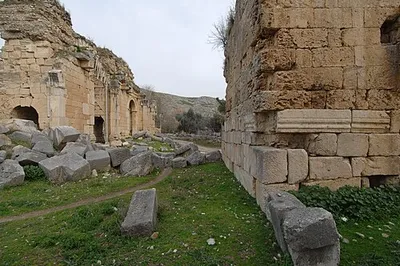
Anazarbos itself was a city with a rich and complex history, situated in Anatolia. It experienced periods of rebuilding and renaming, including being known as Justinopolis and Caesarea ad Anazarbum. The city was strategically important, playing a role in conflicts between empires and being fortified by various rulers. While Dioscorides is the most famous native, the city also produced the poet Oppian and the historian Asclepiades of Anazarba. The ruins of Anazarbos, located near the Ceyhan River, still contain remnants of its past, including fortifications, streets, and public buildings, though some structures have been lost to time and natural disasters.
Botanical and Pharmacological Contributions
Dioscorides' primary contribution to esoteric knowledge lies in his empirical study of the natural world, specifically plants with medicinal properties. His five-volume work, "De Materia Medica," is a foundational text in the history of pharmacology and botany. It describes over 600 plants, detailing their appearance, where they grow, and their therapeutic applications. This was not merely a collection of folklore but an organized effort to classify and understand the medicinal potential of the plant kingdom. While not strictly 'esoteric' in a mystical sense, his work represented a systematic attempt to harness the hidden powers of nature for healing, a pursuit that often intersected with ancient and medieval understandings of natural magic and sympathetic correspondences. His detailed descriptions and classifications provided a framework for understanding the medicinal forces inherent in the natural world, influencing generations of healers and natural philosophers.
Anazarbos: A Historical Context
Dioscorides was a native of Anazarbos, also known as Justinopolis or Caesarea ad Anazarbum, an ancient city in Cilicia, Anatolia. This city, situated on a strategic route, was the capital of the Roman province of Cilicia Secunda. Its history is marked by rebuilding efforts, particularly after earthquakes, and it served as a significant military and administrative center. The city's strategic importance meant it was involved in various conflicts and conquests, from Roman annexation to periods under Armenian and Seljuk rule, before its final destruction in the 14th century. The presence of a notable physician like Dioscorides highlights Anazarbos as a center of learning and practical knowledge in the ancient world, contributing to the intellectual landscape from which his influential work emerged.
Key Ideas
- Systematic cataloging of medicinal plants
- Detailed descriptions of plant properties and uses
- Foundational text for pharmacology and botany
Books by Dioscorides Pedanius of Anazarbos
2 free public domain books · Read online or download