Dennis Fairchild
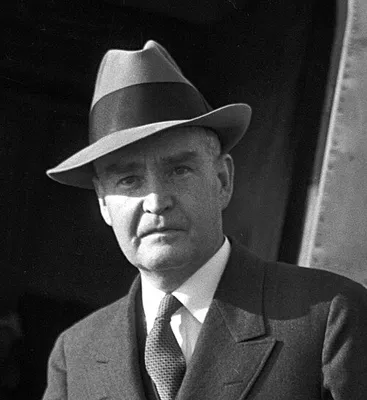
Bruce Barton was an advertising pioneer, author, and politician known for his book "The Man Nobody Knows."
Bruce Fairchild Barton (1886–1967) was a prominent American figure in advertising, literature, and politics. He co-founded the influential advertising agency Barton, Durstine & Osborn (later BBDO), which became a cornerstone of Madison Avenue. Barton was instrumental in shaping corporate branding, creating iconic figures like Betty Crocker and naming major companies such as General Motors and General Electric.
Beyond his advertising career, Barton was a prolific author. His most famous work, "The Man Nobody Knows" (1925), presented Jesus Christ as a successful businessman, a perspective that resonated with many during the Roaring Twenties and sparked considerable discussion. He also penned numerous articles and columns offering advice aligned with the American Dream, blending Christian ethics with business principles. Barton also served as a Republican politician, representing Manhattan in the U.S. House of Representatives and running unsuccessfully for the U.S. Senate.
Advertising Pioneer
Bruce Barton played a pivotal role in the development of modern advertising. In 1919, he co-established Barton, Durstine & Osborn, which later merged to become the renowned agency BBDO. Barton led BBDO for decades, significantly contributing to the establishment of Madison Avenue as a global advertising hub. His creative contributions included developing the character of Betty Crocker and naming influential corporations like General Motors and General Electric, even designing an early version of the GE logo and slogan. His work in institutional advertising helped shape the public image of American corporations.
Author and Religious Themes
As an author, Barton achieved significant success with his guidebooks and popular articles. His most celebrated book, "The Man Nobody Knows" (1925), offered a unique perspective by portraying Jesus Christ as a highly effective contemporary businessman. This interpretation, which presented Jesus as an "Executive" and "Founder of Modern Business," resonated with the era's fascination with commerce and success. Barton's writings often integrated his strong Christian faith with his admiration for American industry, advocating for values like service, self-improvement, and individualism. While some critics, like William L. Shirer, found his ideas "idiotic," the book was widely embraced and later revised to remove some of its more controversial business-focused comparisons.
Political Career and Public Image
Barton transitioned from early progressive leanings to become a dedicated Republican in 1919, serving as an advisor to numerous Republican presidential candidates. He was a vocal critic of President Franklin D. Roosevelt's New Deal policies. Barton won a special election to the U.S. House of Representatives in 1937, serving until 1941. He later ran an unsuccessful campaign for the U.S. Senate in 1940. During this period, President Roosevelt publicly targeted him, famously grouping him with other opponents as "Martin, Barton, and Fish!" Historians have debated Barton's political legacy, with some viewing him as embodying outdated middle-class values, while others, like Otis Pease, argue he represented the liberal wing of the Republican Party, advocating for broader voter appeal.
Key Ideas
- Portraying Jesus Christ as a successful modern businessman.
- Blending Christian ethics with American business and industry ideals.
- Promoting the American Dream through self-improvement and individualism.
- Advancing institutional advertising for American corporations.
Books by Dennis Fairchild
8 free public domain books · Read online or download