Dawson Church
Dawson Church is a figure associated with the historical town of Dawson City, Yukon, known for its gold rush past and cultural significance.
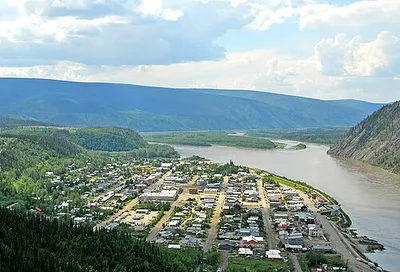
Dawson City, located in the Canadian Yukon, is a municipality with a population of 1,577 as of the 2021 census. Its history is deeply intertwined with the Klondike Gold Rush of 1896-1899, which transformed a First Nations camp into a bustling city. The town served as the Yukon's capital from 1898 until 1952. Despite significant population fluctuations due to the gold rush's end, fires, and later, the Alaska Highway bypassing the town, Dawson City has seen economic recovery through modern gold mining and tourism. The area was historically inhabited by the Hän-speaking people of the Tr’ondëk Hwëch’in, whose traditional lands included the confluence of the Klondike and Yukon Rivers. The townsite itself was founded in 1897 and named after geologist George M. Dawson. In 2023, the Dawson City townsite became part of the Tr’ondëk-Klondike UNESCO World Heritage Site, recognizing its Indigenous and European history and adaptations.
Dawson City's cultural landscape includes notable literary connections, with authors like Jack London, Pierre Berton, and Robert Service having lived and written about the area. The town has also been the site of significant historical discoveries, such as the Dawson Film Find in 1978, which uncovered over 500 nitrate film reels from the early 20th century preserved in permafrost. These films, dating from 1903 to 1929, were later moved for preservation. The town's unique attractions include Diamond Tooth Gertie's Gambling Hall and the Downtown Hotel's Sourtoe Cocktail. It also serves as a key point in the Yukon Quest International Sled Dog Race.
Historical Significance and Gold Rush Era
Dawson City's identity is inextricably linked to the Klondike Gold Rush, which began in 1896. This period saw a dramatic transformation of the area, with the population surging from a First Nations camp to an estimated 16,000–17,000 residents by 1898. The town served as the capital of the Yukon Territory from its inception in 1898 until 1952. The gold rush's rapid boom was followed by a swift decline, with the population dropping significantly by 1899. The town experienced numerous challenges, including devastating fires in 1897, 1899, and 1900, as well as flooding in subsequent decades. Its fortunes further shifted after World War II when the Alaska Highway was built to the south, leading to its replacement as territorial capital by Whitehorse in 1953.
Indigenous Heritage and Modern Recognition
Prior to European settlement, the region was the ancestral homeland of the Hän-speaking Tr’ondëk Hwëch’in people, who utilized the area for hunting and gathering. Their significant historical site, Tr'ochëk, a fishing camp at the confluence of the Klondike and Yukon Rivers, is now a National Historic Site. This area was a vital summer gathering place and a base for hunting. In recognition of its rich historical tapestry, which illustrates the transformation from Indigenous to European use and the Indigenous adaptations to colonialism, the Dawson City townsite was designated a part of the Tr’ondëk-Klondike UNESCO World Heritage Site in 2023.
Cultural and Literary Connections
Dawson City has been a muse for several notable writers. American author Jack London, known for works like 'The Call of the Wild,' lived in the Dawson area from 1897 to 1898, and his experiences heavily influenced his writing, often featuring Dawson City and the nearby ghost town of Forty Mile. Other literary figures who have called Dawson City home and drawn inspiration from it include Pierre Berton and poet Robert Service. The former childhood home of Pierre Berton is now maintained as a residency and retreat for writers, continuing the town's legacy as a place that fosters literary creation.
Unique Discoveries and Attractions
The town holds a unique place in film history due to the Dawson Film Find of 1978. During construction, a collection of over 500 nitrate film reels, dating from the silent film era (1903-1929), was unearthed, preserved by the permafrost. These historically significant films were carefully moved for safety and preservation. Dawson City also boasts distinctive attractions, such as Diamond Tooth Gertie's Gambling Hall, which offers nightly vaudeville shows, and the Downtown Hotel, famous for its peculiar Sourtoe Cocktail, which contains a real mummified human toe. The town also serves as a crucial checkpoint for the Yukon Quest International Sled Dog Race.
Books by Dawson Church
3 free public domain books · Read online or download