Dario Thomas
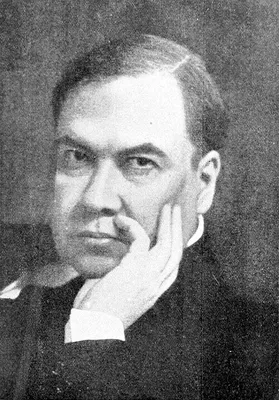
Rubén Darío, a Nicaraguan poet, spearheaded the modernist literary movement in Spanish and profoundly influenced subsequent literature.
Félix Rubén García Sarmiento, known as Rubén Darío, was a Nicaraguan poet born in 1867 who became the central figure of the literary movement called modernismo. This movement significantly shaped Spanish-language literature at the close of the 19th century and left a lasting impact throughout the 20th century. Darío's early life was marked by his parents' separation and his upbringing by his maternal aunt and uncle, whom he initially believed to be his parents. He demonstrated a remarkable precocity, learning to read at age three and writing poetry from a young age. His early works showed influences from contemporary Spanish poets and displayed a liberal, anti-clerical stance, inspired in part by Ecuadorian writer Juan Montalvo.
Darío's journalistic and poetic career began in Nicaragua, where he moved to Managua and engaged with liberal politicians who supported his European education. However, his anti-clerical writings led to a decision to study in Granada, Nicaragua, though he remained in Managua, continuing his journalistic work and developing early romantic interests. His travels to El Salvador were pivotal, where he was introduced to influential figures and began experimenting with French poetic metrics, adapting them to Spanish verse. Despite initial successes and social engagement, he faced financial difficulties and illness, prompting his return to Nicaragua before embarking on a significant journey to Chile.
Literary Innovations and Modernismo
Rubén Darío is credited with initiating and leading the Spanish-language literary movement known as modernismo. This movement, which gained prominence in the late 19th century, represented a significant departure from previous literary styles, emphasizing aestheticism, musicality, and formal experimentation. Darío's work introduced new rhythms, vocabulary, and thematic concerns, drawing inspiration from French Symbolism and Parnassianism while forging a distinct Spanish-American voice. His innovative use of meter, particularly his adaptation of the French Alexandrine line into Spanish, was a hallmark of his stylistic contributions. The publication of his work 'Azul...' in 1888 is considered a watershed moment for modernismo, establishing its foundational principles and garnering critical attention.
Early Life and Influences
Born Félix Rubén García Sarmiento in 1867, Darío's early life was shaped by his parents' tumultuous relationship and eventual separation. He was raised primarily by his maternal aunt and uncle, Félix and Bernarda, whom he considered his parents during his childhood. His paternal lineage carried the surname Darío, which he later adopted, explaining its origin as a family nickname. Darío displayed exceptional literary talent from a very young age, reportedly learning to read at three and writing poetry by thirteen. His early influences included contemporary Spanish poets, and his youthful writings often expressed liberal sentiments and critiques of the Roman Catholic Church, notably influenced by the Ecuadorian writer Juan Montalvo.
Travels and Literary Development
Darío's career involved extensive travel, which significantly influenced his literary output. After initial journalistic work in Nicaragua, he journeyed to El Salvador, where he met Francisco Gavidia, who encouraged his experimentation with French poetic forms. His time in Chile proved crucial; he secured employment with the newspaper La Época and published 'Azul...', a collection of poems and prose that became a seminal work of modernismo. Despite facing social prejudices in Chile, he formed important literary connections and continued to refine his style. His later work as a correspondent for 'La Nación' of Buenos Aires allowed him to travel further, encountering figures like Ricardo Palma and solidifying his reputation across Hispanic America.
Key Ideas
- Pioneering the Modernismo literary movement in Spanish.
- Adaptation of French poetic meters (Alexandrine) into Spanish.
- Emphasis on aestheticism, musicality, and formal innovation in poetry.
- Influence of French Symbolism and Parnassianism.
Books by Dario Thomas
1 free public domain book · Read online or download