Danu Forest
The Turanians were an ancient Iranic people of the Eurasian steppe, interacting with Aryas in Zoroastrian texts.
The Turanians, an ethnonym appearing in Zoroastrian sacred texts, are believed to have been Iranic horse nomads from the Eurasian steppe. Their precise identity remains unknown, but they are frequently depicted in interaction with the Aryas, or early Iranians. The term 'Turanian' is a later formation derived from the toponym Turan, which itself is a back-formation from the Old Iranian ethnonym Turya. While the Turyas themselves don't appear in early historical records, Turanians feature prominently in later Iranian legends, notably as adversaries to the Iranians in the Shahnameh. During medieval times, Turkic tribes settled in the region of Turan, leading to the name becoming increasingly associated with them, a connection that persists in the modern pan-nationalist movement Turanism.
Within the Avesta, the Turanians have a complex portrayal. In the Gathas, a family of Tur is mentioned positively as followers of Asha and Ahura Mazda, suggesting some prominent early figures may have belonged to the Turya people. However, other parts of the Avesta, particularly the Younger Avesta and the Frawardin Yasht, depict them in a more antagonistic role, sometimes as enemies of the Aryas, such as the Danus who are either a clan or associated with the Turyas. The Legendary Yashts contain myths of their origins, describing a division of the world by the primordial ruler Thraetaona, where Tur, ancestor of the Turyas, received the north and east, setting the stage for conflict with the Aryas descended from his brother Iraj. This conflict, often centered on the Turian King Franrasyan's attempts to conquer Iran, is presented as a core narrative in later Iranian historical traditions.
Interactions in the Avesta
The Avesta, the collection of Zoroastrian scriptures, frequently mentions the Turya people in relation to the Aryas. In the Gathas, specifically the Ushtavaiti Gatha, a family named Friia of Tur is presented as followers of Asha and Ahura Mazda, suggesting a potentially positive early association and implying prominent figures of Zoroastrianism might have hailed from this group. This contrasts with their depiction in other Avestan texts. The Frawardin Yasht, dedicated to the Fravashi (guardian spirits), mentions the Fravashi assisting the Aryas against the Turyan Danus, who are either a clan of the Turyas or closely linked to them. The Yasht also venerates faithful individuals from the Turyas who supported the Zoroastrian faith, and speaks of the faithful living in both Arya and Turya lands, indicating a degree of amicable coexistence in some contexts. The Legendary Yashts, which draw on myths and legends, present a more narrative account of the Turya people, often in conflict with the Aryas.
Mythological Origins and Later Traditions
According to the myths found in the Legendary Yashts of the Avesta, the Turya people originated when the primordial ruler Thraetaona divided the world among his sons. His eldest son, Tur, was given dominion over the north and east, becoming the progenitor of the Turyas, while his youngest son, Iraj, ancestor of the Aryas, received the south. This division set the stage for ongoing conflict between the two peoples, notably the attempts by the Turian King Franrasyan to seize the royal glory of the Iranians. These early narratives, which may have entered western Iranian traditions as early as the Achaemenid period, formed the basis for later Iranian historical accounts. In the medieval period, particularly in works like the Shahnameh, the Turanians are consistently portrayed as the primary antagonists of the Iranians. As Turkic tribes began settling in the region of Turan during medieval times, the name Turanian became increasingly identified with them.
Scholarly Identity and Linguistic Connections
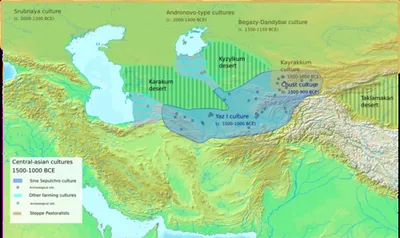
While historical records from the 1st millennium BCE do not explicitly attest to the Turanians, scholarly consensus identifies them as Iranic steppe nomads inhabiting the Eurasian steppe north of the early Iranians. This conclusion is supported by several factors. Firstly, the region of Turan was indeed populated by Iranic steppe nomads during the era of the Avesta. Secondly, personal names found in the Avesta, such as Franrasyan and Arjataspa, are linguistically Iranic. Furthermore, the myth of Thraetaona dividing the world among his sons Tur (Turanian), Sarm (Sairima), and Iraj (Arya) is interpreted as reflecting an ancient kinship between these groups. The ethnonym Sairima is linked to the Sarmatians, and the Dahi may be related to the Dahaes, further suggesting Iranic connections.
Key Ideas
- The Turya/Turanian people as an Iranic group interacting with the Aryans in Zoroastrian texts.
- The mythological origin of the Turanians from the son Tur of the primordial ruler Thraetaona.
- The antagonistic role of Turanians in later Iranian legends, particularly the Shahnameh.
- The association of the name Turan with Turkic tribes in medieval and modern times.
- Scholarly consensus identifying Turanians as Iranic steppe nomads based on linguistic and textual evidence.
Notable Quotes
“Y. 46.12, names the family Friia of Tur as a follower of Asha and Ahura Mazda.”
“Yt. 13.37–38, presents them as helping the Aryas in their fight against the Turyan Danus”
“Yt. 13.143 is dedicated to all the faithful who live in the lands of the Aryas and Turyas”
“Yt. 13.143–144 furthermore mentions the faithful who live in the lands of the Sairimas, Sainus and Dahas.”
Books by Danu Forest
2 free public domain books · Read online or download