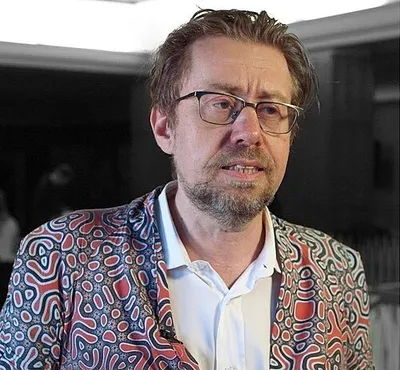
Daniel Pinchbeck
Daniel Pinchbeck is an author exploring shamanism, prophecy, and consciousness transformation, with a public admission of past sexual misconduct.
Daniel Pinchbeck is an American author and journalist known for his writings on shamanism, psychedelic experiences, and theories of consciousness transformation. His notable works include "Breaking Open the Head," which delves into shamanic practices with indigenous groups and the use of psychedelics in contemporary society, and "2012: The Return of Quetzalcoatl," which examines Mayan prophecies and theories of accelerated global consciousness. Pinchbeck co-founded the web magazine Reality Sandwich and the website Evolver.net, and edited the Evolver Editions publishing imprint. He has also contributed to various prominent publications and appeared in documentaries related to his work. In 2017, Pinchbeck publicly admitted to past behavior he described as "sexually fixated, creepy, predatory," detailing instances of insensitivity and unwanted advances.
His journalistic career began with co-founding the literary magazine Open City in the 1990s. Pinchbeck's exploration of shamanism, particularly through his experiences with the Bwiti of Gabon and the Secoya people in the Amazon, led him to question the rational materialism of modern society and consider the validity of intuitive and mystical perspectives. His work often engages with New Age ideas, including the theories of Terence McKenna regarding humanity's evolving consciousness and the significance of the 2012 Mayan calendar prediction. Pinchbeck has also explored themes of ecological crisis as a collective rite of passage in "How Soon Is Now?"
Explorations of Shamanism and Consciousness
Daniel Pinchbeck's literary work has extensively explored shamanic traditions and altered states of consciousness. In "Breaking Open the Head," he documented his experiences with indigenous groups such as the Bwiti of Gabon, who utilize iboga, and the Secoya people of the Ecuadorean Amazon, who employ ayahuasca. He also examined the use of psychedelic substances within the context of modern events like the Burning Man festival. Philosophically influenced by Rudolf Steiner, Pinchbeck developed a hypothesis suggesting that shamanic and mystical worldviews hold intrinsic validity, arguing that contemporary society, in its focus on rational materialism, has neglected crucial intuitive aspects of existence. This perspective underpins his exploration of how these ancient practices intersect with modern life and consciousness.
Prophecy, 2012, and Evolutionary Ideas
His book "2012: The Return of Quetzalcoatl" delves into Mayan and Hopi prophecies, drawing from online discussions and personal research. Pinchbeck investigated the idea, proposed by figures like Terence McKenna, that humanity is undergoing a period of accelerated global consciousness transformation, altering perceptions of time and space. The book also touches upon research into extrasensory perception, crop circle phenomena, and the work of calendar reform advocate José Argüelles. A significant element of the book is Pinchbeck's account of receiving a purported transmission from the Mesoamerican deity Quetzalcoatl during a trip to the Amazon, an experience that delayed the book's publication. This work contributed to the discourse surrounding Mayanism and New Age interpretations of the 2012 phenomenon.
Media and Activism
Beyond his books, Daniel Pinchbeck has been active in creating and participating in various media platforms. He is a co-founder of the web magazine Reality Sandwich and the website Evolver.net, aiming to foster online communities around his ideas. He also edited the Evolver Editions imprint for North Atlantic Books. Pinchbeck has been featured in documentaries such as "2012: Time for Change" and "Electronic Awakening," and appeared on television programs like "The Colbert Report." His work also extends to hosting talk shows and producing web video series, further disseminating his perspectives on culture, consciousness, and societal transformation.
Personal Background and Admissions
Daniel Pinchbeck's background includes a connection to the Beat Generation through his mother, writer Joyce Johnson, who was associated with Jack Kerouac. His father, Peter Pinchbeck, was an abstract painter. Pinchbeck identifies as "an utterly nonreligious Jew." In 2017, he publicly acknowledged engaging in behavior he described as "sexually fixated, creepy, predatory." He detailed instances of pressuring for sex, seeking sexual contact with volunteers, using substances for seduction, and being insensitive to women's needs and desires, including making unwanted advances, particularly towards younger women. This admission has been a significant aspect of his public profile.
Key Ideas
- Shamanism and psychedelic experiences offer valid insights into reality, contrasting with modern rational materialism.
- Humanity is undergoing an accelerated consciousness transformation, potentially linked to ancient prophecies and the 2012 phenomenon.
- The ecological crisis can be viewed as a collective rite of passage for humanity's consciousness.
- Modern society has lost touch with intuitive and mystical aspects of being.
Notable Quotes
“I think they're bringing out the truth about foods.”
“sexually fixated, creepy, predatory”
“pushing for sex without listening to why she was hesitant; seeking sexual contact with volunteers in an organization that I helped to start; the use of substances [drugs] as tools of seduction; being incredibly insensitive and tone-deaf to women’s wants and needs; making unwanted advances; focusing on much younger women.”
Books by Daniel Pinchbeck
3 free public domain books · Read online or download