D. T. Suzuki
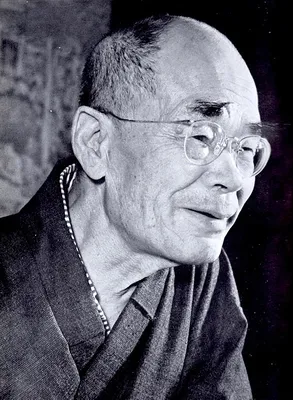
D. T. Suzuki was a Japanese scholar who introduced Zen and Mahayana Buddhism to the West through his extensive writings and lectures.
Daisetz Teitaro Suzuki, born in Japan in 1870, became a prominent essayist, philosopher, and religious scholar, specializing in Buddhism, particularly Zen and Shin traditions. He played a crucial role in popularizing these philosophies in Western countries through his extensive translations and lectures. Suzuki also held a professorship at Ōtani University and spent significant time teaching and lecturing at Western institutions. His work aimed to bridge Eastern and Western philosophical thought, making complex Buddhist concepts accessible to a broader audience.
Suzuki's early life in impoverished circumstances after his father's death led him to seek answers in religion. He pursued studies in various languages and philosophies, including Zen practice, and collaborated with scholar Paul Carus, translating Eastern spiritual literature for Western publication. He married Beatrice Erskine Lane Suzuki, a fellow theosophist, and together they worked to spread understanding of Mahayana Buddhism. Throughout his career, Suzuki received numerous honors, including a Nobel Peace Prize nomination in 1963, and left a significant legacy in the study and dissemination of Buddhist thought.
Introduction of Zen to the West
D. T. Suzuki was instrumental in introducing Zen Buddhism and broader Far Eastern philosophy to Western audiences. His prolific writings and lectures, often delivered at Western universities, served as a primary conduit for this transmission of knowledge. Suzuki's approach focused on making the core tenets of Zen accessible, highlighting its practical nature and emphasis on direct experience. He believed that Zen's focus on everyday life and its potential for enlightenment resonated with Western philosophical and mystical traditions, drawing parallels with thinkers like William James. This accessibility allowed many Westerners to engage with Buddhist thought, sometimes perceiving it as a form of 'Western esotericism disguised as Eastern mysticism.'
Academic and Scholarly Contributions
Suzuki was a distinguished scholar of Buddhism, particularly Zen and Shin, and held a professorship at Ōtani University in Japan. He also spent considerable time teaching and lecturing in the United States and Europe. His academic work included detailed examinations of Buddhist texts, such as the Biyan Lu (Blue Cliff Record) and Wumenguan (Mumonkan/Gateless Passage), exploring the teachings of classical Chinese masters. He also delved into the influence of Zen on Japanese culture and history, as seen in his work 'Zen and Japanese Culture.' Suzuki's scholarly output extended to translations, including the Lankavatara Sutra, and commentaries on Sanskrit terminology, solidifying his reputation as a leading authority on Mahayana Buddhism.
Exploration of Buddhist Practice and Philosophy
Suzuki's own Zen training, undertaken at Engaku-ji under masters like Soyen Shaku, involved rigorous mental, physical, moral, and intellectual discipline, including extended periods of meditation. He described this training as a life of humility, labor, service, prayer, and meditation. Beyond Zen, Suzuki also explored other Buddhist traditions, including Jōdo Shinshū, the faith of his mother, and expressed his view that it represented a significant development in Mahayana Buddhism. His intellectual curiosity also led him to examine Christian mysticism and Western mystics like Meister Eckhart, drawing connections between diverse spiritual traditions.
Key Ideas
- Zen's emphasis on direct experience and its practical application to everyday life.
- The historical development of Zen in China, adapting to social circumstances and integrating mundane tasks into monastic life.
- The idea of a common essence in religious sentiment, making Zen relatable to Western mystical traditions.
- The significant development of Jōdo Shinshū Buddhism in East Asia.
Notable Quotes
“Suzuki in his later years was not just a reporter of Zen, not just an expositor, but a significant contributor to the development of Zen and to its enrichment.”
Books by D. T. Suzuki
0 free public domain books · Read online or download