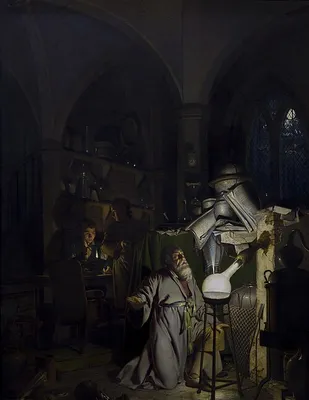
Crystal Divine Alchemy
The philosopher's stone, a legendary alchemical substance, was sought for its power to transmute metals and grant immortality.
The philosopher's stone, also known as "the tincture" or "the powder," was a mythical alchemical substance believed to possess the power to transform base metals like lead into gold or silver. Beyond material transmutation, alchemists also attributed to it the ability to create an elixir of life, promising rejuvenation and eternal life. For centuries, the pursuit of this stone, referred to as the Magnum Opus or "Great Work," represented the ultimate goal of alchemy, symbolizing perfection, divine understanding, and spiritual bliss.
The concept of the philosopher's stone has deep historical roots, with early mentions appearing in texts from antiquity. Alchemists drew inspiration from Greek philosophy, incorporating ideas like the anima mundi and the concept of a prima materia, or first matter, as the foundational element for the stone's creation. Throughout the Middle Ages and into the Renaissance, alchemists in various cultures, including Byzantine, Islamic, and European traditions, continued to theorize and experiment with transmutation, building upon ancient knowledge and developing complex theories about the nature of elements and their transformation. The stone's significance extended beyond practical application, becoming a central symbol in the mystical and philosophical underpinnings of alchemy.
Origins and Philosophical Roots
The earliest documented reference to the philosopher's stone appears in the writings of Zosimos of Panopolis around 300 AD. However, some alchemical traditions claim a much older lineage, tracing its knowledge back to Adam, who purportedly received it directly from God and passed it down through biblical patriarchs, accounting for their extended lifespans. The theoretical framework for the stone's creation is rooted in ancient Greek philosophy. Alchemists adapted concepts such as the classical elements and the anima mundi, using creation narratives from texts like Plato's Timaeus as allegorical guides for their alchemical processes. Plato's idea of the four elements originating from a common source, or prima materia, resonated deeply with alchemists, who also identified this prima materia as the essential starting material for their own Great Work.
Medieval and Renaissance Developments
During the Middle Ages, alchemists in the Byzantine and Arab empires expanded upon the work of earlier scholars, focusing intently on the concept of metal transmutation. Notable figures like Jabir ibn Hayyan (Geber) analyzed the classical elements based on qualities of hot, cold, dry, and moist, theorizing that metals were combinations of these principles. He proposed that rearranging these qualities, facilitated by a substance called xerion (Greek) or al-iksir (Arabic), could achieve transmutation. This substance, often described as a red powder, was linked to the philosopher's stone. While some, like Avicenna, expressed skepticism about the possibility of true transmutation, others, such as Albertus Magnus, reportedly witnessed or claimed to have achieved it. Later figures like Paracelsus proposed the existence of an undiscovered element, alkahest, which he equated with the philosopher's stone.
Eastern Parallels and Symbolic Meanings
Equivalent concepts to the philosopher's stone exist in Buddhist and Hindu traditions, notably the Cintamani (or Chintamani). In Mahayana Buddhism, this jewel is associated with bodhisattvas and is believed to bestow wisdom and enlightenment upon recitation of its dharani. Tibetan Buddhist traditions sometimes depict the Chintamani as a luminous pearl. In Hinduism, the stone is linked to deities like Vishnu and Ganesha and is often represented as a jewel. Texts like the Yoga Vasistha feature stories about the stone, and spiritual figures like Sant Dnyaneshwar used the metaphor of transmutation into gold to describe spiritual realization. The Shyāmantaka Mani, a mythical ruby in Hindu lore, is said to bring prosperity and daily produce gold. Across these traditions, the concept often symbolizes spiritual perfection and divine attainment.
Attributes and Nomenclature
The philosopher's stone was primarily credited with the ability to transmute base metals into gold or silver and to heal illnesses, prolonging life. Additional purported properties included creating perpetual lamps, transforming common stones into jewels, reviving dead plants, and even creating homunculi. The stone was referred to by a vast array of names and symbols, such as "white stone," "vitriol" (an acronym for "Visita Interiora Terrae Rectificando Invenies Occultum Lapidem" - "Visit the interior of the earth and by rectifying you will find the hidden stone"), "lapis noster," and numerous mythological references. In some mystical interpretations, the stone was identified with Christ. Descriptions of the stone varied, but it was often said to exist in two forms: white, for silver production, and red, for gold production. When powdered, it was described as saffron-colored or red; in solid form, it was depicted as transparent, glass-like, and between red and purple.
Key Ideas
- Transmutation of base metals into gold or silver.
- Creation of an elixir of life for rejuvenation and immortality.
- The Magnum Opus (Great Work) as the ultimate alchemical pursuit.
- Prima materia as the fundamental starting substance.
- Symbolism of perfection, divine illumination, and spiritual attainment.
Notable Quotes
“The smattering I have of the Philosophers stone, (which is something more than the perfect exaltation of gold) hath taught me a great deale of Divinity.”
“Those of the chemical craft know well that no change can be effected in the different species of substances, though they can produce the appearance of such change.”
“Unicornis est Deus, nobis petra Christus, nobis lapis angularis Jesus, nobis hominum homo Christus (One-horned is God, Christ the rock to us, Jesus the cornerstone to us, Christ the man of men to us.)”
Books by Crystal Divine Alchemy
2 free public domain books · Read online or download