Crystal Alchemy
Alchemy has deeply influenced art, literature, and music throughout history, serving as both subject matter and structural inspiration.
Alchemy's connection to the arts is extensive, appearing in literature, visual arts, and music across centuries. In literature, it manifests in alchemical texts themselves, as satire directed at alchemists, in stories using alchemical imagery, and in works that structurally mirror the alchemical process, a concept termed 'literary alchemy.' This literary tradition ranges from early allegorical texts to modern fantasy, where alchemists are often depicted in mystical roles.
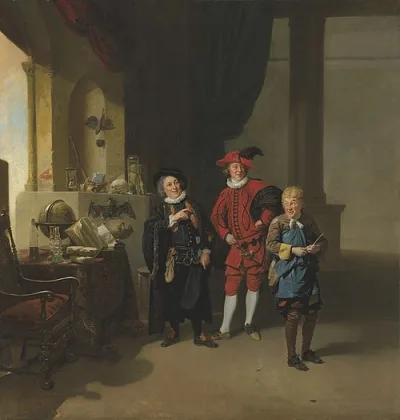
Visual artists have engaged with alchemy by creating art within alchemical culture, depicting alchemists, incorporating alchemical ideas or symbols as disguised symbolism, or creating works with structural similarities to alchemical thought. Alchemy also influenced the development of pigments and paint. In contemporary art, while alchemy may be a marginal subject, its underlying concepts continue to inspire artists, with some explicitly using alchemical symbols while others are influenced more by the abstract ideas of transformation and perfection.
Music has also been a medium for alchemical expression, with Renaissance alchemists incorporating musical ideas and some modern musicians continuing this trend. Early alchemical texts sometimes included musical notations or references, suggesting music's role in alchemical practice or contemplation. The influence spans from fugues in alchemical treatises to contemporary musical expression.
Literary Alchemy and Narrative Structure
The intersection of alchemy and literature is multifaceted, encompassing alchemical texts, satirical critiques of alchemists, narratives employing alchemical iconography, and works structurally aligned with the alchemical process, known as literary alchemy. Early alchemical writings, such as those by Zosimos of Panopolis and later works like "The Chymical Wedding of Christian Rosenkreutz," often adopted an allegorical rather than purely technical approach. Satirical works, beginning in the 14th century with authors like Chaucer and Ben Jonson, used alchemists as subjects of ridicule. More recently, particularly in fantasy fiction, alchemists are frequently portrayed in a mystical or magical capacity, blurring the lines between alchemy, magic, and witchcraft. The concept of literary alchemy extends to stories where the plot or character development mirrors the stages of the alchemical magnum opus, aiming for a form of transformation or purification akin to the alchemical goal.
Visual Arts and Alchemical Symbolism
Visual art has a long-standing dialogue with alchemy, categorized into works created within alchemical culture, genre depictions of alchemists, art that appropriates alchemical ideas as disguised symbolism, and works sharing structural affinities with alchemy. Early alchemical texts featured illuminations and emblems, with significant pictorial elements appearing in works like the Ripley Scroll and Mutus Liber. The 16th century saw the rise of allegorical art forms inspired by Horapollo, adopted by artists such as Matthäus Merian and Lucas Jennis. Genre paintings depicting alchemists became popular with artists like Pieter Brueghel the Elder. Furthermore, alchemy played a role in the evolution of pigments and paint, with alchemists and pigment manufacturers intersecting from ancient times, influencing artists' recipes with practical and theoretical alchemical concepts.
Contemporary Artistic and Philosophical Echoes
In modern and contemporary art, alchemy continues to serve as a source of inspiration, either as a subject matter or through the use of alchemical symbols. While alchemy may not be central to current visual art discourse, its underlying philosophical concepts remain influential. Artists like Brett Whiteley and Krzysztof Gliszczynski openly incorporate alchemical symbols, while the influence on renowned figures such as Jackson Pollock, Marcel Duchamp, and Salvador Dalí may be more conceptual, relating to the idea of transformation rather than direct alchemical practice. This influence extends to various contemporary artists and their works, exploring themes of perfection, transformation, and hidden processes that resonate with alchemical principles.
Music and Sonic Alchemy
Alchemy's relationship with music has historical roots, with some Renaissance alchemists expressing their ideas through sonic means. This connection persists today, with musicians drawing inspiration from alchemical concepts. Heinrich Khunrath's "Amphitheatrum Sapientiae Aeternae" included references to music's ability to dispel negative influences, suggesting its role in alchemical practice. A prominent example is Michael Maier's 17th-century work, "Atalanta Fugiens," which featured fifty fugues designed to be studied alongside its alchemical content. This demonstrates music not just as a thematic element but as an integral part of alchemical contemplation and expression.
Key Ideas
- Literary alchemy: narratives structured or themed around alchemical processes.
- Disguised symbolism: appropriation of alchemical ideas or motifs in art.
- Structural affinities: artworks sharing conceptual similarities with alchemy without direct reference.
- Transformation and purification: central themes in both alchemical practice and artistic representation.
Books by Crystal Alchemy
2 free public domain books · Read online or download