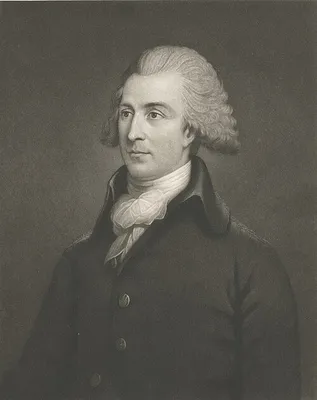
COXE, Francis.
Tench Coxe was a multifaceted American figure, serving as a political economist, delegate, and advocate for early U.S. industrialization.
Tench Coxe, born in Philadelphia in 1755, was a prominent figure in early American economic and political life. Initially trained for commerce, he became involved in politics after the Revolutionary War. Coxe's allegiances were questioned by some Patriots due to his activities during the British occupation of Philadelphia, though he was later listed in militia records and expressed strong views on the rights of the militia. He transitioned through various political affiliations, including Whig and Federalist, contributing significantly to policy discussions.
As a Federalist, Coxe collaborated with Alexander Hamilton on the "Report on Manufactures" and served as Assistant Secretary of the Treasury. He was a strong proponent of industrial development and championed tariffs to protect nascent American industries. Later, aligning with the Democratic-Republicans, he continued to be active in political discourse and held positions such as Purveyor of Public Supplies. Coxe's writings covered a range of economic and political topics, and he is recognized for his foundational role in the American cotton industry.
Early Life and Business Career
Born in Philadelphia in 1755, Tench Coxe hailed from a family with notable standing in American affairs, including a great-grandfather who was governor of West Jersey. Though he initially intended to study law, his father directed him into the merchant trade. Coxe became a partner in the firm Coxe & Furman at the young age of twenty-one, establishing himself in business.
Political Career and Shifting Allegiances
Coxe's political journey was marked by evolving affiliations and significant contributions. He served as a delegate to the Annapolis Convention and the Continental Congress. Initially a Whig, he later became a Federalist, co-authoring the "Report on Manufactures" with Alexander Hamilton and serving in the Treasury Department. His political stance later shifted to Democratic-Republican, leading to criticism from Federalists. He held positions appointed by Presidents Washington and Jefferson, demonstrating his continued relevance in national affairs.
Economic Advocacy and Industrialization
A fervent advocate for American industrial growth, Coxe played a crucial role in shaping early economic policy. He was instrumental in promoting industrialization and supported protective tariffs for the nation's developing industries. His work extended to advocating for naval power and the encouragement of arts and manufactures. Coxe is particularly noted for his pioneering efforts in the American cotton industry, including urging Southern cultivation and attempting to introduce advanced machinery.
Writings and Public Discourse
Coxe was a prolific writer on political and economic subjects. His publications addressed the foundations of a commercial system for the United States, critiques of British trade policies, and defenses of the U.S. Constitution. He also wrote on topics such as naval power, arts and manufactures, and the cotton trade. His writings often reflected his advocacy for industrial protectionism and his views on the rights and role of the militia.
Key Ideas
- Advocacy for protective tariffs to foster domestic industries.
- Promotion of industrialization and manufacturing in the early United States.
- Pioneering efforts in the development of the American cotton industry.
- Belief in the right of the people to bear arms, as represented by the militia.
Notable Quotes
“Who are the militia? Are they not ourselves? Is it feared, then, that we shall turn our arms each man against his own bosom. Congress have no power to disarm the militia. Their swords, and every other terrible implement of the soldier, are the birthright of an American… The unlimited power of the sword is not in the hands of either the federal or state governments, but, where I trust in God it will ever remain, in the hands of the people.”
Books by COXE, Francis.
0 free public domain books · Read online or download