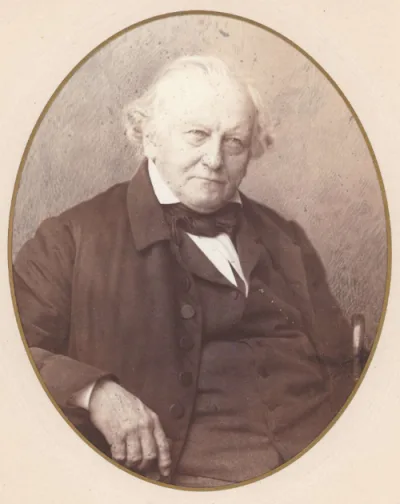
![Cory, I. P. [Cory, Isaac P. (Isaac Preston)]](/img/authors/cory-i-p-cory-isaac-p-isaac-preston.webp)
Cory, I. P. [Cory, Isaac P. (Isaac Preston)]
The Chaldean Oracles are ancient philosophical texts influential in Neoplatonism, surviving as fragments.
The Chaldean Oracles are a collection of spiritual and philosophical texts that were highly regarded by Neoplatonist philosophers between the 3rd and 6th centuries CE. Although the original writings are no longer extant, their content is preserved through quotations and commentaries by later thinkers. It is believed they originated as a single mystery poem, possibly compiled by Julian the Chaldean or his son, Julian the Theurgist, in the 2nd century CE.
These texts exhibit similarities to Gnostic teachings, describing a supreme divine intellect, a mediating World-Soul, and the creation of the material world. They outline a metaphysical system that includes a transcendent Father, an Intellect (Demiurge), and Hecate as a mediator between the divine and material realms. The Oracles advocate for spiritual purification through asceticism and ritual to liberate the soul from material existence and ascend to a state of pure intellect.
The origins of the Oracles are uncertain, with "Chaldean" possibly referring to Babylonian or a general term for practitioners of mystic arts. The texts were translated into English in the 17th and 18th centuries, gaining popularity and influencing esoteric groups like the Order of the Golden Dawn in the 19th century. Modern scholarship reconstructs the Oracles from surviving fragments, acknowledging that these are not complete originals but rather compilations of quoted material.
Origins and Authorship
The precise origins of the Chaldean Oracles remain obscure, though they are typically attributed to Julian the Theurgist and/or his father, Julian the Chaldean. The term "Chaldean" itself is a classical Greek designation for Babylonia, and it is unclear if Julian the Chaldean had Eastern heritage or if "Chaldean" had evolved to signify a practitioner of arcane arts by his era. Julian the Theurgist reportedly claimed to have invoked divine intervention, causing a rainstorm during a Roman military campaign. The composition of the Oracles is thought to have occurred during a trance state, suggesting divine inspiration. No original manuscripts exist; our understanding is derived from fragments and later commentaries by Neoplatonist and Christian scholars. These fragments were compiled and arranged by scholars like Wilhelm Kroll and Hans Lewy, with modern editions by Edouard des Places and Ruth Majercik focusing on the surviving excerpts rather than reconstructing the original poem.
Metaphysical Framework
The metaphysical structure of the Chaldean Oracles commences with an ultimate, transcendent deity referred to as the Father. This Father's power gives rise to Intellect, which contemplates pure Forms and subsequently creates and governs the material cosmos as the Demiurge. A distinct entity, Hecate, personifies the boundary between the intellectual and material realms, acting as a conduit for divine influence. Emanating from Hecate is the World-Soul, which in turn generates Nature, the ruler of the sub-lunar sphere. Fate, derived from Nature, can ensnare the human soul. The Oracles propose that liberation and salvation are achieved through a life of austerity and contemplation, enabling the soul to ascend through cosmic spheres, shedding material attachments to attain pure intellect.
Influence and Significance
The Chaldean Oracles were considered a foundational text for many subsequent Neoplatonist philosophers, often placed in importance nearly on par with Plato's Timaeus, leading some scholars to dub them the "Bible of the Neoplatonists." Hellenistic civilization fostered a synthesis of Greek thought with Babylonian, Persian, Israelite, and Egyptian traditions, including mystery cults and wisdom lore. The Oracles represent an Alexandrian effort to philosophically interpret and unify the ancient wisdom attributed to these cultures, particularly Chaldea. They were highly esteemed throughout Late Antiquity and by later Neoplatonists, though figures like Augustine of Hippo sometimes disputed their doctrines. Influences from Zoroastrianism have also been noted within some of their teachings.
Key Ideas
- Transcendent Father as the ultimate deity.
- Intellect (Demiurge) as creator and governor of the cosmos.
- Hecate as a mediating divine power.
- World-Soul and Nature as emanations.
- The goal of spiritual purification and ascent through contemplation and austerity.
- Liberation of the soul from material existence and Fate.
Books by Cory, I. P. [Cory, Isaac P. (Isaac Preston)]
0 free public domain books · Read online or download
![The ancient fragments; containing what remains of the writings of Sanchoniatho, Berossus, Abydenus, Megasthenes, and Manetho. Also the Hermetic Creed, the Old Chronicle, the Laterculus of Eratosthenes, the Tyrian Annals, the Oracles of Zoroaster […]](/img/thumb/the-ancient-fragments-containing-what-remains-of-the-writings-of-sanchoniatho-berossus-abydenus-megasthenes-and-manetho-also-the-hermetic-creed-the-old-chronicle-the-laterculus-of-eratosthenes-the-tyr.webp)