Coptic Gnostic Library Project
The Nag Hammadi library, discovered in Egypt in 1945, comprises early Christian and Gnostic texts, primarily in Coptic, offering insights into ancient mystical traditions.
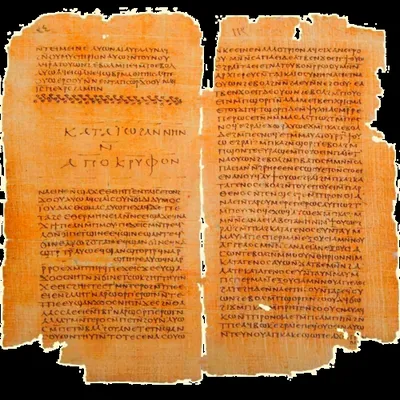
Discovered near Nag Hammadi, Egypt, in 1945, the Nag Hammadi library is a collection of twelve leather-bound papyrus codices containing over fifty Gnostic texts, alongside works from the Corpus Hermeticum and a part of Plato's Republic. These texts, written in Coptic, date from the 3rd and 4th centuries, though some, like the Gospel of Thomas, are believed to have originated earlier. The discovery was made by a local farmer, Muhammad al-Samman, and the manuscripts were eventually housed in the Coptic Museum in Cairo. Scholars suggest the collection may have belonged to a Pachomian monastery and was possibly hidden due to religious condemnations.
The library's contents, including the complete text of the Gospel of Thomas, have been instrumental in understanding early Christian and Gnostic thought. The process of translation and publication was complex, spanning several decades and involving international collaboration. Key figures like James M. Robinson played a significant role in organizing the scholarly effort to make these texts accessible. The availability of these codices in various languages has profoundly impacted the study of ancient religious and philosophical traditions, though debates continue regarding the precise classification of all the texts as Gnostic.
Discovery and Provenance
The Nag Hammadi library, consisting of twelve papyrus codices and fragments of a thirteenth, was unearthed in late 1945 by an Egyptian farmer, Muhammad al-Samman, near Nag Hammadi in Upper Egypt. These texts, written in Coptic, were found buried in a sealed jar. The collection includes a significant number of Gnostic treatises, three works from the Corpus Hermeticum, and a portion of Plato's Republic. Scholars have proposed theories, such as the one expanded by Lundhaug & Jenott and strengthened by Linjamaa, suggesting the codices may have originated from a nearby Pachomian monastery, potentially buried after Saint Athanasius's condemnation of non-canonical writings in 367 AD. Linjamaa's research posits that a monastic intellectual elite used these texts as part of a larger Christian library. The manuscripts themselves date from the 3rd and 4th centuries, with the contents written in Coptic.
Contents and Significance
The Nag Hammadi codices contain a rich collection of early Christian and Gnostic writings, with the Gospel of Thomas being one of the most well-known works, as the codices preserve its only complete text. Fragments of sayings attributed to Jesus, found in the Gospel of Thomas, were also recognized in earlier manuscripts from Oxyrhynchus. While most interpreters date the composition of the Gospel of Thomas to the second century, it is based on even earlier sources. The library's contents provide invaluable primary source material for the study of Gnosticism and early Christian diversity. The texts were eventually transferred to the Coptic Museum in Cairo, Egypt, becoming national property after the 1952 revolution.
Publication and Scholarly Access
Following their discovery, the Nag Hammadi texts underwent a lengthy process of translation and publication. The Jung Codex, a significant part of the collection, was acquired by the Carl Gustav Jung Institute in Zurich in 1951 and eventually reached the Coptic Museum in 1975. A major collaborative effort, spearheaded by James M. Robinson and involving international scholars, led to the publication of a bilingual English edition. Facsimile editions were released between 1972 and 1977, making the texts available for scholarly study. The first English translation, 'The Nag Hammadi Library in English,' was published in 1977, with revised editions following. Other notable translations include Bentley Layton's 'The Gnostic Scriptures' (1987). The gradual dispersal of these texts into the public domain has been crucial for the advancement of research into ancient esoteric and religious thought.
Key Ideas
- Gnosticism: A diverse set of religious beliefs and systems that emerged in the early centuries CE, emphasizing direct knowledge (gnosis) for salvation.
- Coptic Texts: Writings in the Coptic language, the final stage of the Egyptian language, used by early Egyptian Christians.
- Pachomian Monastery: A type of early Christian monastic community founded by Pachomius.
Books by Coptic Gnostic Library Project
3 free public domain books · Read online or download