Clare Crellin
Vikings were Scandinavian seafarers who explored, raided, and settled across Europe and beyond, leaving a lasting cultural and historical impact.
Originating from Scandinavia (modern Denmark, Norway, and Sweden), the Vikings were a seafaring people active from the late 8th to the late 11th centuries. Their extensive voyages took them across Europe, into the Mediterranean, North Africa, the Middle East, and even to North America. They engaged in raiding, piracy, trading, and settlement, significantly influencing the early medieval history of northern and eastern Europe.
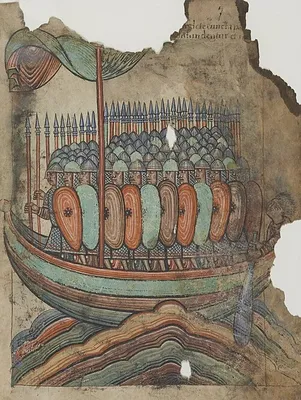
These Norsemen were skilled sailors, navigating in their distinctive longships. They established settlements and governments in various regions, including the British Isles, Iceland, Greenland, and along major Eastern European trade routes, where they were known as Varangians. From these Norse colonies emerged groups like the Normans, Rus, and Icelanders. The Vikings spread Norse culture while also bringing foreign influences and people back to Scandinavia, impacting its genetic and historical development. During this era, their homelands consolidated into the kingdoms of Denmark, Norway, and Sweden.
Norse Culture and Beliefs
The Vikings spoke Old Norse and utilized runic inscriptions. For the majority of the Viking Age, they adhered to the Old Norse religion, gradually converting to Christianity between the 8th and 12th centuries. They possessed their own distinct legal systems, artistic styles, and architectural practices. While often popularly depicted as solely warriors, most Vikings were also farmers, fishermen, craftsmen, and traders. Archaeological and historical evidence reveals a complex civilization that often contrasts with romanticized or stereotypical modern conceptions, such as the myth of horned helmets, which originated in the 19th century.
Etymology and Perception of 'Viking'
The term 'Viking' has been subject to academic debate regarding its origins. Theories suggest roots in Old English and Old Frisian terms related to settlement, or from the Old Norse word 'vík' meaning 'creek'. Another theory links it to Old Norse 'vika' (sea mile) and Proto-Germanic '*wîkan' (to recede), supported by linguistic evidence and nautical usage. In the Middle Ages, 'viking' primarily referred to Scandinavian pirates or raiders, and the term was not initially used to denote nationality. 'Wicing' appeared in English sources around 700 AD, predating the first known Viking raid in England. The modern usage of 'Viking', revived in the late 18th century, acquired romanticized connotations of 'barbarian warrior' or 'noble savage', evolving throughout the 19th and 20th centuries to encompass broader cultural and historical references.
Exploration, Trade, and Settlements
The Viking Age, roughly from 793 to 1066, saw Norsemen explore vast territories by sea and river for trade, colonization, and conquest. They established significant settlements and trade routes across Europe, reaching as far south as the Caspian Sea and Baghdad. Important trading centers included Birka, Hedeby, and Kiev. Their navigators opened routes to new lands, leading to the founding of settlements in the Faroe Islands, Iceland, Greenland, and a brief settlement in Newfoundland. Scandinavians also served as mercenaries in the Byzantine Empire, forming the Varangian Guard, and were recruited by other European courts. This period of expansion and interaction led to the formation of distinct Norse colonies and influenced the development of future states.
Books by Clare Crellin
1 free public domain book · Read online or download