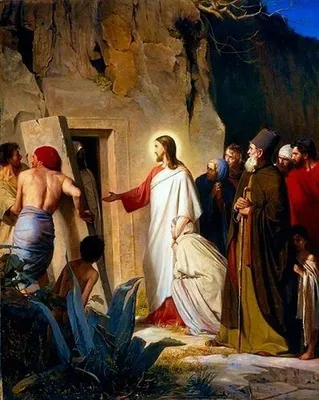
Christian Rosencreutz
Christian Rosenkreuz is the legendary founder of the Rosicrucian Order, introduced in early 17th-century manifestos.
Christian Rosenkreuz is presented as the legendary founder of the Rosicrucian Order, whose existence is primarily known through three manifestos published in the early 17th century: Fama Fraternitatis (1614), Confessio Fraternitatis (1615), and The Chymical Wedding of Christian Rosenkreutz (1616). The Fama Fraternitatis narrative describes him as a medieval German aristocrat who, after an early monastic education and extensive travels in search of esoteric wisdom across the Holy Land, North Africa, and Spain, founded the Fraternity of the Rose Cross. This narrative includes details of his discovery in a perfectly preserved state within a specially constructed tomb, described as a compendium of the universe.
Historically, there is no verifiable evidence of Christian Rosenkreuz as a real person, with support for his existence largely confined to myth and legend. Various interpretations exist, with some scholars suggesting he may be an allegorical figure or a pseudonym for another historical individual, such as Francis Bacon. Occultists have also linked him to figures like the Count of St. Germain and proposed he was depicted in certain artworks. The details within the manifestos, including dates and events, are often considered symbolic or allegorical rather than literal accounts by students of occultism.
The Rosicrucian Manifestos and Narrative
The figure of Christian Rosenkreuz is introduced to the world through a series of influential texts published in the early 17th century. The Fama Fraternitatis, appearing in 1614, first presented "Frater C.R.C." as the founder. This was followed by the Confessio Fraternitatis in 1615 and The Chymical Wedding of Christian Rosenkreutz in 1616. The Fama narrative portrays Rosenkreuz as a German nobleman who, after being orphaned and educated in a monastery, embarked on extensive journeys in the 15th century. During these travels, he is said to have acquired profound esoteric knowledge from various sages in the East and North Africa. Upon his return, he established the Rosicrucian Brotherhood, a group of eight members, and oversaw the construction of a spiritual temple. The narrative further details the posthumous discovery of his tomb, described as a heptagonal chamber containing his perfectly preserved body and a wealth of esoteric texts and instruments, symbolizing a compendium of universal knowledge.
Historicity and Interpretations
The historical existence of Christian Rosenkreuz remains unverified, with accounts primarily rooted in legend and allegory. While some writers, like Maurice Magre, treated him as a real historical figure, their claims lack corroborating sources and are often considered fictional narratives. Magre's account, for instance, posits a lineage connected to Cathar beliefs, though it appears to borrow and adapt details from the Fama. Modern scholarship generally views Rosenkreuz as a symbolic or allegorical construct, possibly representing an ideal adept or a collective esoteric tradition. Some esoteric traditions and individuals have proposed alternative identifications, suggesting Rosenkreuz might be a pseudonym for figures like Francis Bacon, or that he reappeared in later incarnations such as the Count of St. Germain. Rudolf Steiner famously identified a Rembrandt painting as a potential portrait of Rosenkreuz in a 17th-century manifestation.
Symbolism and Esoteric Significance
The narratives surrounding Christian Rosenkreuz are rich with symbolism, inviting esoteric interpretation. The details within the manifestos, such as specific dates and the description of his tomb, are often understood not as literal historical facts but as allegorical representations. The tomb's description, with its heptagonal chamber and symbolic inscriptions like "Visita Interiora Terrae Rectificando Invenies Occultum Lapidem" (Visit the interior of the Earth; by rectification thou shalt find the hidden stone), aligns with alchemical principles and the pursuit of hidden knowledge. The pilgrimage described in the Fama can be seen as mirroring the stages of the Great Work in alchemy, while the tomb's discovery might symbolize cyclical renewal or the unveiling of profound truths. The manifestos themselves acknowledge the use of parables and secrets, suggesting a need for initiated understanding of their teachings.
Key Ideas
- Allegorical founder of the Rosicrucian Order
- Quest for esoteric wisdom through travel and study
- Symbolic representation of alchemical and cosmic principles
- The Rosicrucian Brotherhood and its secret teachings
Notable Quotes
“Jesus mihi omnia, nequaquam vacuum, libertas evangelii, dei gloria intacta, legis jugum”
“We speak unto you by parables, but would willingly bring you to the right, simple, easy and ingenuous exposition, understanding, declaration, and knowledge of all secrets.”
Books by Christian Rosencreutz
2 free public domain books · Read online or download