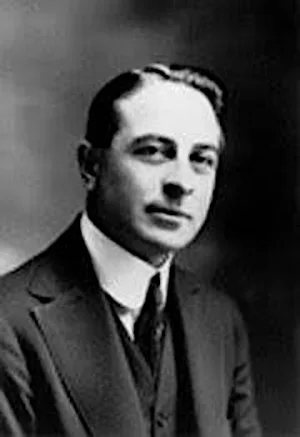
Christian D. Larson was a foundational American New Thought author and teacher whose writings influenced many.
Christian Daa Larson (1874–1954) was a significant figure in the American New Thought movement, recognized by Horatio Dresser as one of its founders. A prolific writer, his books on metaphysical and New Thought topics continue to be published over a century later. His work significantly impacted subsequent New Thought leaders, notably Ernest Holmes, the founder of Religious Science.
Born in Iowa to Norwegian parents, Larson pursued education at Iowa State College and Meadville Theological School. His intellectual journey led him to embrace the teachings of Mental Science figures like Helen Wilmans and Henry Wood in his early adulthood. He established the New Thought Temple in Cincinnati in 1901 and launched the influential periodical "Eternal Progress," which achieved a circulation exceeding 250,000. During this period, he also began his extensive career as an author.
Later relocating to Los Angeles, Larson became an honorary president of the International New Thought Alliance and was an active lecturer in the 1920s and 1930s. He was associated with other prominent figures of the era, including William Walker Atkinson and Annie Rix Militz. Larson's influence was so profound that Ernest Holmes, early in his career, shifted his focus from Christian Science to Larson's teachings, even undertaking a correspondence course with him. Larson also contributed to "Science of Mind Magazine" and taught at Ernest Holmes' Institute of Religious Science.
Foundations of New Thought
Christian D. Larson emerged as a central figure in the New Thought movement, with Horatio Dresser identifying him as a foundational contributor. His early engagement with Mental Science, influenced by thinkers like Helen Wilmans and Henry Wood, shaped his philosophical outlook. Larson's establishment of the New Thought Temple in Cincinnati and his publication of "Eternal Progress" were instrumental in disseminating these ideas. The periodical's substantial circulation demonstrated the widespread appeal of New Thought principles during that era. His prolific writing career, which began concurrently with his publishing endeavors, further solidified his role as a leading teacher and proponent of these metaphysical concepts.
Literary Influence and Legacy
Larson's literary output left a lasting mark on the New Thought landscape. His books, many of which are still in print, served as significant influences for later generations of writers and leaders in the movement. Ernest Holmes, a key figure in establishing Religious Science, found Larson's writings so compelling that they led him to re-evaluate his own spiritual studies. Holmes and his brother Fenwicke even participated in a correspondence course offered by Larson. Fenwicke Holmes' biography highlights the profound impact of Larson's work, specifically mentioning "The Ideal Made Real" as being as influential to Ernest as other seminal texts of the period. Larson's continued involvement with "Science of Mind Magazine" and his teaching role at the Institute of Religious Science underscore his enduring connection to the intellectual and practical application of New Thought.
Personal Life and Public Recognition
Born in Iowa of Norwegian heritage, Christian Larson pursued higher education at Iowa State College and Meadville Theological School. His personal life included marriage to Georgea L DuBois in 1918, with whom he had two children, Louise and Christian Jr. The family resided in Beverly Hills for many years. Beyond his writing and teaching, Larson was actively involved in the broader New Thought community. He held the position of honorary president for the International New Thought Alliance and was a recognized lecturer throughout the 1920s and 1930s. He also engaged with contemporaries such as William Walker Atkinson and Annie Rix Militz, participating in a vibrant intellectual circle. Notably, a poem by Larson published in 1912 eventually became the "Optimist Creed," adopted by Optimist International in 1922.
Books by
0 free public domain books · Read online or download