Christian Bernard
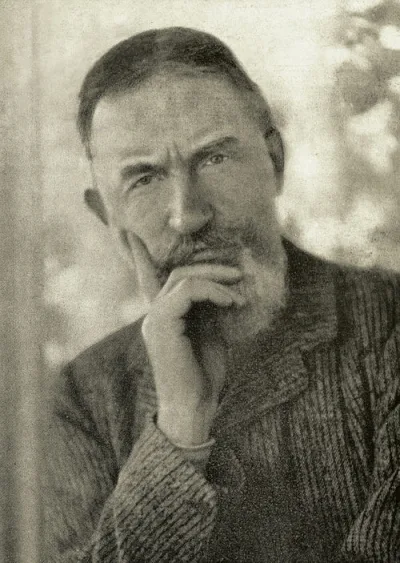
George Bernard Shaw was an influential Irish playwright, critic, and activist known for his social commentary and philosophical ideas.
George Bernard Shaw, an Irish playwright, critic, and political activist, significantly impacted Western theatre and culture from the late 19th century onwards. Born in Dublin, he moved to London and, after a period of self-education and early struggles, became a respected voice in cultural and political discourse. Shaw authored over sixty plays, including renowned works like 'Man and Superman' and 'Pygmalion,' which often served as vehicles for his progressive social, political, and religious ideas. He was awarded the Nobel Prize in Literature in 1925.
Shaw's views were frequently controversial; he advocated for eugenics and alphabet reform, while opposing vaccination and organized religion. His political stances, including criticism of both sides in World War I and later admiration for dictators like Mussolini and Stalin, often courted unpopularity but did not diminish his literary standing. He continued writing prolifically throughout his life, receiving an Academy Award for the screenplay of 'Pygmalion.' Despite refusing state honors, his legacy endures, with his ideas and expression style becoming known as 'Shavian.'
Early Life and Education
Born in Dublin to a family of English descent, George Bernard Shaw was the youngest child of George Carr Shaw, an ineffectual alcoholic, and Lucinda Elizabeth (Bessie) Shaw. His mother developed a close relationship with George John Lee, a musician, leading Shaw to speculate about Lee being his biological father. Shaw found solace in the abundant music in his household and was deeply influenced by Lee's musical knowledge and the literature he encountered through Lee's students. He attended several schools, which he disliked, leading to a disillusionment with formal education. After leaving school, he worked as a clerk in Dublin, later dropping his first name to be known as Bernard Shaw. His mother and sisters later moved to London with Lee, and Shaw followed, never to live in Ireland again.
Literary Beginnings and Political Awakening
Upon moving to London, Shaw initially avoided clerical work, living with his mother and undertaking some ghostwriting for George John Lee. He spent considerable time at the British Museum Reading Room, reading and writing extensively. His early attempts at drama and novels, including 'Immaturity,' were largely unsuccessful with publishers at the time. He briefly worked for the Edison Telephone Company before committing to a full-time writing career, though he initially subsisted on his mother's support. During this period, he became a vegetarian and developed facial scars from smallpox. His engagement with the Zetetical Society led him to meet Sidney Webb, initiating a lifelong friendship and intellectual partnership. A pivotal moment was attending a lecture by Henry George, which sparked his interest in economics and led him to read Karl Marx, profoundly influencing his political and socialist views.
Career as Playwright and Critic
Shaw became a respected theatre and music critic by the mid-1880s. Influenced by Henrik Ibsen, he aimed to introduce a new realism into English-language drama, using his plays to convey his political, social, and religious ideas. His first major theatrical success was 'Arms and the Man' in 1894. By the early twentieth century, he had established his reputation with plays like 'Major Barbara' and 'Caesar and Cleopatra.' His prolific output continued through the inter-war years with ambitious works that met with varying success. He also contributed to film, writing the screenplay for 'Pygmalion,' for which he won an Academy Award in 1938. His writings and public statements often challenged conventional thinking, making him a prominent and sometimes controversial figure.
Key Ideas
- Use of drama as a vehicle for political, social, and religious ideas
- Advocacy for eugenics and alphabet reform
- Opposition to vaccination and organised religion
- Critique of societal norms and institutions
Books by Christian Bernard
1 free public domain book · Read online or download