Chinmayananda Swami
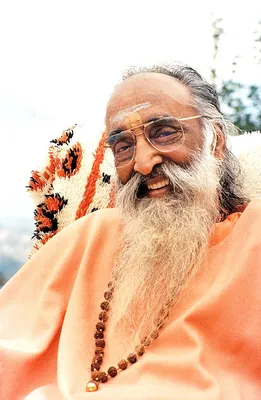
Swami Chinmayananda was a Hindu spiritual leader who founded Chinmaya Mission to spread Vedanta teachings globally.
Swami Chinmayananda, born Balakrishna Menon, was a significant Hindu spiritual leader and teacher. He established the Chinmaya Mission in 1953, an international organization dedicated to disseminating the knowledge of Advaita Vedanta and other ancient Hindu scriptures. Through his extensive lectures and publications, delivered primarily in English, he initiated a global Hindu spiritual and cultural revival. His teachings reached a wide audience, including the English-educated Indian middle class and the Indian diaspora.
Before his spiritual career, Swami Chinmayananda was a journalist and was involved in the Indian independence movement. He studied Vedanta under the guidance of Swami Sivananda and Tapovan Maharaj, eventually taking vows of renunciation. He began his public spiritual teachings with lecture series, known as jñāna yajñas, in 1951. His approach focused on making profound philosophical concepts accessible, leading to the establishment of numerous centers worldwide that engage in educational, spiritual, and charitable activities.
Founding of Chinmaya Mission and Global Outreach
In 1953, Swami Chinmayananda formally established the Chinmaya Mission, an organization aimed at propagating the wisdom of Advaita Vedanta, the Bhagavad Gita, and the Upanishads. His approach was to present these ancient Hindu texts and values through lectures and publications in English, making them accessible to a broad, modern audience, particularly the English-educated Indian population and the global Indian diaspora. This effort led to a significant spiritual and cultural renaissance, popularizing Hindu philosophy across India and internationally. The Mission grew substantially, now comprising over 300 centers worldwide that conduct various educational, spiritual, and charitable initiatives. Swami Chinmayananda's international teaching tours, which began in 1965, covered numerous countries, solidifying the Mission's global presence.
Early Life and Spiritual Awakening
Born Balakrishna Menon in Ernakulam, India, in 1916, he received a comprehensive education, earning postgraduate degrees in English literature and law, alongside journalism studies. His early life included involvement in the Indian independence movement, leading to his arrest and imprisonment. While working as a journalist, he traveled to Rishikesh with the intention of exposing the spiritual leaders. However, his encounter with Swami Sivananda at the Divine Life Society profoundly changed his perspective. He experienced a deep sense of inner peace and joy, transitioning from skepticism to a dedicated student of Vedanta. In 1949, he was initiated into sannyasa by Swami Sivananda, receiving the name Swami Chinmayananda.
Vedantic Studies and Public Teaching
Following his initiation, Swami Chinmayananda dedicated himself to intensive study of Vedanta under the guidance of Tapovan Maharaj. In 1951, he embarked on a mission to share the teachings of Vedanta with the masses, a departure from traditional practices. He began delivering lecture series, known as jñāna yajñas, across India, starting in Pune. These talks attracted large audiences from diverse social backgrounds. His first lecture series in Pune in December 1951 marked the beginning of his public spiritual work. The success of these teachings led to the formation of the Chinmaya Mission, initially conceived as a forum for studying Vedanta, which grew into a vast international organization.
Interfaith Dialogue and Cultural Advocacy
Swami Chinmayananda was also instrumental in the founding of the Vishva Hindu Parishad (VHP), a prominent Hindu organization, serving as its first president. His aim was to foster a sense of pride and awareness among Hindus regarding their cultural heritage. Beyond his work within Hinduism, he was a proponent of interfaith dialogue, engaging with leaders of other faiths and participating in interfaith events. His interactions included notable figures like Cardinal Valerian Gracias and the Dalai Lama, underscoring his commitment to understanding and cooperation between different religious traditions. He also worked to establish the Chinmaya International Foundation for research and study.
Key Ideas
- Spreading knowledge of Advaita Vedanta, Bhagavad Gita, and Upanishads.
- Global Hindu spiritual and cultural renaissance.
- Making ancient Hindu scriptures accessible through modern language (English).
Books by Chinmayananda Swami
4 free public domain books · Read online or download