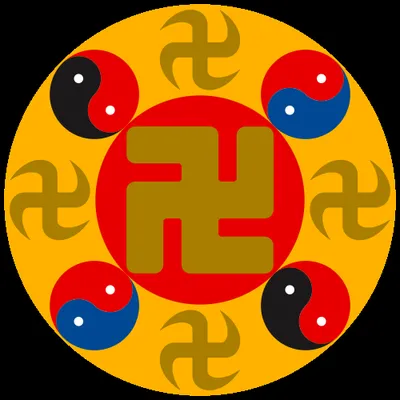
Chinese Health Qigong Association
Falun Gong, a spiritual practice founded in China, combines exercises and moral teachings, facing persecution and operating global organizations.
Falun Gong, also known as Falun Dafa, is a spiritual practice established in China in the early 1990s by Li Hongzhi. It emerged from the qigong movement, integrating meditation, qigong exercises, and moral principles derived from Buddhist and Taoist traditions. Initially supported by some Chinese government bodies, its rapid expansion and autonomy led to its classification as a threat, resulting in government suppression starting in 1999. This suppression has involved arrests, torture, and ongoing reports of societal discrimination against practitioners in China.
Globally, Falun Gong is headquartered in New York and is associated with various organizations, including the Epoch Media Group, which publishes The Epoch Times, and the dance troupe Shen Yun. The Epoch Times has been noted for promoting far-right political views and conspiracy theories. Falun Gong's teachings emphasize spiritual ascent through moral conduct, focusing on the principles of truthfulness, compassion, and forbearance. These tenets are considered fundamental to the cosmos and guide practitioners in cultivating virtue and eliminating negative karma.
Origins and Persecution
Falun Gong originated in China in 1992 as part of the qigong movement, founded by Li Hongzhi. Its practice combines meditation, qigong exercises, and moral teachings influenced by Buddhism and Taoism. While initially tolerated, its rapid growth and independence from state control led to its perception as a threat by Chinese authorities. In 1999, the Chinese government banned Falun Gong, labeling it an illegal organization. This resulted in widespread arrests, alleged torture, and significant persecution of practitioners. Reports indicate a substantial portion of China's labor camp population consisted of Falun Gong adherents, and human rights groups have documented numerous deaths due to this persecution.
Core Teachings and Philosophy
The central tenets of Falun Gong are truthfulness (Zhen), compassion (Shan), and forbearance (Ren), which are seen as the fundamental nature of the universe and the criteria for moral conduct. Li Hongzhi, the founder, teaches that spiritual elevation is achieved through moral cultivation and the practice of exercises. Practitioners aim to assimilate these universal qualities, let go of worldly attachments and desires, and eliminate negative karma, which is conceptualized as a dark substance accumulated through wrongdoing. This process is believed to lead to spiritual transformation and the attainment of higher states of being, potentially including special powers.
Practice and Cosmology
Falun Gong practice involves both physical exercises, including four standing movements and a sitting meditation, and the refinement of one's moral character (xinxing). Li Hongzhi's teachings suggest a cosmic order beyond ordinary human understanding, positioning Falun Gong's principles as superior to those found in Buddhism and Taoism. The practice posits that humans have descended from an original state of goodness due to selfishness and karma accumulation. By cultivating virtue and adhering to the core principles, practitioners seek to purify themselves, eliminate illness, and return to their innate, divine nature, potentially achieving a state of Consummation (yuanman).
Organizational Reach and Controversies
Led by Li Hongzhi, Falun Gong operates numerous organizations globally, including the Epoch Media Group, which oversees media outlets like The Epoch Times and NTD Television, and the Shen Yun performing arts group. The Epoch Times has gained notoriety for its promotion of politically far-right ideologies, conspiracy theories, and anti-vaccine sentiments. Falun Gong's teachings have also been noted for their opposition to the Chinese Communist Party, as well as expressed negative views on homosexuality, feminism, and the theory of evolution. Li Hongzhi is presented by followers as a spiritual leader with extraordinary abilities.
Key Ideas
- Truthfulness, Compassion, Forbearance: The three core principles guiding moral and spiritual cultivation.
- Karma and Virtue: The concept of accumulating negative karma through wrongdoing and positive virtue through good deeds and suffering, influencing one's spiritual destiny.
- Xinxing Cultivation: The refinement of moral character and temperament through adherence to universal principles and the relinquishing of desires.
- Spiritual Ascension: The ultimate goal of purifying oneself to return to an original, divine state.
Notable Quotes
“To his followers, Li is a God-like figure who can levitate, walk through walls and see into the future.”
“His ultra-conservative and controversial teachings include a rejection of modern science, art and medicine, and a denunciation of homosexuality, feminism and general worldliness.”
“Li both appreciates “what modern science has accomplished” and recognizes “its limitations."”
“Many leadership positions among Falun Gong practitioners are occupied by women.”
“Li asserts that he possesses the ultimate truth of the universe, that he can assume incarnations to protect his followers, and that he can install a spinning wheel of energy in the abdomen of Falun Gong practitioners.”
Books by Chinese Health Qigong Association
4 free public domain books · Read online or download