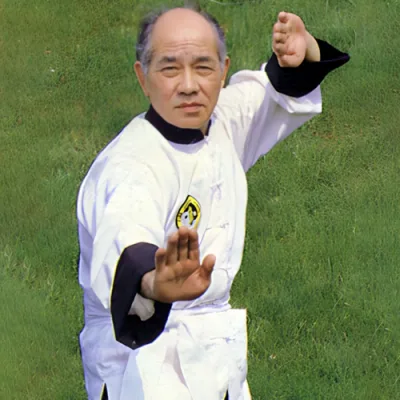
Chee Soo was a British author and martial artist who popularized Taoist arts, including Tai Chi and Feng Shou Kung Fu.
Chee Soo, born Clifford Soo in 1919, was a prolific author and martial arts master known for his teachings on Taoism, Lee-style tai chi, qigong, Ch'ang Ming, Traditional Chinese Medicine, and Feng Shou kung fu. He began his martial arts training at age fourteen under Chan Kam Lee, a teacher from Shandong, China. After serving in the British Army during World War II, where he was awarded the Military Medal and survived a period as a prisoner of war, Soo continued his martial arts studies and eventually took over leadership of his teacher's association.
Throughout his career, Soo taught a variety of disciplines, including self-defense, healing, and spiritual practices. He established his own classes and associations, spreading Taoist arts across Britain and internationally. Beyond his martial arts and healing work, Soo also contributed to Western audiences' understanding of these practices, notably through his choreography for the TV series 'The Avengers' and his numerous books on Taoist philosophy and practices. He passed away in 1994.
Early Life and Martial Arts Foundation
Born Clifford Soo in London in 1919, he was the son of a Chinese seaman and an English mother. His early life saw him adopt his mother's maiden name, Gibbs, for military enlistment. A pivotal moment occurred at age fourteen when he met Chan Kam Lee, a martial arts teacher from Shandong. Soo began training under Chan Lee, who reportedly adopted him and taught him various arts as time permitted. This foundational training in Chinese martial arts marked the beginning of his lifelong dedication to these disciplines.
Military Service and Post-War Development
Chee Soo served in the British Army during World War II, rising to the rank of Serjeant and earning the Military Medal for his actions in North Africa. His service included combat in France, North Africa, and Burma, where he was captured by the Japanese and forced to work on the Death Railway. He endured harsh conditions as a POW before escaping and eventually reuniting with Allied forces. After the war, he resumed his martial arts training, studying Judo, Kendo, and Aikido before returning to Chinese arts. He established his own classes, notably in East London, and later took over leadership of the International Taoist Society following his teacher's death.
Teaching the Taoist Arts
Chee Soo became a prominent figure in teaching Taoist philosophy and practices. He founded and led organizations such as the Chinese Cultural Arts Association and the International Wu Shu Association. His teachings encompassed a wide range of disciplines, including Lee-style tai chi, qigong (K'ai Men), Feng Shou ('Hand of the Wind' kung fu), Ch'ang Ming (Taoist diet therapy), Traditional Chinese Medicine, and various healing and meditation techniques. He is credited with introducing Kung Fu to Western audiences years before other prominent figures, and his work was recognized by Guinness World Records for its role in bringing martial arts to television.
Writings and Legacy
During the 1980s, Chee Soo dedicated significant time to writing and teaching, moving to Coventry and conducting courses across Britain and internationally. He authored several books on Taoist philosophy and practices during his lifetime, with one published posthumously. His influence extended to television, where he served as a fight choreographer for 'The Avengers,' helping to integrate martial arts into Western popular culture. Chee Soo's legacy lies in his extensive efforts to preserve, teach, and disseminate Taoist arts, making them accessible to a broad audience.
Key Ideas
- Lee-style tai chi: A specific lineage of Tai Chi taught by Chee Soo.
- Qigong (K'ai Men): Taoist exercises for cultivating vital energy.
- Ch'ang Ming: Taoist principles of diet and long-life health therapy.
- Feng Shou ('Hand of the Wind'): A gentle yet effective style of Kung Fu.
- Traditional Chinese Medicine: Principles of health and healing based on Chinese medical theory.
Books by
2 free public domain books · Read online or download