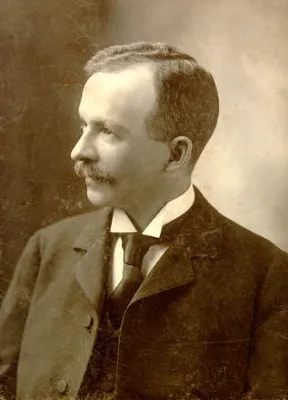
Charles Waddell Chesnutt
Charles Waddell Chesnutt was an African-American author and activist known for exploring racial identity and post-Civil War Southern society.
Charles Waddell Chesnutt was an influential African-American author, essayist, activist, and lawyer whose writings delved into the complex social and racial dynamics of the post-Civil War American South. Born in 1858 to free Black parents, Chesnutt navigated a world where racial lines were rigidly defined, though his light complexion allowed him to pass as white. Despite opportunities to do so, he always identified as Black. His early life included returning to Fayetteville, North Carolina, after the Civil War, working in his family's failing business, and beginning his education and teaching career at a young age.
Chesnutt established a successful court reporting business in Cleveland, Ohio, which provided financial stability. This allowed him to pursue his literary ambitions, aiming to improve race relations through his work. His early stories, published in prominent magazines like The Atlantic Monthly, gained recognition. His collections, including "The Conjure Woman" and "The Wife of His Youth and Other Stories of the Color-Line," explored themes of race, class, and identity within the Black community. His novels, such as "The House Behind the Cedars" and "The Marrow of Tradition," directly addressed sociopolitical issues and historical events like the Wilmington Massacre, though they were less commercially successful than his stories. Interest in his work was revived in the 20th century, leading to new editions and formal recognition, including a commemorative stamp.
Early Life and Education
Born in Cleveland, Ohio, in 1858, Charles Waddell Chesnutt's parents were free people of color from North Carolina. His family returned to Fayetteville after the Civil War, where he worked in his parents' grocery store. Despite facing economic hardship and the early death of his mother, Chesnutt pursued education diligently. By age 14, he was a pupil-teacher at the Howard School, an institution established for Black students during Reconstruction. He continued teaching and studying, eventually becoming the principal of a normal school in Fayetteville by 1880. His commitment to education and his leadership qualities were noted, but he resigned in 1883 to pursue a writing career, moving to New York City.
Legal and Literary Career
After an initial move to New York, Chesnutt relocated to Cleveland, Ohio, where he studied law and established a prosperous court reporting business. This financial success enabled him to focus on his literary aspirations. His first short story, "The Goophered Grapevine," was published in The Atlantic Monthly in 1887, marking the first publication by an African American in the magazine. His early collections, "The Conjure Woman" (1899) and "The Wife of His Youth and Other Stories of the Color-Line" (1899), explored themes of racial identity, the complexities of 'passing,' and social stratification within the Black community. His novels, including "The House Behind the Cedars" (1900) and "The Marrow of Tradition" (1901), tackled more direct social and political commentary, with the latter being based on the Wilmington Massacre of 1898.
Themes and Legacy
Chesnutt's writings are characterized by their nuanced exploration of racial and social identity in the post-Reconstruction South. He examined the psychological impact of race, the challenges faced by those who could 'pass' as white, and the internal dynamics of the Black community, including colorism and class distinctions. While his short stories achieved critical acclaim and were more popular, his novels, which offered a more direct critique of sociopolitical conditions and historical injustices, faced less commercial success. Despite this, he was respected by his literary peers, evidenced by an invitation to Mark Twain's birthday celebration. Interest in Chesnutt's work experienced a revival in the 20th century, leading to reissued editions and formal recognition, including a commemorative stamp in 2008.
Books by Charles Waddell Chesnutt
1 free public domain book · Read online or download