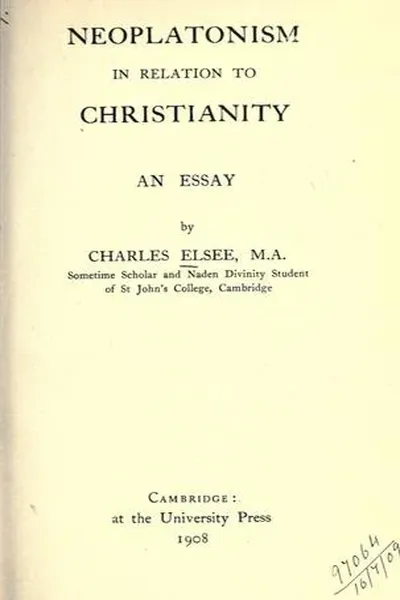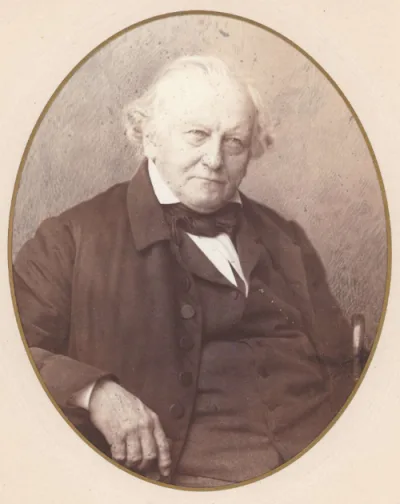
Charles Elsee
Logos is a multifaceted term in philosophy and religion, broadly meaning reason, word, or discourse, with deep historical and theological significance.
The term 'Logos' originates in Ancient Greek philosophy and religion, most broadly encompassing concepts of reason, logic, order, and understanding. Initially systematized by Aristotle as a principle of rhetoric alongside ethos and pathos, it signifies reasoned discourse and the structure of language. Its roots trace back to Proto-Indo-European, related to concepts of ordering and speaking.
Heraclitus first employed 'logos' as a technical term, viewing it as a universal principle of order and knowledge connecting rational discourse to the world's structure. Later philosophers, including the Sophists, Pyrrhonists, and Stoics, developed distinct interpretations, with the Stoics identifying it as the active reason pervading the universe. In Hellenistic Judaism, Philo of Alexandria integrated 'logos' into Jewish philosophy, seeing it as an intermediary divine being or demiurge, bridging God and the material world.
Within Christianity, the Gospel of John identifies the Logos as divine and incarnate in Jesus Christ. This theological usage presented translation challenges, with early Latin translations using 'verbum' (word) and later languages adopting terms like 'le Verbe' (French). The term also appears in Sufism and Carl Jung's analytical psychology, and in ancient Greek contexts, it contrasted with 'mythos' (tale or narrative).
Origins and Philosophical Development
The term 'Logos' has ancient Greek origins, broadly translating to 'word,' 'discourse,' or 'reason.' Its etymology connects to verbs meaning 'to say,' 'to speak,' and 'to gather.' Heraclitus was among the first to use 'logos' as a philosophical concept, describing it as a universal principle of order and knowledge that governs the cosmos, though often misunderstood by humanity. Philosophers like Aristotle further refined its meaning, particularly in rhetoric, where 'logos' became one of three modes of persuasion, alongside 'ethos' (character) and 'pathos' (emotion). For Aristotle, it represented reasoned argument and the logical structure of speech, distinguishing it from mere opinion or emotional appeal. The Stoics conceived of 'logos' as the active, animating reason pervading the universe, often identified with God or Nature, and also as a generative principle ('logos spermatikos').
Hellenistic Judaism and Christianity
In Hellenistic Judaism, Philo of Alexandria integrated the concept into his philosophy, viewing the 'Logos' as a divine intermediary, the 'first-born of God,' that bridges the gap between the transcendent God and the material world. Philo distinguished between different aspects of the Logos, including the 'utterer word,' the 'speech,' and the 'word within.' This concept profoundly influenced early Christian thought. The Gospel of John famously identifies the 'Logos' as divine ('theos') and incarnate in Jesus Christ, a pivotal theological development that posed translation difficulties for early interpreters. The inadequacy of single Latin words to capture the full meaning of 'Logos' led to varied translations, such as 'verbum' (word) in the Vulgate, and later terms like 'le Verbe' in French.
Later Interpretations and Contrasts
Beyond its philosophical and theological applications, 'Logos' has appeared in other traditions, including Sufism and Carl Jung's analytical psychology. In ancient Greek discourse, 'logos' was often contrasted with 'mythos,' representing reasoned argument and rational explanation in opposition to narrative or myth. While often translated as 'word,' 'logos' was distinct from the grammatical term 'lexis.' The term's multifaceted nature, encompassing reason, discourse, divine principle, and intermediary being, has made it a subject of continuous interpretation and debate across various intellectual and spiritual traditions.
Key Ideas
- Logos as reason, logic, and order
- Logos as word and discourse
- Logos as a principle of cosmic order (Heraclitus)
- Logos as a mode of persuasion in rhetoric (Aristotle)
- Logos as the divine reason pervading the universe (Stoics)
- Logos as an intermediary divine being (Philo)
- Logos as divine and incarnate in Christ (Christianity)
Books by Charles Elsee
2 free public domain books · Read online or download