Charles Brooke
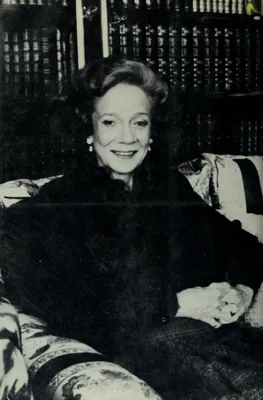
Roberta Brooke Astor was a philanthropist, socialite, and writer, known for her leadership of the Vincent Astor Foundation.
Roberta Brooke Astor, born Roberta Brooke Russell in 1902, was an American philanthropist, socialite, and writer. She was the daughter of John Henry Russell Jr., the 16th Commandant of the Marine Corps. Her early life was marked by extensive travel due to her father's military career, living in various international locations.
Brooke Astor was married three times. Her first marriage, at age 17, was to John Dryden Kuser, with whom she had one son, Anthony Dryden Kuser. This marriage was reportedly tumultuous. Her second marriage was to Charles Henry Marshall, a senior partner in an investment firm, with whom she had stepchildren. Her third and final marriage was to William Vincent Astor, a prominent member of the Astor family and chairman of Newsweek. Following Vincent Astor's death, she became the chairwoman of the Vincent Astor Foundation, managing the significant fortune left to it.
Throughout her life, Astor was deeply involved in philanthropy, serving on boards and supporting various institutions like the Metropolitan Museum of Art and the New York Public Library. She received numerous accolades for her charitable work, including the Presidential Medal of Freedom. Her later years were marked by a public controversy regarding the welfare and guardianship of her estate, involving her son and grandson.
Early Life and Travels
Born Roberta Brooke Russell in 1902, she was the only child of John Henry Russell Jr., who held the distinguished position of the 16th Commandant of the U.S. Marine Corps. Her family's life was peripatetic, with her father's career necessitating prolonged stays in diverse locations such as China, the Dominican Republic, and Haiti. This upbringing abroad, beginning in her childhood, provided her with unique experiences that she later documented. She attended the Holton-Arms School and briefly The Madeira School. Her early observations and experiences were captured in diaries and drawings, which formed the basis of her memoir, "Patchwork Child: Early Memories," published in 1993.
Marriages and Personal Life
Brooke Astor's personal life was characterized by three marriages. Her first union, shortly after her 17th birthday in 1919, was with John Dryden Kuser. This marriage, which ended in divorce in 1930, was described by Astor as deeply challenging, marked by alleged abuse, alcoholism, and infidelity from her husband. They had one son, Anthony Dryden Kuser. Her second marriage was to Charles Henry Marshall, a partner in an investment firm, in 1932. This union brought two stepchildren into her life. During this period, her son changed his name to honor his stepfather. In 1940s, she contributed to the family's financial stability by working as a features editor at House & Garden magazine and briefly for an interior decorator. Her third marriage, in 1953, was to William Vincent Astor, a wealthy heir and businessman. This marriage lasted until his death in 1959.
Philanthropic Leadership
Following the death of her third husband, Vincent Astor, Roberta Brooke Astor assumed a pivotal role in managing the Vincent Astor Foundation, which inherited his considerable fortune. She served as its chairwoman, guiding its extensive philanthropic activities. Her involvement extended to prominent cultural institutions; she was a Trustee of the Metropolitan Museum of Art and was instrumental in the conception of the Astor Court, a Chinese garden courtyard within the museum. Astor also supported the New York Zoological Society, which named an elephant in her honor. Her commitment to social causes was broad, contributing to organizations like the Lighthouse for the Blind, the Fresh Air Fund, and the International Rescue Committee. Her personal philosophy on generosity was notably captured by the maxim: "Money is like manure; it's not worth a thing unless it's spread around."
Later Years and Controversy
In her later years, Brooke Astor continued her active engagement in philanthropy and New York society. She received significant recognition for her lifelong dedication to charitable causes, including the National Medal of Arts and the Presidential Medal of Freedom. However, her elder years were also overshadowed by a public legal dispute concerning her welfare. A lawsuit filed by her grandson, Philip Cryan Marshall, alleged that her son, Anthony Marshall, had neglected her care and mismanaged her estate. The controversy brought public attention to her health issues, including Alzheimer's disease and anemia, and raised questions about the management of her assets and personal well-being. Despite these challenges, she remained a prominent figure until her passing in 2007 at the age of 105.
Notable Quotes
“I certainly wouldn't advise getting married that young to anyone. At the age of sixteen, you're not jelled yet. The first thing you look at, you fall in love with.”
“I learned about terrible manners from the family of my first husband. They didn't know how to treat people”
“He had a dreadful childhood and as a result had moments of deep melancholy. But I think I made him happy. That's what I set out to do. I'd literally dance with the dogs, sing and play the piano, and I would make him laugh, something no one had ever done before. Because of his money, Vincent was very suspicious of people. That's what I tried to cure him of.”
“she married Vincent for the money. I wouldn't respect her if she hadn't. Only a twisted person would have married him for love.”
“I don't think I can stand being married to him anymore. I don't think I can take it. He never wants to go anywhere — he's so antisocial.”
Books by Charles Brooke
1 free public domain book · Read online or download