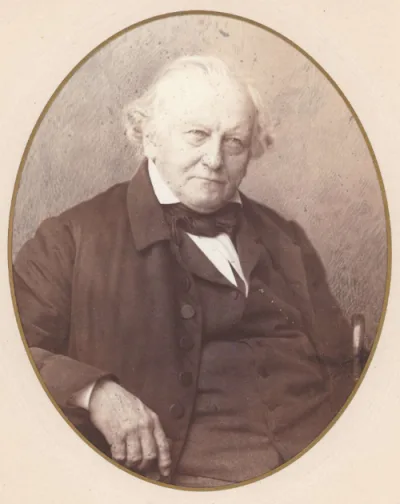
✍️ Author Biography
Charles Blount
📅 1620 – 1686
🌍 American
📚 1 free book
⭐ Known for: The Oracles of Reason (1693)
Charles Blount was a notable figure in English intellectual circles, known for his deistic writings and philosophical inquiries.
Charles Blount (c. 1654–1693) was an English writer and philosopher associated with the early development of deism. Born into a prominent family, he received a solid education and became known for his critical examination of religious doctrines and institutions.
Blount's most significant contributions lie in his challenging of traditional religious authority and his advocacy for reason as the primary means of understanding the divine. His works often explored the concept of a creator God who established natural laws but did not intervene directly in human affairs, a cornerstone of deistic thought. He engaged with contemporary intellectual currents, including those of thinkers like John Locke, though his more radical conclusions sometimes set him apart.
Despite facing considerable opposition and censorship during his lifetime due to the controversial nature of his ideas, Blount's writings circulated and influenced later thinkers in the Enlightenment. His life ended tragically, but his intellectual legacy persisted as a contribution to the philosophical debates surrounding religion and reason.
Early Life and Intellectual Development
Charles Blount was born around 1654, the son of Sir Henry Blount, a noted traveler and author. This familial connection to intellectual pursuits likely influenced his own path. He received an education that provided him with a strong foundation in classical learning and contemporary philosophical debates. His early engagement with religious texts and theological arguments, coupled with a burgeoning interest in rational inquiry, set the stage for his later critical stance on established religious dogma.
Deistic Philosophy and Religious Critique
Blount is primarily recognized for his contributions to early deism. He questioned the literal interpretation of scripture and the divine right of kings, advocating instead for a natural religion discoverable through reason. His works, such as 'The Oracles of Reason' and 'A Philosophical Discourse on Miracles,' challenged the validity of miracles and the necessity of revealed religion, proposing that a benevolent creator established a universe governed by natural laws. This rational approach to divinity and morality positioned him as a significant, albeit controversial, figure in the intellectual landscape of his time.
Controversy and Legacy
The radical nature of Blount's deistic arguments led to significant controversy and condemnation from religious authorities. His writings were often suppressed, and he faced accusations of atheism. Despite these challenges, his ideas circulated among intellectual circles and contributed to the broader Enlightenment discourse on religion, reason, and individual liberty. Although his life was cut short by suicide in 1693, his intellectual output left a mark on the development of skeptical thought and the philosophical exploration of faith and reason.
Key Ideas
- Natural religion discoverable through reason
- Critique of revealed religion and miracles
- Deism and the concept of a creator God
- Questioning of religious dogma and authority