✍️ Author Biography
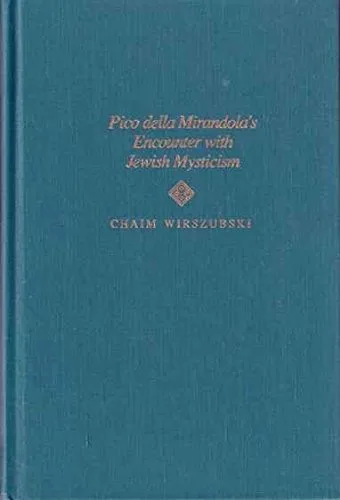
Chaim Wirszubski
📅 1901 – 1906
🌍 American
📚 1 free book
⭐ Known for: Bahir
Chaim Wirszubski was a scholar of Jewish mysticism, particularly Kabbalah, contributing to its academic study.
Chaim Wirszubski was a scholar focused on Jewish mysticism, a rich tradition of esoteric and spiritual practices aimed at understanding the divine and hidden aspects of existence. This tradition, which evolved over millennia, includes various forms such as Kabbalah, prophetic, and apocalyptic mysticism. Its roots are traced back to biblical figures, developing through periods like the Heikhalot and Merkavah literature, and later formalizing with the medieval emergence of Kabbalah in Southern France and Spain, producing foundational texts like the Bahir and the Zohar.
Wirszubski's work likely engaged with the historical development and textual analysis of these mystical traditions. Key developments in Jewish mysticism include Lurianic Kabbalah with concepts like Tzimtzum and Tikkun, and the later Hasidic movement which integrated Kabbalistic ideas into popular religious life. The academic study of Jewish mysticism, significantly advanced by scholars like Gershom Scholem, seeks to explore its historical, textual, and philosophical dimensions. Wirszubski's contributions would fall within this academic framework, illuminating the complex history and thought of Jewish esoteric traditions.
Roots and Early Development of Jewish Mysticism
Jewish mysticism, encompassing esoteric practices to understand the divine, has a long history tracing back to biblical prophets like Elijah and Ezekiel. Early forms include apocalyptic mysticism, evident in texts such as 1 Enoch, and later Heikhalot and Merkavah literature from the 2nd to the early medieval period, which focused on visionary ascents and the divine chariot. These traditions laid the groundwork for the more formalized Kabbalah that emerged later. The Talmudic era also contained esoteric teachings, referred to as Ma'aseh Merkavah ('Works of the Divine Throne/Chariot') and Ma'aseh Bereshit ('Works of Creation'), based on Genesis and Ezekiel, respectively. These secret doctrines were carefully guarded, with warnings about their potential dangers and restrictions on public teaching, as illustrated by the famous parable of the four rabbis entering Pardes.
Medieval Emergence and Formalization of Kabbalah
The medieval period marked a significant formalization of Kabbalah, particularly in Southern France and Spain starting in the 12th century. Mystical brotherhoods, some remaining anonymous, contributed to this development. The appearance of the Bahir, a work describing divine attributes as a dynamic drama, and the teachings of Isaac the Blind's school, represent early theosophical Kabbalah. Kabbalah then spread to Catalonia, influenced by figures like Nahmanides, and reached its classic expression in Castile with the Zohar literature, which addressed cosmic healing and divine attributes. These developments were often influenced by or reacted against rationalist philosophies of the time, such as those of Maimonides.
Later Developments and Academic Study
In the early modern period, Isaac Luria's 16th-century Lurianic Kabbalah introduced key metaphysical concepts like Tzimtzum (divine contraction) and Tikkun (cosmic repair). The 18th century saw the rise of Hasidism, a movement that integrated Kabbalistic ideas into a popular, revivalist context, emphasizing personal mystical experience and the divine presence in daily life. The academic study of Jewish mysticism, pioneered by scholars such as Gershom Scholem, continues to explore its historical, textual, and philosophical dimensions. This scholarly pursuit aims to understand the evolution and impact of these complex esoteric traditions.
Key Ideas
- Kabbalah: A central form of Jewish mysticism focusing on divine understanding and hidden aspects of existence.
- Ma'aseh Merkavah: Mystical speculation related to Ezekiel's vision of the Divine Chariot.
- Ma'aseh Bereshit: Mystical speculation based on the creation account in Genesis.
- Tzimtzum: A concept from Lurianic Kabbalah describing divine contraction.
- Tikkun: A concept from Lurianic Kabbalah referring to cosmic repair.