Central Chinmaya Mission Trust
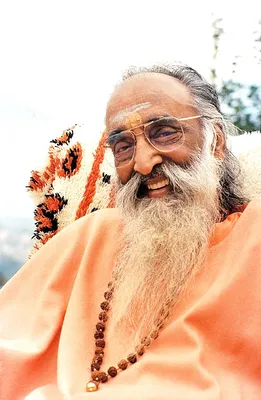
Swami Chinmayananda founded Chinmaya Mission to spread Vedanta and Hindu scriptures globally, becoming a prominent spiritual teacher.
Swami Chinmayananda, born Balakrishna Menon, was a Hindu spiritual leader and teacher who established the Chinmaya Mission in 1953. This global nonprofit organization was dedicated to disseminating the teachings of Advaita Vedanta, the Bhagavad Gita, and the Upanishads. Through his efforts, he initiated a worldwide Hindu spiritual and cultural revival, making these ancient texts accessible through lectures and publications in English across India and internationally. Before his spiritual work, he was a journalist involved in India's independence movement. Under the guidance of spiritual mentors like Swami Sivananda and Tapovan Maharaj, he embraced Vedanta and took vows of renunciation, adopting the name Swami Chinmayananda. His first public lecture series, known as jñāna yajña, began in 1951, laying the groundwork for the Mission's expansion. Today, Chinmaya Mission operates over 300 centers, engaging in educational, spiritual, and charitable activities.
Spiritual Teachings and Mission Foundation
Swami Chinmayananda's primary focus was the dissemination of Vedanta and ancient Hindu scriptures to a global audience, particularly appealing to the English-educated Indian middle class and the diaspora. He believed in making these profound teachings accessible through lectures and written works in English. In 1953, he founded the Chinmaya Mission to systematically study and propagate these spiritual texts. The Mission grew rapidly, establishing numerous study groups and centers. His lectures, known as jñāna yajñas, attracted thousands and were recognized for their role in revitalizing Hindu cultural heritage. He also embarked on extensive international tours, delivering lectures and engaging in discussions across numerous countries, thereby extending the reach of Hindu philosophy worldwide.
Background and Spiritual Journey
Born Balakrishna Menon in 1916, he pursued higher education in English literature and law, also studying journalism. His early life included participation in India's independence movement, leading to his arrest and imprisonment. His path shifted dramatically when, as a journalist intending to expose spiritual leaders, he encountered Swami Sivananda's ashram. This experience led to a profound transformation, moving him from skepticism to deep spiritual conviction. He was initiated into sannyasa in 1949, receiving the name Swami Chinmayananda. Subsequently, he undertook intensive study of Vedanta under Tapovan Maharaj, preparing him for his future role as a spiritual teacher.
Interfaith Dialogue and Cultural Advocacy
Swami Chinmayananda was also instrumental in the founding of the Vishva Hindu Parishad (VHP), an organization aimed at uniting and strengthening the Hindu community globally. He served as its first president, advocating for a renewed sense of pride and consciousness among Hindus. Beyond this, he engaged in interfaith dialogue, receiving recognition and support from leaders of other religious traditions, including Cardinal Valerian Gracias and the Dalai Lama. His efforts extended to establishing the Chinmaya International Foundation, an institution dedicated to research and preservation of Indian philosophy, underscoring his commitment to both spiritual education and cultural preservation on a global scale.
Key Ideas
- Spreading knowledge of Advaita Vedanta, Bhagavad Gita, and Upanishads.
- Global Hindu spiritual and cultural renaissance.
- Making Hindu scriptures accessible through English lectures and publications.
Notable Quotes
“I went not to gain knowledge, but to find out how the swamis were keeping up the bluff among the masses.”
“Don't start any organisation in my name. I have not come here to be institutionalised. I have come here to give the message of our ancient sages, which has benefited me. If it has benefited you, pass it on.”
“awake(n) the Hindus and to make them conscious of their proud place in the comity of nations”
“Let us convert Hindus to Hinduism, then everything will be all right.”
Books by Central Chinmaya Mission Trust
1 free public domain book · Read online or download