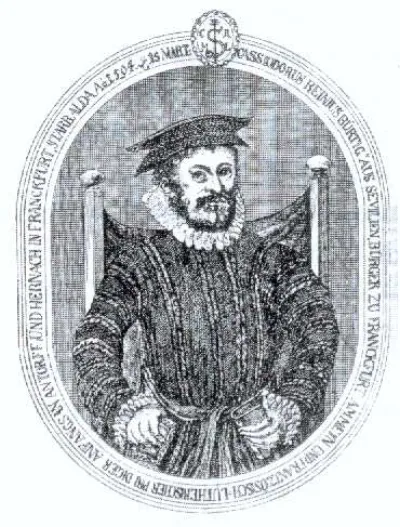
Casiodoro de Reina was a Spanish theologian and translator, known for his Spanish Bible and anti-Inquisition writings.
Casiodoro de Reina, born around 1520, was a Spanish theologian and monk who became a proponent of the Protestant Reformation. Facing suspicion from the Spanish Inquisition, he fled Seville with other monks, initially seeking refuge in Geneva. However, he found Geneva too rigid and left for London, where he ministered to Spanish Protestant refugees. His activities led to him being declared a "heresiarch" and an effigy of him was burned by the Inquisition in an auto-da-fé. He later moved to Antwerp and Frankfurt, associating with scholars and continuing his work. Reina is most recognized for his translation of the Bible into Spanish, published in 1569, which became the foundation for the Reina-Valera Bible. He also authored significant works critical of the Spanish Inquisition, published under a pseudonym.
Early Life and Reformation Adherence
Born in Montemolín around 1520, Casiodoro de Reina dedicated his early life to studying the Bible. As a monk at the Hieronymite Monastery of St. Isidore of the Fields near Seville, he became exposed to Lutheranism and embraced the Protestant Reformation. This affiliation led him and about a dozen fellow monks to flee to Geneva in 1557 to escape the Spanish Inquisition. Despite finding refuge, Reina was critical of Geneva's strict atmosphere, famously declaring it a "new Rome" before departing in 1558. He then traveled to London in 1559, serving as a pastor to Spanish Protestant exiles, but faced pressure from King Philip II of Spain for extradition.
Exile and Opposition to the Inquisition
During his exile, Reina was identified by the Spanish Inquisition in Seville as a key figure in converting monks to Lutheranism. In April 1562, his effigy was burned during an auto-da-fé, and his writings, along with those of his colleagues, were placed on the Index of prohibited books, with him being labeled a "leader of heretics." Around 1563, he moved to Antwerp, collaborating with authors of the Polyglot Bible, and by 1564, he settled in Frankfurt with his family. During this period, he penned a significant critique of the Inquisition, "Sanctae Inquisitionis hispanicae artes aliquot detectae, ac palam traductae," published in Heidelberg in 1567 under the pseudonym Reginaldus Gonsalvius Montanus. He also secretly translated Sebastian Castellion's work condemning persecution for conscience's sake.
Biblical Translation and Later Life
While living in exile in various locations including London, Antwerp, Frankfurt, Orléans, and Bergerac, Reina undertook the monumental task of translating the Bible into Spanish. This endeavor was supported by individuals like Juan Pérez de Pineda. For the Old Testament, he utilized the Ferrara Bible and the Vetus Latina, alongside the Masoretic Text, while the New Testament was based on Erasmus's Textus Receptus, with comparative study of the Vetus Latina and Syriac manuscripts. He received assistance from Francisco de Enzinas and Juan Pérez de Pineda for the New Testament translation. Frankfurt granted him citizenship in 1571. He supported his family as a silk trader and acquired the library of Johannes Oporinus. His Spanish Bible was published in Basel in 1569, laying the groundwork for the renowned Reina-Valera Bible. Around 1580, he published a catechism in multiple languages, aligning with Lutheran theological thought.
Books by
2 free public domain books · Read online or download