Carlos G. Steel
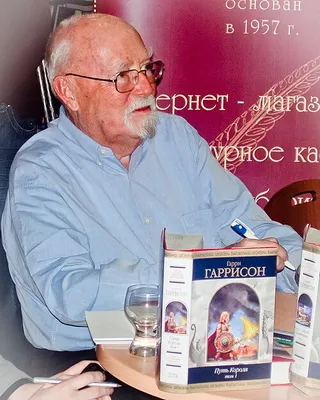
Harry Harrison was an influential American science fiction author known for adventure stories with satirical and anti-military themes.
Harry Harrison (born Henry Maxwell Dempsey) was an American author celebrated for his contributions to science fiction, particularly his adventurous yet satirical novels. He is widely recognized for creating "The Stainless Steel Rat" character and writing the novel "Make Room! Make Room!," which served as the basis for the film "Soylent Green." Harrison's career began in illustration for comic books before he transitioned to writing, penning numerous short stories and novels. He was known for his engaging writing style, often characterized by humor, sharp wit, and a critical stance against military and authority figures. His work frequently explored themes of overpopulation and societal critique, delivered through fast-paced narratives.
Beyond his writing, Harrison was a significant figure in the science fiction community. He co-founded the Irish Science Fiction Association and co-chaired the Birmingham Science Fiction Group with Brian Aldiss. Together, Harrison and Aldiss were instrumental in promoting SF criticism and internationalizing the genre. Harrison also held a notable passion for Esperanto, integrating the language into his fictional worlds and advocating for its use. Despite not winning major genre awards for specific works, his lasting impact was recognized with induction into the Science Fiction Hall of Fame and designation as an SFWA Grand Master.
Literary Style and Themes
Harry Harrison's science fiction is characterized by its blend of rip-roaring adventure and sharp satire, often delivered with a humorous and self-aware tone. While his novels might appear as unpretentious action stories, they consistently carried underlying critiques of military structures, authority, and societal follies. He possessed a unique ability to write in the style of conservative pulp fiction while embedding liberal conscience and acute intelligence within his narratives. His works, such as the "Deathworld" and "Stainless Steel Rat" series, and "Bill, the Galactic Hero," are noted for their fast-paced plots, strong sense of humor, and often subversive, anti-military, and anti-authority stances. This thematic approach was informed by his own experiences, including a notable distrust of military and governmental figures.
Advocacy for Esperanto
In his later years, Harry Harrison became a dedicated proponent of the constructed language Esperanto. He reported being able to write and speak it with an ease he found unparalleled in other languages besides his native English. Harrison's military service reportedly sparked his interest in learning Esperanto. The language frequently appeared within his fictional works, notably in his "Stainless Steel Rat" and "Deathworld" series, weaving it into the fabric of his created worlds. He held significant roles within Esperanto organizations, serving as honorary president of the Esperanto Association of Ireland and as an honorary member of Esperanto-USA, among other affiliations. His commitment extended to international Esperanto associations, highlighting his dedication to the language and its global community.
Community and Criticism
Harrison was a deeply influential figure within the science fiction community, known for his amiable and outspoken personality. He played a crucial role in fostering critical discourse within the genre, particularly through his collaborations with Brian Aldiss. Together, they co-founded "SF Horizons," a pioneering journal dedicated to science fiction criticism, and worked to elevate the standards of critical analysis. They also co-edited numerous anthologies, aiming to delineate the unique characteristics of science fiction narratives. Their internationalist outlook led them to establish "World SF," an organization designed to support and advance non-English science fiction writing. Harrison and Aldiss also co-edited several volumes of "The Year's Best Science Fiction" and "Decade" series, showcasing significant works from various eras.
Key Ideas
- Science fiction as a vehicle for adventure and satire
- Critique of military and authoritarian structures
- Exploration of overpopulation and resource consumption
- The role and integration of Esperanto in fiction and advocacy
Notable Quotes
“a constant peer and great family friend”
“Imagine Pirates of the Caribbean or Raiders of the Lost Ark, and picture them as science-fiction novels. They're rip-roaring adventures, but they're stories with a lot of heart.”
“His most popular and best-known work is contained in fast-moving parodies, homages or even straight reconstructions of traditional space-opera adventures.”
“while being exactly what they might superficially seem to be, unpretentious action novels with a strong streak of humour, they are also satirical, knowing, subversive, unapologetically anti-military, anti-authority and anti-violence.”
“His books toed the line between science fiction adventure, humor, and satire, often with a strong anti-military bent informed by his time in the U.S. Army Air Forces.”
Books by Carlos G. Steel
0 free public domain books · Read online or download