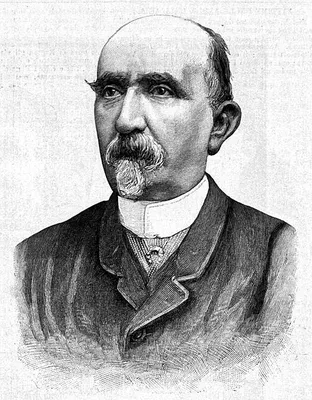
Carlo Collodi
Carlo Collodi, born Carlo Lorenzini, was an Italian journalist and author most famous for his allegorical children's novel, The Adventures of Pinocchio.
Carlo Lorenzini, who adopted the pen name Carlo Collodi, was born in Florence in 1826. He began his career as a journalist and humorist, actively participating in political matters through his writings and the founding of satirical newspapers. His early career also included work in censorship and the publication of theatrical sketches and stories.
Lorenzini later shifted his focus to children's literature, initially by translating French fairy tales. He also penned a pedagogical series aimed at exploring Italian unification through a fictional character. His most enduring work, "Storia di un burattino" (later known as "Le avventure di Pinocchio"), was serialized and became a celebrated allegorical tale. He passed away in 1890, and his legacy is maintained through foundations and attractions dedicated to his work.
Early Life and Education
Born Carlo Lorenzini in Florence on November 24, 1826, his mother was a seamstress from the town of Collodi, a place that would later inspire his pseudonym. His father was a cook, and both parents worked for a noble family. Carlo was the eldest of ten children, though many of his siblings died young. He spent a significant portion of his childhood in Collodi with his maternal grandmother. After completing primary schooling, he initially studied at a theological seminary but decided against becoming a priest, continuing his education instead at a college in Florence. He later worked in a Florentine bookstore, assisting a manuscript specialist.
Journalism and Political Engagement
Lorenzini's early career was marked by his involvement in journalism and politics. He served in the Tuscan Army during the Italian Wars of Independence and founded the satirical newspaper 'Il Lampione' in 1853, which was subsequently censored. He launched another newspaper, 'Lo scaramuccia,' in 1854. His initial publications appeared in these periodicals, with his debut as an author including a play and a parodic guidebook in 1856. His work 'Il signor Alberi ha ragione!' in 1860 presented his political and cultural views on Italy and was the first to use the Collodi pseudonym, derived from his mother's hometown. He also contributed to other political newspapers and worked for the Theatre Censorship Commission.
Shift to Children's Literature and Pinocchio
Following a period of disillusionment with Italian politics, Lorenzini turned his attention to writing for children. His initial foray into this genre involved translating French fairy tales into Italian, such as Charles Perrault's collection. He also created a pedagogical series of books featuring a character named Giannettino, which explored themes of Italian unification. Lorenzini became particularly interested in using a relatable, mischievous character to convey his ideas allegorically. This led him to write "Storia di un burattino" (Story of a Marionette), later widely known as "Le avventure di Pinocchio," which was serialized and became his most famous creation. The novel's exploration of morality and transformation through the puppet Pinocchio has resonated through generations.
Key Ideas
- Allegorical storytelling through relatable characters
- Exploration of Italian identity and unification
- Moral development and transformation
Books by Carlo Collodi
2 free public domain books · Read online or download